Achieving personal financial security is important for everyone. Dodgy research helps no-one

Why slave away crafting a serious academic research paper when you can knock out an under-graduate quality effort that will still be published provided it pushes the appropriate PC buttons? One gets to bang the feminist drum to one’s heart’s content, virtue-signal across the chattering class, and pad out one’s resume all at the same time.

Anyway, accuracy, objectivity and academic rigor are so last century!

Young women can budget in the short term but struggle with long-term investments: survey’ (14 February 2017)

This unexceptional article merits its own post only by virtue of the way it exemplifies several of my concerns regarding pro-feminist research:

  • presents a non-gendered issue as gendered
  • only surveys women yet uses the results to argue a case of relative female disadvantage
  • features lamentably weak research methodology
  • only identifies contributing factors consistent with a predetermined conclusion based on feminist dogma
  • infers that men are primarily responsible for both causing and resolving the alleged situation of female disadvantage

My comments are inserted within the body of the article, and shown in blue font.

The main premise of the article is that women are significantly disadvantaged in terms of achieving financial security, and warrant special assistance in this regard. This disadvantage is said to stem mainly from a lack of awareness of investment options and strategies. In supporting this position the paper grasps at various feminist chestnuts such as the gender wage gap, the superannuation gap, and gender bias within schools and specific employment sectors.

“Our investigation into the financial literacy of young women finds they are confident in implementing budgeting and savings strategies, but lack the knowledge and confidence required to implement long-term financial strategies.”

The first thought that sprang to mind was ‘Why focus solely on young women?’, especially if the intention is to assert gender-based disadvantage. What exactly was the goal of this research project? Better understanding a problem that affects many PEOPLE with a view to identifying strategies to help those in need? Or simply opportunistically seizing on the issue of savings and investment in order to add to the chorus of ‘women have it tougher’?

The justification for excluding men from the study is hardly compelling:

  • the average level of retirement savings for men is greater than the average for women
  • men are claimed to be, again on average, more financially literate than women.

What of the fact that many men fall below the male average, and quite likely also the female average? There would certainly be no shortage of men who “lack the knowledge and confidence required to implement long-term financial strategies“. Consider too that some women would exceed male average savings, and that this segment is sure to increase in coming years.

Bear in mind too that men’s savings are not necessarily their own, and will more often be used to support dependents. For example, many women are financially supported in later life by current or previous male partners, whilst relatively few men are supported in such a manner. And indeed, far more men than women will have some or all of their savings confiscated via court-ordered settlements following separation or divorce.

“This is surprising given that financial literacy usually refers to not only an understanding of how money actually works and how to make and manage money for day-to-day affairs but also how to use this in preparation for the future.

While our results are preliminary, based on social media users and require more detailed research, our results begin to draw links between social, institutional and personal attitudes towards financial knowledge.

A survey we distributed across social media found that 91% of 175 respondents had confidence in their ability to implement savings strategies (varying from simple to complex), and 89% were confident in their ability to budget. Strategies included everything from planning for a holiday to managing credit cards. Participants also considered budgeting and saving to be the most important aspects of their finances.”

It appears that all the survey respondents were female – a major oversight – and were likely self-selected from within the ranks of the researchers’ friends/associates. What likely degree of survey bias did this entail? In other words, to what extent are the results meaningful even in a purely statistical sense?

However, our survey participants expressed a distinct lack of appreciation for longer-term financial goals. While 72% of respondents felt that savings were extremely relevant to them, only 38% said the same about superannuation, and they showed even less interest in other long-term investment (23%).

Knowledge and confidence in implementing long-term investment strategies were even more concerning. Only 17% of respondents said they had a “medium” knowledge of superannuation and only 1% (or two of 175 respondents) felt that they had an in-depth understanding. In contrast, 55% indicated having little or no knowledge whatsoever.

The numbers look even bleaker for responses about investments. A low 12% of survey participants had medium levels of knowledge in this area, while again only 1% felt their knowledge was in-depth.

When asked about why they lacked financial knowledge, the barrier most commonly acknowledged by participants was lack of financial information taught at school (91%). Also 55% of participants reported feeling discouraged from learning about finance because they were women. This is consistent with reports of female students being discouraged from studying subjects such as science, technology, engineering and mathematics (STEM).”

Oh please! That’s a reach isn’t it? Did male students receive additional education regarding financial information at school? With no corresponding results for young men, the value of the stats provided above – in terms of supporting a gendered agenda – are dubious.

And as for the validity of measuring how people “feel” about things, I would refer you to this paper.

Why financial literacy matters for women

Women working full-time currently earn 84% of a man’s pay – at a 20 year average. The impact is this: women will earn around [A$650,000 less than men across their lifetimes].

While the pay gap is considerable, the “super gap” is even greater. On average women will accumulate 46.6% less in superannuation than men, and one in three women retire with no super at all. Superannuation is the second largest asset for most Australian households, (second only to housing) and contributes significantly to economic security and savings at retirement.

The pay gap is based on the average for all men and all women, and when analysed it becomes clear that there a significant variations in the extent of the gap (even with respect to which gender is favoured).

Insufficient superannuation and savings at retirement have also been linked to high rates of homelessness experience by older women – a point that has been emphasised by Homelessness Australia. While there are many factors that contribute to homelessness, from drug and alcohol abuse, lack of affordable housing and domestic violence, a 2013 study by Adam Steen and David MacKenzie suggests that the little research done is this area indicates poor financial literacy is also a contributing factor.

Difference in superannuation savings between women and men are driven by interrelated factors including: the gender pay gap, more frequent participation of women in lower paid industries and jobs, disproportionate participation of women in part-time and casual positions. Also influencing this trend are the fragmented work patterns as a result of time taken off for unpaid care and pregnancy related workplace discrimination. Women also typically retire earlier and live longer than men – up to 4.4 years longer for a female born today.

These are mainly issues of personal choice. Choose different options, for example taking a job in a higher paid sectors, and the situation changes regardless of gender – as stated in the following paper (and countless others).

“A Department of Labor study released in 2009, which reviewed upwards of 50 peer-reviewed papers, concluded the wage gap, “may be almost entirely the result of individual choices being made by both male and female workers.”

“Women, more than men, show a demonstrated preference for lower risk occupations with greater workplace safety and comfort, and they are frequently willing to accept lower wages for the greater safety and reduced probability of work-related injury or death”” (Source)

In addition to these structural and social factors, our data suggests that women are ill-equipped to manage long-term financial investments.

That sounds almost sexist doesn’t it? … whilst readers can only speculate how much better-equipped men in the same cohort are, as the relevant information is omitted from the “data”.

And then there are the other factors that might have a bearing on women’s relative unwillingness or inability to commit to long-term financial plans. One of these is female hypergamy, and one of the authors responded to this suggestion in the following manner:

Do you, dear reader, consider the author’s response to be a) Objective b) Scholarly or c) Butthurt (Circle correct answer/s)

Some other possible factors are mentioned in the readers comments that follow the article, for example the relative confidence of men v women (as distinct from actual knowledge or skill). Willingness to take risk was also mentioned.

Reduced financial literacy amongst women in comparison to men was acknowledged by the Australian government in 2008 and again by the NSW Council of Social Services in 2016. Likewise it has been acknowledged in the United States and further afield. Our data suggests little has changed.

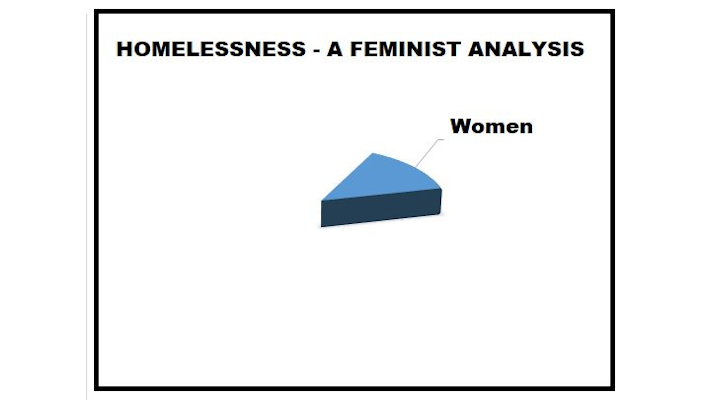
But the authors earlier asserted that homelessness was highly correlated with financial literacy, and yet there are far more homeless men than women. Would someone please explain?

I’m perfectly willing to accept that financial literacy is a significant factor, for both men and women, in achieving financial security later in life. And yes, this should be a major focus in terms of designing appropriate remedial action.

What I am not willing to accept however is:

  • Designing and providing educational programs for financial literacy that are not available to both men/boys and women/girls
  • Extending financial support or other incentives to women, but not men (as in the case, for example, of the ANZ staff Super payment mentioned in this blog post).

And more publicly-funded ‘research’ like this!

See also:

Sex of employees at the Australian Research Council (12 August 2025)

‘Wasn’t cutting it’: 21yo’s mortgage hell after using inheritance to buy first apartment (5 December 2024) Financial idiocy from an empowered womyn and news.com.au

Women and wealth, by Bettina Arndt (19 August 2024)

Australian superannuation company (HESTA) plays straight from the feminist song-book (August 2024)

Labor MP mistaken on homelessness figures (10 May 2023)

The shameful secret behind this photo of a mum and her three kids (3 May 2022) and ‘Horrible’: Why we need to change this appalling reality (2 May 2022) Note that language

Calls for government to pay superannuation for women on parental leave | news.com.au (17 September 2021)

Inconvenient truths about impoverished women and privileged men, by Bettina Arndt (11 April 2021)

Women’s superannuation not so super: The $120,000 gender gap (27 October 2017)

Aussie retirement gender gap much larger than US, UK (17 October 2017)

Brisbane small business to pay female employees more superannuation than male co-workers (28 September 2017)

Superannuation is sexist (6 September 2017) Video

Claims super is ‘biased’ against women are nonsense (30 July 2017)

Image

Discrimination against males in the context of humanitarian agencies/causes

Some time ago I came across an item in ‘Inside Man‘, a rather good UK publication that focused on men’s issues. In its September 2014 edition it featured an article entitled Nine out of ten people pictured in charity posters are women. (Sadly the web site no longer exists, although the article is still available via web.archive.org).

The article informed us that charities are loathe to use pictures of men in their posters and advertising campaigns because of an empathy gap that exists in the community. Pictures of poor men just don’t elicit anywhere near the same amount of sympathy as do pictures of poor women.

“So what does this tell us about public attitudes towards men, women, boys and girls? Big charities aren’t stupid. They know what sells. The top 1,000 charities in the UK raise £11.5 billion every year in voluntary donations. Charity is big, BIG business and big business knows that all of us, men and women, are collectively more tolerant of the harm that happens to men and boys. If you want to raise money, you’ve more chance of doing it if you tell people women and girls are suffering.

And what message does this send to men and boys? That we are less valued by society, that we are not cared for as much as women, that we are not as vulnerable, that we don’t need the help of others, that we are tough and strong and should “man up” and get on with our lives and not expect help when we face problems in life. Is it any wonder that men are less likely to access help and support when they need it, when the constant message that we give to men and boys collectively is that we don’t need and don’t deserve help and support from others?”

I included a link to this article in tweets I sent to organisations such as ‘Plan International’, in response to various gender-biased campaigns they promoted online.

One example was a campaign that focused on providing clean drinking water for women and girls (google on ‘clean water for women’ for many examples of similar campaigns). Clean water for poor men and boys? Not so important it would seem, though I doubt that’s because they are sitting in deck chairs quaffing Moet.

There have been other campaigns related to the effects of global warming, for example. Apparently problems such as global warming have a greater affect women/girls, with men/boys protected by way of some kind of force-field.

Oh, and if we needed a reminder as to how little a male life is considered to be worth, who could forget #BringBackOurGirls?

And then today I came across a reddit mensrights discussion thread on this same theme. It’s entitled:

Did many men lose their lives due to discriminatory policies? (26 May 2016)

“Most international charities discriminate against men at least since 1995. In 2010 Haiti Earthquake men were denied food. Do you think such policies are responsible for many excess men’s deaths?”

It’s worth taking a moment to look at the readers comments (30 of them as at the time I uploaded this post).

The Australian Government not only provides far more more funding for women/girls with regards to its domestic programs, but now its foreign aid programs are increasingly gender-targeted. This January 2017 article, for example, discusses the Australian Government contribution towards UN Women. In November 2016 Prime Minister Turnbull advised that the resettlement scheme for those in detention centres would prioritise women, children and families. Because #genderequality

See also:

Food? For thee but not for me (27 October 2023)

Policy brief: Gender-responsive approaches to foreign policy and the 2030 Agenda: Feminist foreign policies (2023) More nonsense from UN Women

A new International Gender Equality Strategy (August 2023) Women and girls mentioned everywhere. Men and boys – huh? See my submission here

Australia’s Department of Foreign Affairs and Trade paper on the global theme of gender equality (undated). The word ‘man’ features once in this paper whereas ‘woman’ features 58 times.

The DFAT website includes an entry entitled ‘Australia’s international support for gender equality‘ which removes any doubt that women’s rights are up here and men’s rights are … missing in action.

Are we implicitly biased against men? New study finds a “positive” bias towards women (8 April 2023)

Canada’s Feminist International Assistance Policy is key to addressing our biggest global challenges (27 March 2023)

Pro-female and anti-male biases are more influential than race and other factors in Implicit Association Tests (27 March 2023)

The Power of Many, by Bettina Arndt (28 December 2022)

This tweet issued by the United Nations revisits the topic of giving preference to females with regards to the provision of emergency food aid (23 November 2022)

“In countries facing conflicts and crises, women & girls often eat least and last. Their specific needs must be prioritized in humanitarian response efforts.”

Where women are absent, peace does not prevail” (28 October 2022) with full statement here wherein the Australian Government proudly informs the world that “Today’s topic is not one for debate. The evidence is clear that pathways to peace are paved with women’s resilience and leadership”. Cringe. Be a good boy and drink your glass of feminist Kool-aid.

Truss says she is “proud that we have rebalanced our international development budget” and focused it more on humanitarian aid, and women and girls. (19 October 2022) UK Source

Australian representative promoting a workshop on Harnessing Social Protection to Address Violence Against Women and Girls (4 October 2022) Men & boys suffer more violence but are left to fend for themselves. This despite the fact that feminists now admit that violence against women is poverty-related rather than being primarily due to men’s lack of respect for women (aka Gender Based Violence).

Istanbul Convention ratified by the UK (24 July 2022)

Bias against men in health research: one researcher’s journey from exercise science to men’s health (11 July 2022)

Why do the World Health Organisation’s gender equity gatekeepers struggle to acknowledge that masculinity can be good for health? (30 June 2022)

Our new four-year Strategic Partnership Framework with Australia and the commitment of AU$31.2 million to core resources are vital to UN Women’s ability to support gender equality and women’s empowerment” (19 June 2022) Source: A tweet from UN Women

We Rise Together program to boost gender-responsive procurement in Thailand and Viet Nam (28 March 2022) See also the related UN Women media release

Stronger partnerships with women in Southeast Asia (1 April 2022) ‘Women Together’ is $300 million program to “focus on building women’s economic empowerment, increasing women’s leadership in regional peace and stability and realise women’s and girl’s rights with a focus on violence prevention” 

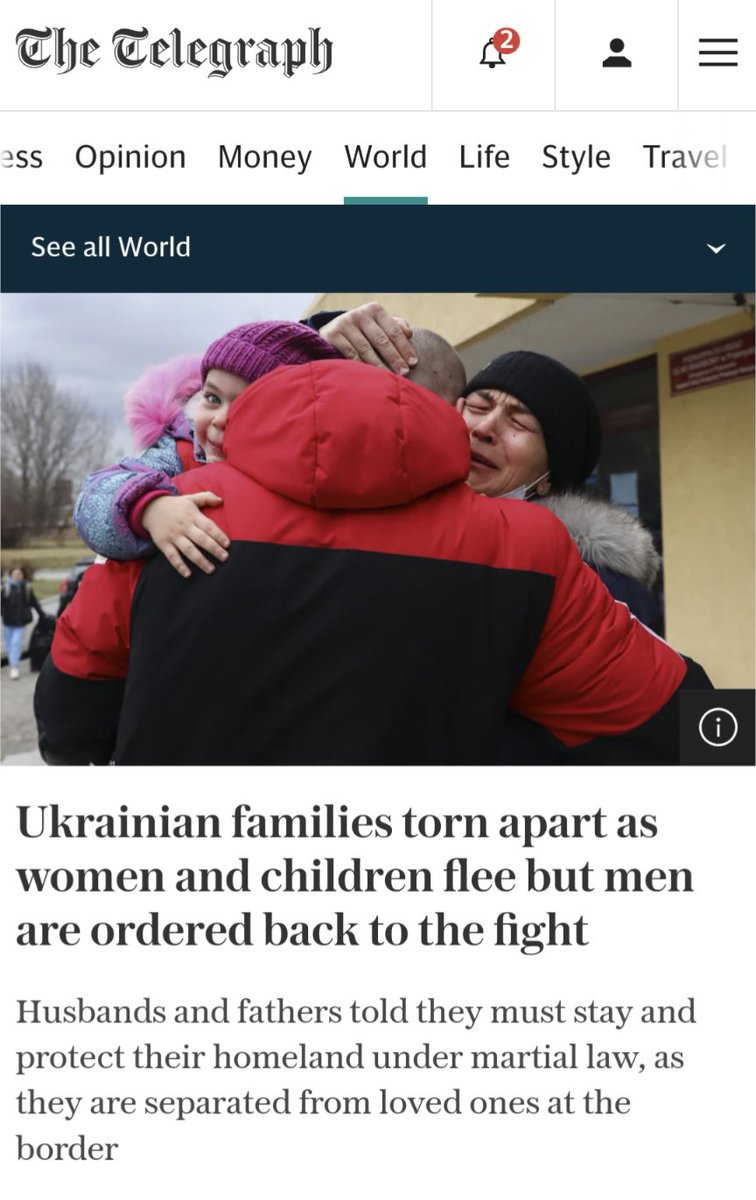
Russian soldiers are committing a genocide against boys & men in Ukraine. This has been picked up by the media, but they are avoiding saying the gender. They’re just “civilians” or “bodies”. Twitter thread (4 April 2022)

Are all missing persons female? (17 March 2022) USA. To assign funding to a project you first need to acknowledge a problem exists.

WEBINAR: The case for feminist foreign policy in Asia (9 March 2022) To what extent is the injection of gender ideology into Australia’s foreign affairs appropriate? And to what extent are (predominantly male) taxpayers subsidising it? (It’s organised by these folks)

Image

The silence about this (re: military draft) gender inequality is greatest from countries that profess to have a feminist foreign policy (Source) Certainly nothing has been said by any Australian politician or government agency.

Australia urged to put women and girls at centre of foreign policy (17 April 2017)

Ambassador of Australia for Women and Girls (31 January 2022)

“The Ambassador for Women and Girls raises the importance of addressing sexual and gender-based violence, increasing economic opportunities for women, promoting women’s leadership, the critical importance of promoting positive social norms and the rights of girls.”

A selection of foreign aid organisations that fail to address the welfare needs of men

Grevio Third Report, June 2022 (24 July 2022) A paper from EmpathyGap.uk

UK drafting plan to detain male migrants found at sea (22 January 2022)

Image

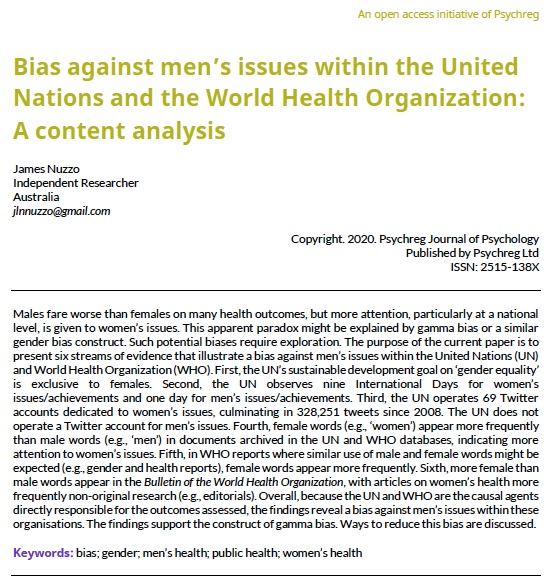
Bias against men’s issues within the United Nations and the World Health Organization: A content analysis, by Dr James Nuzzo (2020)

UN Women – The equality of discrimination (2 September 2020) Video

Male victims entirely erased from any statistics (30 July 2020)

No money for boys and men: The truth about giving (2 May 2020)

“Put women and girls at the centre of efforts to recover from COVID-19” – Statement by the UN Secretary-General Antonio Guterres (9 April 2020)

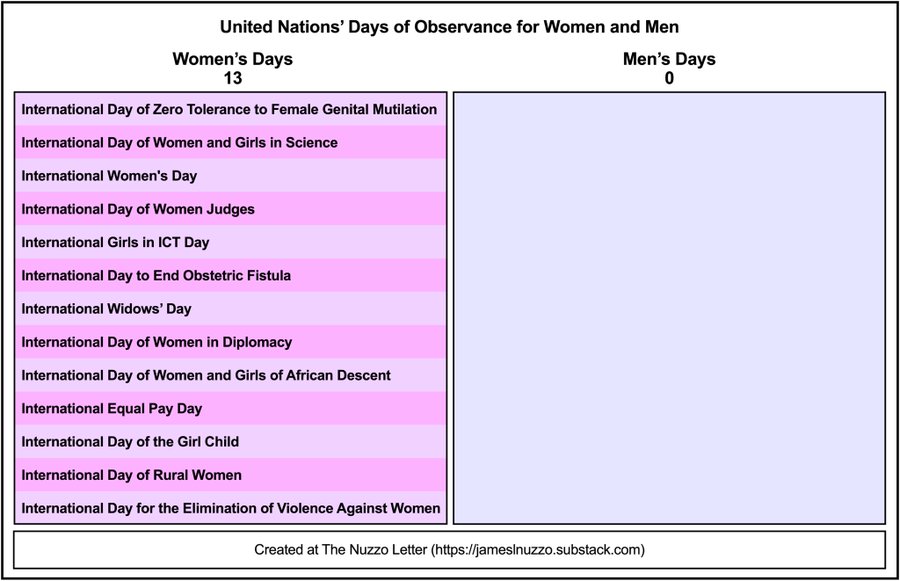
List of human rights issues as identified/pursued by the United Nations … men are apparently missing in action. The UN doesn’t even bother to list International men’s Day (19 November) in its online calendar of events. Here’s a list of the female days celebrated by the UN (Tweet dated 5 April 2019).

globalgoalsSee globalgoals.org and their twitter stream (@TheGlobalGoals) for many examples of sexist statements and programs

See GirlRising and their twitter stream (@GirlRising) for more of the same

See ActionAid and their twitter stream (@ActionAid) for more of the same. Note the section called ‘The Facts’ contained debunked factoids – except Point 3 (violence) which if true is also true for men, who face far more violence overall)

Upon first arriving at the web site of Project Futures the organisation appears gender-neutral. Sadly the more you read the clearer their blindness to trafficked or enslaved men becomes, despite the size of that problem in the Asian region. They also appear to be supportive of disgraced activist Somaly Mam (refer wiki entry).

Further sources illustrating and/or discussing pro-female gender bias in foreign aid programs:

It is time we remember Afghan men are also victims of this war | Asia | Al Jazeera (10 September 2021)

Women and girls are to get sanctuary in UK: Afghan females will be given priority to come here | Daily Mail Online (17 August 2021) Because “women & girls rights are feared to be in severe peril” … unlike men (killed) and boys (raped). Yes, google on ‘bacha bazi‘, dear.

Johnson accused of hypocrisy over G7 girls’ education pledge | G7 | The Guardian (12 June 2021)

Boys are more likely to be undernourished than girls: A systematic review and meta-analysis of sex differences in undernutrition (20 September 2020)

UN Women takes initiative to ensure that women and families hit hardest by the COVID-19 crisis are not left behind in North Macedonia (8 May 2020)

Fury over 4.2billion pound feminist foreign aid as spending watchdog warns overseas projects that receive financial gifts are not being properly assessed (29 April 2020)

LA on lockdown – what that means for men (19 March 2020)

A simplified approach to measuring national gender inequality (January 2019) “In 91 (68%) of the 131 countries, men were on average more disadvantaged than women”

World Vision article prepared by news.com.au entitled ‘Why gender equality is about basic rights‘ only to then launch into a discussion of why (only) girls need help, and ignoring the fact that poor boys face the same challenges as poor girls, e.g. forced to work young, forced to marry young, genital mutilation, etc.

The article concludes with “All children can be vulnerable, and girls face particularly harsh realities because of their gender. That’s why World Vision has started a movement to sponsor 1000 girls by International Day of the Girl. You can join us now and help a girl in poverty live free of fear. Sponsor a girl today.” (September 2019)

Gender Empathy Gap Day (23 June 2018)

African Opposition to UNICEF’s Mass Infant Circumcision Campaign: UNICEF responds. So do Africans (1 August 2017) And when the UN does decide to ‘help’ men/boys, is this is the best they can manage?

Canada commits $97-million to Congo under feminist foreign-aid policy (6 July 2017)

How to spend foreign aid like a feminist (4 July 2017)

Ottawa unveils new feminist foreign-aid policy (9 June 2017) Canada

“The federal government has unveiled what it is calling “Canada’s first feminist international-assistance policy,” with plans to eventually ensure that at least 95 per cent of the country’s foreign aid helps improve the lives of women and girls”

Karen Straughan in The Red Pill on Boko Haram (17 May 2017) Video

Secret aid worker: Men have as many issues as women, we just don’t know what they are (14 February 2017)

“Despite cries that gender is as much about men as it is about women, most project proposals or documents referring to gender will mention women, but little about men. If they do talk about men, they do so in terms of their relations with and respect for women.”

The U.N.’s Shocking Gender/Feminist Bias: Masterpost with Links (17 September 2016)

Dear #GamerGate, UN feminism is more dangerous than you know (27 September 2015)

Gender Equality in Humanitarian Assistance (March 2015) Sweden

“A gender equality perspective in humanitarian assistance takes into account that:

•  Crises affect women, girls, boys and men differently;
•  Existing power inequalities  between women and men exacerbates during crisis;
•  Women, girls, men and boys have different needs and different coping mechanisms;
•  Women, girls, men and boys have different opportunities to benefit from support; and
•  Women and girls are an important resource in designing and delivering humanitarian assistance.”

Sounds almost fair. But in terms of outputs this model is imbued with gynocentric bias, which manifests itself via a plethora of programs aimed at women/girls. There are few/no programs directed at men/boys, this being rationalised through the belief that they can cope better/are less affected/that supporting them may worsen the problem, etc.

Thai Team Receives World Bank Award for Innovations to Prevent Gender-Based Violence, with more details in a blog post entitled Ending the invisible violence against Thai female sex workers (June 2016) I submitted a comment to the blog post  which was not uploaded … par for the course when feminist author meets dissenting view.

“Women must believe that their safety and rights are worth defending – even when the odds feel stacked against them for involvement in sex work. Clients and police need these messages too. We must create an environment that tells women they do not deserve to be abused, that someone cares about their safety and well-being.   
 
We are invigorated, inspired, and challenged to transform a world that perpetrates violence and blames victims to one in which freedom, safety, health and human rights prevail for all.”

Presumably written by the author without a hint of irony. Female victims matter, male ones don’t. No mention in the write-up of this project about the violence experienced by male and transgender sex-workers … why?  Could the answer be ‘Gynocentrism manifested by way of feminist bias’?

Zika and Ebola had a much worse effect on women: we need more research to address this in future (20 October 2016)

Read down to see “By the end of 2015, the three West African countries most affected by Ebola – Guinea, Liberia and Sierra Leone – had a total of 8,703 cases of the virus in women compared to 8,333 in men. But the sex tally of those infected does not reveal the social impact of the disease on local populations.”

Take five with Joy Chebet Bii: Why does digital literacy matter for women and girls? (4 October 2016) Girls get taught to code, boys can watch on

Defining, Demonstrating, & Understanding Male Disposability (30 September 2016)

Iconic Australian charity changes its name to ‘Ourtown’ in 2016 after 55 years as ‘Boystown’, as explained by them and as announced in a media article

Unheard Voices: Men and Youth in Thailand’s Conflict-Affected Deep South (21 September 2016) An oh-so-rare example of consideration being given to the welfare of men/boys in a humanitarian program

Meteor hits earth: Women most affected (19 September 2016) Video

How Clean Cookstoves Create Gender Equality (15 September 2016) Apparent over-reach to promote this as a gender issue given lack of evidence in either this article nor the linked source article.

Commonwealth Ministers pledge four-point plan to empower women (9 September 2016)

Take a look at how fear of sounding politically incorrect forces the U.N into hypocrisy and inaction, ignoring the male education crisis in East Asia (23 June 2016) Reddit discussion thread

Teaching slum girls and female refugees to believe in themselves (17 June 2016) with related Reddit discussion thread here

5 Ways to End Poverty by Focusing on Women and Girls (14 June 2016)

Canada to turn away single men as part of Syrian refugee resettlement plan (24 November 2015) So Muslims OK, but men not OK, right?

The UN is responsible for hundreds of thousands of men starving to death through negligence (2015)

Inside Story – The silent victims of rape (28 July 2011)

The rape of men: the darkest secret of war (17 July 2011)

“… The research by Lara Stemple at the University of California doesn’t only show that male sexual violence is a component of wars all over the world, it also suggests that international aid organisations are failing male victims. Her study cites a review of 4,076 NGOs that have addressed wartime sexual violence. Only 3% of them mentioned the experience of men in their literature. “Typically,” Stemple says, “as a passing reference.””

Haitian Men starve while “Women Only” get food (1 February 2010) and UN sets up women-only food aid in Haiti (31 January 2010)

Recognizing Gender-Based Violence Against Civilian Men and Boys in Conflict Situations (2006)

Image

Image

See also my blog posts entitled ‘Human trafficking of men and boys + other hidden sexual violence against males‘ and ‘Gamma Bias on steroids: A submission concerning the development of an International Gender Equality Strategy

Is it my imagination or does media coverage of mens health focus too much on shaming men?

Readers might be aware that there are a number of areas when men compare poorly with women in terms of disease prevalence and outcomes, rates of suicide, and overall life expectancy. I talk about some of these factors in my earlier post on men’s health.

Many factors contribute to this situation including aspects of male physiology, a propensity towards greater risk-taking in leisure pursuits, and working longer hours – sometimes in more dangerous occupations. Other individual factors include things like attention to diet and exercise, and receptiveness to seeking/receiving medical treatment.

Let’s try to split all the factors contributing to men’s poorer health outcomes into two groups, comprising those things that individual men can exercise significant control over versus those things that they can’t.

At the outset we must recognise that there is clearly a huge range of individual variation within male and female populations in relation to these factors with further variables like degree of education, income level, and age for example. Thus there are limits as to the extent that we can make meaningful generalisations about “all men” or “all women”. Further, in the case of some factors over which one might think people do have control, the extent to which an individual actually can exercise personal choice, is very limited in some cases. An example of this would be a poorly educated man choosing to engage in a risky occupation to support his family.

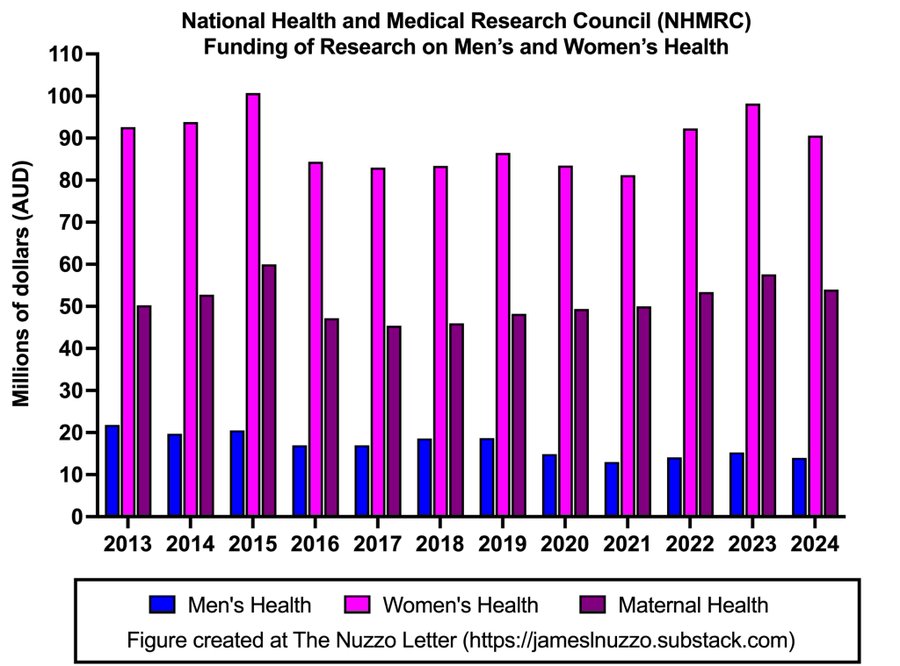
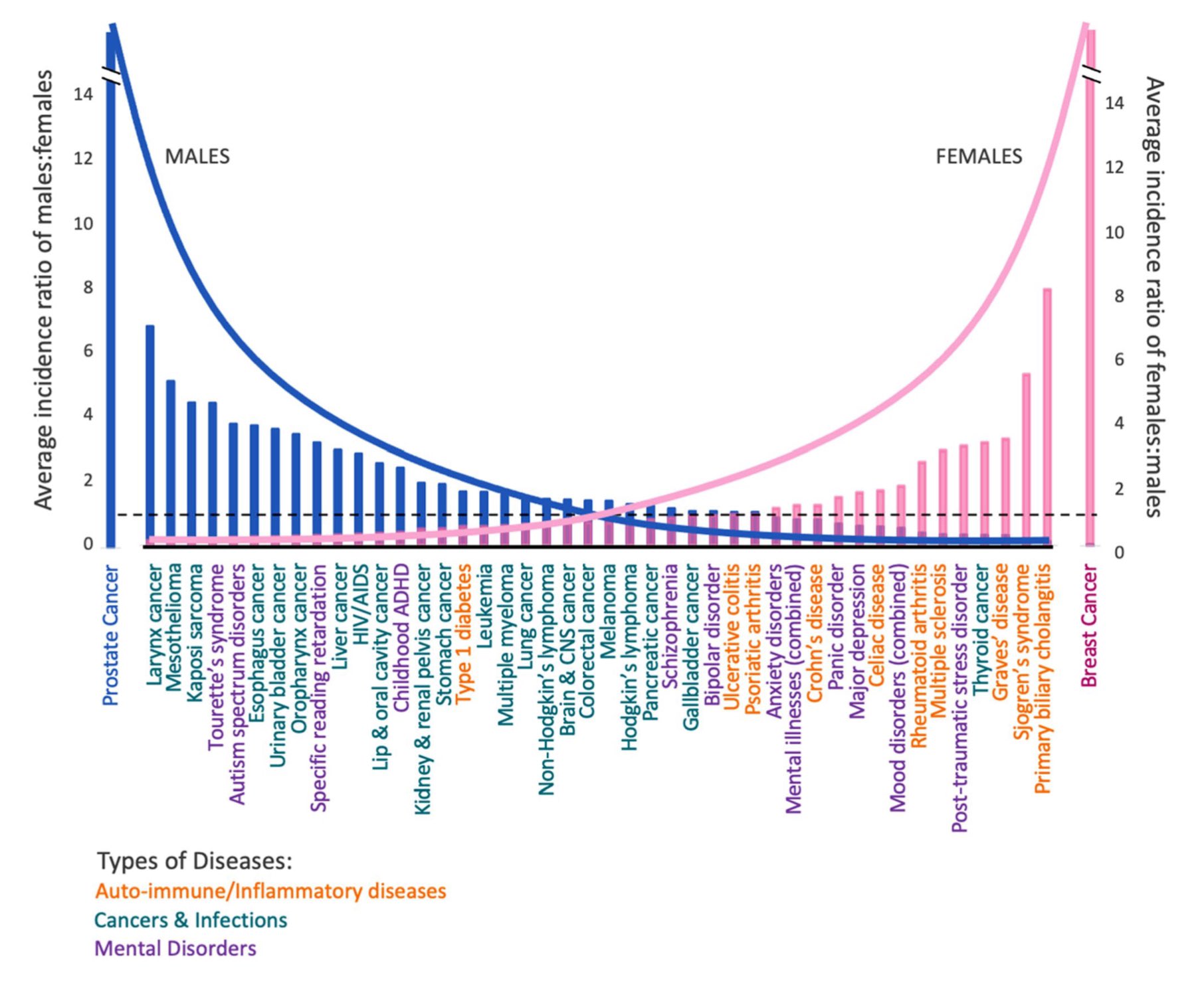
So what of the factors that most individuals don’t have any control over? Well one that springs to mind are decisions made by governments, health agencies and drug companies (for example), that determine funding priorities/subsidies/etc for medical research and treatment. To give an example, the fact that the death rate from prostate cancer is higher than for breast cancer might be more indicative of the disproportionately greater funding for breast cancer research and treatment than the extent to which men “take their health seriously“.

And yet despite the above, all too often the focus of campaigns and articles about men’s health seems to be an implied or overt suggestion that men’s health problems are of their own making – that if men weren’t so silly/lazy then everything and everyone would be better off.

For now I’ll just mention a few examples, with more perhaps to be added later.

I came across this article about a men’s health campaign fronted by well-known actor Samuel L Jackson. Jackson was visiting the UK to promote a new male cancer campaign called ‘One For The Boys’ that hopes to “change male mentality”. Apparently men in the UK are 60% more likely to get the cancers that affect all sexes and 70% more likely to die from these cancers.

The campaign is based on the premise that the higher incidence of cancer in men is caused by men neglecting their health. “If only men would only stop being so dumb and talk about our health then we’d stop dying from cancer in greater numbers.”

The author of the article disputes both the validity and appropriateness of this message, claiming that a major reason for the different rates of cancer between men and women is greater expenditure of research and treatment in relation to women’s health.

The author would prefer a more positive message for men, and suggests something more along the following lines:

“Listen brother, every man’s and woman’s life is precious so why are we putting less time, energy and money into fighting cancer in men? It doesn’t make sense to me. Is it any wonder that more men than women are dying of cancer every single day? Are you okay with that? I’m not. So here’s what we’re going to do. Us men, all of us, we’re going to get together and make sure we start putting more time, energy and money into fighting male cancer, cos that’s the only way we’re going to beat this goddam, mother***ing disease. So who’s with me? Are you with me brother? Are you with me?”

The author closes with: “Now that’s the kind of good man narrative that I’d be happy to be part of, and it could apply to any of the issues that men and boys face.”

Fast forward to February 2015 and Ice-T has established the Male Awareness Foundation (MAF), which appears to be in a similar vein. MAF is described as a non-profit organization whose mission is to reach men and boys where they live, work, play, and pray with sickness prevention messages and tools, screening programs, educational material, advocacy opportunities, and patient referrals.

Now the following media story may appear relatively benign, and the research was no doubt well-meaning, but male-shaming remains nonetheless quite apparent. On 6 October 2014 an item appeared on the television news entitled ‘Men at risk of mental health problems‘.

I subsequently wrote to the Australian HQ of the ‘Movember’ organisation to query whether the ‘problem is that men don’t take their health seriously’ angle for the story originated with them or whether the media created this angle of their own volition. I received the following reply the next morning:

“Thanks for your email this morning in response to the news coverage overnight.
With regard to the claim that some men don’t take their health seriously, this was a finding from a study we conducted last month into the attitudes Australian men have towards their health and well-being.  It revealed that 1 in 3 Aussie men don’t take their health seriously, in response to a specific question that asks whether they agree or not with the statement ‘I take my health seriously’.  We surveyed a representative sample of over 1,500 men from around the country, aged 18+.
The media reported it as 1/3 , so they (not Movember) are saying it’s all men.  In fact, it’s good to know that 2/3 do take health seriously, but there’s still some work to be done to raise awareness amongst the remaining 1/3 who don’t.
The purpose of the report is to shine a light on some of the challenges facing men and their health, with a view to raising awareness and sparking conversations about these issues, something the Movember aims to do through our annual Mo growing campaign.  It certainly wasn’t intended to denigrate men or portray them negatively.  We’re all about supporting men, raising awareness about their health and funding programs that help tackle prostate cancer, testicular cancer and men’s mental health.
I hope that answers your query, Chris.  Please do get back in touch if you have any further questions or concerns.” (Meagan Bell, Movember, 7 October, 2014)
I wrote back as follows:
“Thanks for your prompt response. Yes, I don’t disagree with the fact that some men need to take their health more seriously, and they should be encouraged and supported in doing so. My concern is that there are many factors contributing to men health problems, and that how seriously they take their health is but one of these. It is unfortunate though that this aspect – which brings with it an element of male-shaming – seems to more often than not be the focus of media articles and health campaigns. I would like to see more effort made to put this variable into a broader perspective of men’s health and for men to be encouraged – in a positive way – to do what they can to maintain good health.
Recognition must also be given to the fact that some contributing factors, like government support for medical research and treatment for men’s health issues versus the level of support given to women’s health issues – are not directly under men’s control.”
Another common assertion about men and their health – particularly mental health – is that men need to talk about things more. Especially their feelings.
A couple of issues crop up here:
When men do speak up they are often shamed or called things in the media/social media. Things like ‘whiny man-child’
Research and anecdotal evidence suggests that many men are not helped by talking about things, this approach only adding to their anxiety. Most likely this is a point of difference between most men and most women.
On this last point I asked for relevant references on Reddit mensrights and several relevant sources were nominated including this excellent discussion thread with more than 200 readers comments.
See also:

Movember rips off men’s health dollars, by Bettina Arndt (3 August 2025)

Dr Zac Turner on whether men should get a vasectomy (10 April 2022) “I believe his connection to ‘neutering’ with getting a vasectomy is grounded in toxic masculinity”. Mind you, if a woman was concerned about contraception and/or medical procedures then that *wouldn’t be* Toxic Femininity, clear? Thanks #newscomauHQ
Men Are Experiencing Historic Levels Of Loneliness – YouTube (6 August 2021) While shame is heaped onto men, the negative contribution of women (in relation to male illness or suicide) is conveniently removed from the picture
Poll: Men less likely to follow health guidelines amid Coronavirus outbreak (27 March 2020) But then reading items listed in this post, would suggest that many women are hardly being angels in this regard.
Alcohol deaths have risen sharply, particularly amongst women (10 January 2020) But nobody would dare shame women about this, now would they?
How’s your walnut, mate? Why men don’t like to talk about their enlarged prostate (4 May 2016) The second shaming article in ‘The Conversation‘ this week. The theme of this one is that men are ignorant. Author avoids mention of contentious issues like number of related male deaths and paucity of research funding relative to (for e.g.) breast cancer.
Men more reluctant to go to the doctor – and it’s putting them at risk (2 May 2016) Apparently masculinity is the problem (isn’t it always?)

Dealing with mens issues – The current situation in Australia

Australian men’s issues have both a physical and online footprint that is vastly smaller than is the case for women’s issues. There are a number of reasons for this, but the primary one is the enormous disparity in government support in relation to the two. Pro-feminist media bias in combination with feminist tactics of shaming and censorship has also proved quite effective in stifling male activism and lobbying up to this point in time.

Look at the example of Fiona Girkin, a lecturer at the University of Tasmania who was teaching police the truth about domestic violence. Well at least until she was interviewed by Bettina Arndt. As a result of complaints subsequently lodged by local feminists, Fiona is no longer working at the university.

Of those Australian organisations and sites dealing with mens issues that do have some public profile, almost all have a health focus. Most of these organisations/sites appear to be rather introspective and self-effacing in nature, i.e. essentially to keep under the feminist radar and to avoid jeopardising whatever pitiable amount of funding or government support they might receive.

Those few mens programs that do attract funding, for example the men’s shed movement, only manage to do so as they are seen as somewhat twee and posing no threat to the furthering of feminist objectives.

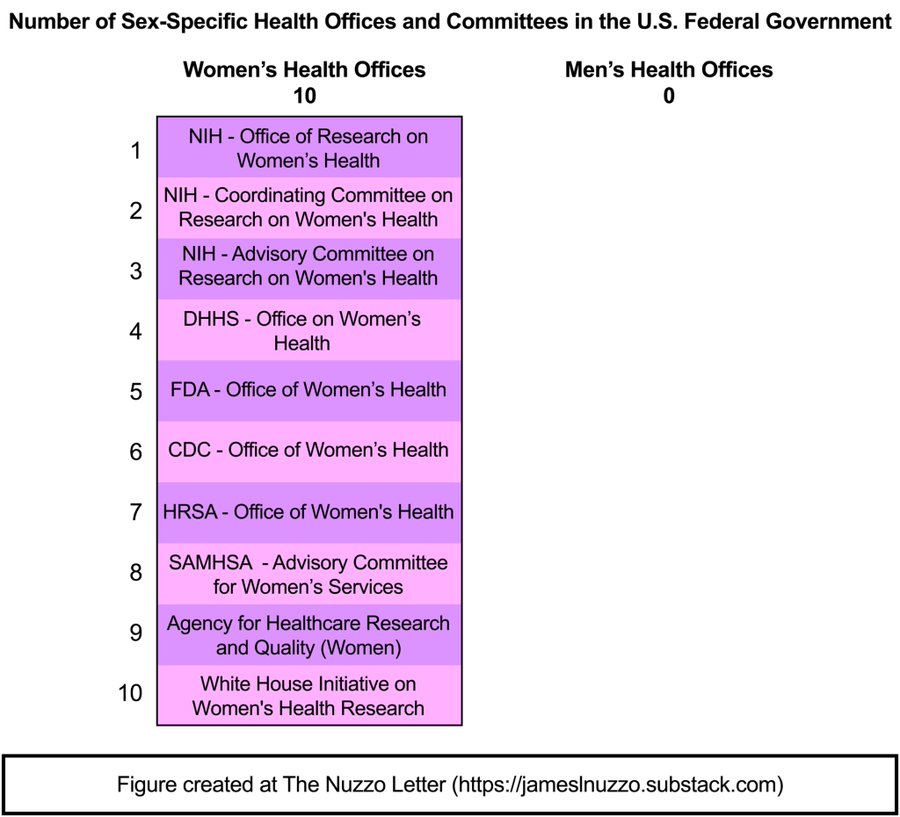
Government agencies: I am not aware of any federal or state government agency that deals specifically with men’s and boys issues, nor even a dedicated section within a government agency. This is a huge point of difference in comparison with the situation with women’s and girls issues.

Of those government agencies that do address issues that are very much relevant to men, the most prominent are those dealing with mental & physical health and with domestic violence. With regards to the latter at least, the primary emphasis is on ‘treating’ male perpetrators of acts of violence and abuse. Whilst some claim to offer services to male victims, such services are very hard to find & utilise.

The way that domestic violence web sites are worded gives the impression of a distinct pro-female and anti-male bias (example). Given that men are already less likely to reports acts of abuse against them, one could suggest with confidence that the character of domestic violence web sites acts as a significant disincentive to come forward. In terms of individuals who admit to working in the Australian federal or state public service, and who adopt anything other than the feminist position of the moment … well I can’t think of even one.

I deal with the issue of government agencies and ‘not-for-profit’ organisations that ignore or downplay men’s welfare in this other blog post.

Men’s studies: As you can see in this thread, an attempt was recently made to establish a men’s studies course in Australia. This met with a furious feminist backlash and was shelved. One of those who spoke against the initiative was Michael Flood, a staunch feminist who misrepresents himself as a spokesperson for the Australian men’s rights movement. 

Men’s health: Men’s health advocates comprise a mix of individual counselors, universities, and non-government organisations. Their stance towards men’s rights varies between one of neutrality to a ‘deer in the headlights’ stance brought about through their concern that any perceived association with MRA could threaten their political acceptability and hence access to government funding. The latter position is demonstrated by the charity discussed in this other blog post. There are, however some virulently anti-MRA outliers such as Michael Salter, Michael Flood, and more recently some character by the name of Joshua Roose (an example of his unfortunate mindset).

The level of government funding for Australian mens health issues/organisations (as with men’s issues/organisations generally) is miniscule in comparison to that allocated to women (see one useful source in this regard).  See also this post about funding for The Men’s Health Information and Resource Centre having been slashed.

Here is a web site for Men’s Health Week (12-18 June 2023)

Some of the better-known men’s health organisations include:

Men’s Health Australia
Australian Men’s Health Forum (see also their ‘links‘ page)
Australian Institute of Male Health and Studies
Centre for Advancement of Men’s Health
Men4Life support group
Men’s Health Clearinghouse
The Shed Online (an initiative of Beyond Blue)
Dr Elizabeth Celi
Inspire change counselling

‘Relating to Men’ was a great site that was sadly removed after sustained online harassment of the author, Jasmin Newman

Fathers issues (incl. divorce, custody, etc):

Dads4Kids
Lone Fathers Association
Australian Brotherhood of Fathers (See related article here)
Dads in Distress support services
Fathers for Equality
‘Dads on the Air’ radio program
Non-Custodial Parents Party (Equal Parenting)

Men’s rights activism:
The most popular online forum for sharing news and information is Reddit Mensrights
Men’s Rights Agency
Men’s Rights Sydney and Men’s Rights Melbourne (with a further group formed in Brisbane in early 2015)
Australian Men’s Rights Association

Some other recognised Australian spokespersons on men’s/boys issues include:

I believe Bettina Arndt to now be the best Australian writer on gender issues re: her consistent and substantial output of informative papers. Here’s one particular paper from Bettina (November 2023), here is her end of 2024 update, and here is a paper + video dealing with the 2025 federal election

James L. Nuzzo has also recently produced a swathe of detailed papers on various men’s issues. 

Greg Andresen also writes good quality material, incl. government submissions and fact sheets. Greg is the Senior Researcher for the ‘One in Three’ organisation which advocates for male victims of domestic violence. He is also the Australian liaison for the US-based organisation ‘National Coalition for Men‘, as well as being an active advocate for men’s health.

Dr. Greg Canning is the Australian liaison for the US-based organisation ‘A Voice for Men‘, and has previously written many articles and submissions on men’s issues. ‘A Voice for Men’ also now has its own Australian committee.

There are quite a number of others posting good quality material on social media outlets like Twitter, but their output (like my own) is sporadic, in part because they are volunteering their own time. There also seems to be a pattern of many pro-MRA writers disappearing after a few years, due to frustration and becoming the targets of doxxing and/or other forms of harassment

Australian politics and gender issues:

In Australia, as with the USA, there currently exists a distinct and growing trend towards women being more likely to vote for left-leaning individuals/parties (Source).

An argument put forward by feminists is that men can’t possibly be discriminated against because most politicians are male. This point was addressed in a comment I came across online:

“Men in power do not act in the interest of other men. They are widely influenced by women and their lobbying efforts, and are more likely to act in the interests of them.” (Source: http://time.com/2949435/what-i-learned-as-a-woman-at-a-mens-rights-conference/)

This is certainly the case here in Australia, where most of our politicians, from former Prime Minister Malcolm Turnbull on down … are too busy cowering in fear at the thought of being labelled misogynists to contemplate representing the interests of 50% of their constituents. You can see some of Malcolm Turnbull’s unfortunate early comments on gender matters here, here and here

I can’t help wondering what could be achieved if only we had an Australian politician with the tenacity and courage of Philip Davies in the UK (see this example of his efforts). Philip’s pioneering efforts with gender equality are also discussed in this article.

Meanwhile other MP’s like Tim Watts (Australian Labor Party) are pathetically eager to champion feminist causes and/or push men under the bus (see related reddit discussion here).

There are just a few exceptions to the rule:

Pauline Hanson is virtually the only woman in federal parliament with anything positive to say in relation to men and boys (2023 video).

Sarah Game made history in 2022 by becoming the first One Nation member of the Parliament of South Australia, and the first female One Nation parliamentarian elected anywhere other than Pauline Hanson herself (Source). Sarah Game has appeared online on numerous occasions demonstrating initiatives in support of men & boys.

Watch out for Senator Alex Antic.

George Christensen, former Federal Member for Dawson: Of the hundreds of state and federal politicians paid for by us taxpayers, George was the only one with the guts to come out and openly support ANY fathers/men’s/boys issue. George previously chaired a Parliamentary Inquiry into the Child Support Program. Here is a speech by George concerning family law, and another paper regarding the issue of child support. And this is the treatment that George got for speaking up on these issues.

Senator John Madigan (Independent) and George Christensen launched the Parliamentary Friends of Shared Parenting on 16 June 2015 … “We need to end parental alienation because every child deserves a meaningful relationship with his or her mother and father.” Feel the hurt from this feminist journalist as she bemoans the fact that these politicians dared to corrupt public policy by (shudder) listening to men.

Another federal parliamentarian, Bob Katter has also previously expressed concern regarding anti-male bias within the family court system.

Labor’s Member for Greenway in Western Sydney, Michelle Rowland, has asked a parliamentary inquiry examining the child support system, to consider whether custodial parents should be accountable for how they spend child support money (Source)

Senator Cory Bernardi dared to suggest that it might sometimes be appropriate to use a headlock on a violent woman during an incident of domestic violence, and was publicly accused of encouraging violence against women. In June 2016 Cory was also criticized for tweeting a link to an article by Roosh V concerning social justice warriors.

Victorian MP Graham Watt is another one to watch after attracting media attention for refusing to give misandrist DV lobbyist Rosie Batty a standing ovation. See this article also (including readers comments)

Senator Mitch Fifield warrants an honourable mention for his refusal to accept a sexist slur offered by Katy Gallagher.

David Leyonhjelm (formerly Liberal Democrats) has also made a name for himself in this regard in the federal sphere, before moving to the state (NSW) arena (see video), and then losing his seat.

Also in NSW, Senator Jewell Drury is, amongst other things, seeking reform with regards to the treatment of domestic violence.

‘Andrew Tate recruitment drives’: Senator Matt Canavan’s extraordinary gender pay gap spray (27 February 2024) Whilst Matt’s comments appear rather uninformed, this article shows what happens to anyone who steps out of (the pro-feminist) line.

In Queensland, Opposition Corrective Services spokesman Tim Mander accused Labor of exceeding its party’s gender quota system in relation to appointments to the Parole Board.

See also my posts in relation to the views of both the major parties and minor parties in relation to feminism and gender-related issues.

By and large the only Australia politicians with the courage to challenge the feminist orthodoxy are ex-politicians, as discussed in this other blog post.

One person to keep an eye on going forward is Augusto Zimmermann, who is Law Reform Commissioner at the Law Reform Commission of Western Australia. Dr Zimmermann was proposed as a replacement for Gillian Triggs at the Australian Human Rights Commission, but alas was not appointed. (Paper 1) (Paper 2) (Paper 3) (Paper 4)

The Australian media:

The MSM in Australia is a lost cause for the time being, with very few journalists willing to be seen to question feminist orthodoxy. Those that do, know full-well what they can expect. Some examples would include Andrew Bolt, Corrine Barraclough, Miranda Devine and Rita Panahi.

Where are things up to in Australia at the moment amongst the general population? Well I would liken the situation with most men to frogs being boiled in a pot. The temperature is going up slowly and steadily and guys just aren’t noticing how hot things are. The temperature in this case being the increasing anti-male bias in the media, in the law, in politics, etc.

One significant political event has been the re-election of Donald Trump as US President, one benefit of which has already been to generate discussion about real and alleged gender bias in the political process (example).

Further, and contrary to the notion of patriarchy, men’s own innate behaviour is such that they lend themselves to being taken advantage of. For example, the default setting for most men is to help and protect women rather than criticise them. Men are also very reluctant to been seen to portray themselves as victims, and would prefer to internalise problems and deal with them on their own (rather than for example join a men’s group).

Most men (and women) have little knowledge of the men’s rights movement, and consequently the views of many reflect the deeply biased picture painted in the mainstream media, i.e. MRA as being violent, as being ‘rednecks’, as being ultra-conservative, and as being ‘woman-haters’. By the same token, most men (and women) are equally ill-informed about the true nature of feminism and so accept the benign ‘dictionary definition’ of feminism as portrayed in the media.

Nevertheless, however, many men are reaching the inescapable conclusion that the pendulum has swayed far beyond the mid-way point with regards to the rights of women vis a vis the rights of men. They also recognise that there is also a widening gap between the respective rights and obligations of men and women.

Many men are increasingly unhappy and dissatisfied in their interaction with women. Many men have also either suffered considerable psychological and financial trauma as a result of divorce, or know friends who have been shattered in this manner. (And coincidentally or otherwise, women have also become increasingly unhappy.)

As a consequence whilst the majority of Aussie guys remain unwilling to take collective action, or to identify as an MRA, I am seeing many more men and women expressing their views in the online world in response to media articles that have an anti-male bias (example 1 / example 2 / example 3).

Another telling indicator is the huge number of visitors to MHRA sites like ‘A Voice for Men’ versus the relatively small number who are actually registered members. This suggests to me that there are a lot of people ‘sitting on the fence’ at the moment awaiting a tipping-point, whereupon we will see far greater and more organised expressions of assertive (yet assiduously non-violent) activism.

Further background material

The last few decades have seen men increasingly portrayed in a negative light, basically it’s now a choice between lazy, inept, evil, stupid, or creepy. Concerns raised about this trend are generally dismissed along the lines of “relax, it’s just a joke!”. Funny thing though, ‘jokes’ made about women elicit a very different reaction.

“Men have always made fun of themselves,” said New York Times best-selling author and social philosopher Michael Gurian. “The kind of things that are done with men in the media would never be done with women, and that’s just sort of a given. But men don’t mind. They live by joking and putting each other down and lifting each other up. But the negative is that they can only be OK if the rest of society has a basic understanding and respect for boys and men.” (Source)

I’m tired of Hollywood trying to sell me on the concept of “loveable idiots”, and I am disheartened by the ubiquitous content that tears men down. I love filling my life with laughter, however why are my current content choices trying to get me to laugh at a reduced version of men? Why is Hollywood trying to get me to focus on the broken-down, allegorical version of who they think my husband is? Obviously they don’t know my husband. (Source)

Now take a look at this article that appeared in that dreadful magazine ‘Cosmopolitan‘. It’s all about the ways that women are said to be better than men. Stomach-turning sexist tosh. Ah, but then treat yourself to this excellent rebuttal by Janet Bloomfield.

One wonders whether this ongoing negative portrayal of men reinforces hostility towards men, which may in turn influence the rate of partner violence towards men as addressed in this other blog post.

The various sources listed below discuss this issue in depth and/or provide specific examples of negative ways in which men are presented in the media and/or are subsequently perceived in the community-at-large:

‘The lad vote’: Surprise polling trend shows young Aussie men moving to the right (19 March 2025) This trend is by no means restricted to Australia 

Victorian Premier Jacinta Allan creates social media backlash by creating new new role of Parliamentary Secretary for Men’s Behaviour Change (29 May 2024) See too this video on this topic (1 June 2024) See too this video by Bettina Arndt (2 June 2024)

Aussie men have had enough – has a great push-back begun? (May 2024) Video 

‘Working for Women’ – A Strategy for Gender Equality (2024) How absurd – a gender equality strategy that barely mentions men & boys. Or to be more accurate, the word ‘men’ appears in the Strategy 84 times, ‘women’ features 491 times, ‘woman’ (5), boy (1), and ‘girl’ (29). Almost equal. Not

Of Marx and Men, by Damien Coory (14 January 2023)

Men’s Rights Agency presentation to the Parliamentary Forum
arranged by Ken Ticehurst MP held in Canberra on 12
November 2002

Misandry in Ads (a video from 2015)

Trashing men in the movies, by Bettina Arndt (28 September 2022)

Buy a real shaver – Jeremy’s razors (22 March 2022) Video satire

Ukraine’s disposable men (9 March 2022)

Why must every man on TV today be a monster? As a tidal wave of male-hating shows depicts women as victims (17 November 2021)

The dangerous pleasure of hating men (13 November 2021)

Of Bond, villains, and the average boy  (15 October 2021)

Should we be concerned about the messages that men and boys are exposed to? (2 September 2021)

Sarah Everard missing: Why a curfew for men isn’t a bad idea (12 March 2021) Can you imagine a similar story saying women should be subject to a curfew? Err .. no

Oh but this US game show is so funny. Now swap genders and listen to the laughs drying up (18 May 2020) Video, and here is a link to a Twitter discussion stream.

The team working for McDonalds fast-food chain (Mumbrella) seem destined to produce a Gillette-style campaign, but targeting boys (3 February 2020) “Just a bit a fun say the advertisers, while boys get demonised for slamming doors in girls’ faces” observes Bettina Arndt.

The marketing team at Lee Jeans thinks it’s ok to disparage men on the basis that only men spread over seats on public transport (July 2019) Tedious sexism. Video

A new German commercial takes man-hating to the next level (9 May 2019) Edeka takes up where Gillette left off

ABC’s The Drum – We’re all misogynists now (14 April 2019) Another great Scott Crowe video

The Victorian Government (Australia) has issued a video highlighting the horror of women receiving unwanted attention on public transport, and – surprise surprise – calling on men to step in and deal with other men (9 April 2019). ‘Independent Man’ responds to this rather well with his own video.

Ten things not to say to/about your husband (9 February 2010) Video. How rarely is this type of message encountered? Women have corresponding obligations to their spouse? What?

What is a man? A response to Gillette (January 2019) Video

Happy International Men’s Day, by Tom Golden (19 November 2018) Video

National Trust covers up male busts (6 November 2018) UK

White men are now the Democratic Party’s punching bag, by Saritha Prabhu (29 October 2018)

Rethinking Gender, Sexuality, and Violence, by Gideon Scopes (25 October 2017)

The mysterious invisibility of men’s good deeds, by Mark Dent (14 July 2018)

The beginning of the end, by Mark Dent (25 June 2018)

Men, you want to treat women better? Here’s a list to start with (17 October 2017) See the readers comments plus a related Reddit discussion thread here.

Sexual Assault Survivors Aren’t Just Daughters. They’re Actually Humans (12 October 2017) Stuff like this does my head in. Men shamed for speaking about the female experience (men can’t possibly understand!) Men shamed for not condemning sexual harassment (enough). Mainstream media runs many articles claiming that men only begin to understand women when they have a daughter (example1). Men feel unqualified to express a view so use justification of having daughter (etc) to qualify themselves as having a right to express a view. Men shamed for being seen to need to justify their views on the basis of having a daughter. Back to start and repeat.

Amanda Platell on the misandrous makers of TV drama (7 October 2017)

Does the NRL have a culture problem? (13 September 2017) Video

The Violent Sex (9 July 2017)

Complaint regarding BBC program that presented domestic violence against men as humorous (5 May 2017)

Between 1920 and 2005, men in USA increased their unpaid housework contribution x 3. Haven’t seen that acknowledged in any one of those countless articles about how men are such slackers around the house.

We Need More Balance In The Media’s Depiction Of Men (13 April 2017)

When did men (particularly dads) become so idiotic? (3 March 2017)

Why I won’t let any male babysit my children, by Kasey Edwards (23 February 2017) Australia. My subsequent blog post concerning both this article, and various follow-up articles, can be found here.

The myth of white male supremacy (14 February 2017)

Husbands Are Deadlier Than Terrorists (11 February 2017) USA. Wives are too, but saying that won’t get the author a tummy scratch from the feminist lobby. The thing is, even if the author had titled this piece ‘Spouses are deadlier that terrorists’, it would not have detracted from the main thrust of the article one iota … ie. completely superfluous sexism. (My readers comment is here)

‘Women kicking balls, I’d like to see that’ (22 January 2017) New ad campaign promoting women’s sport. How about ‘Men grabbing pussy, I’d like to see that’. Hmm, still not funny.

Son, let me tell you all about how dadsplaining works (13 January 2017) Whether this piece was a weak & inappropriate attempt at humour, or a serious bid for a tummy-scratch from feminists, it undermines the role of men/fathers at a time when we need to be doing the very opposite.

Cab firm is forced to pull ‘derogatory and sexist’ ad campaign featuring an overweight model with the slogan ‘If I start to look sexy book a taxi’ (4 January 2017) No complaints about sleazy man poster – you can portray men any way you like.

Advertising Standards Board rules Allpest commercial ‘vilifies’ husbands (29 December 2016)

An open letter to men, who can help female runners feel safe (6 December 2016)

Sell a sticker like this that says anything other than “men” – I dare you (undated)

Misandrist advertisements (1 December 2016) Reddit discussion thread

Stock photographers have all got the same idea of what it looks like when things go wrong in bed (17 November 2016) Reddit discussion thread and linked article.

Hating men is mainstream (23 September 2016)

Social Justice’s Punching Bags: Men, White People, Straight People (17 September 2016)

White men are being blamed for everything‘ by Mark Latham (30 August 2016) Australia

The all men (and only men) are potential serial killers meme: ‘What mass killers really have in common’, by Rebecca Traister (17 July 2016), and ‘One group is responsible for America’s culture of violence, and it isn’t cops, black Americans, Muslims or rednecks. It’s men‘, by Melissa Batchelor Warnke

Andrea Leadsom suggests men should not be nannies because they may be paedophiles (15 July 2016) UK. This gender bigot is a senior member of the newly-appointed British cabinet. A subsequent article regarding the reaction to Ms Leadsom’s odious comments.

Doting dad’s hilarious approach to housework (2 July 2016)

Can’t you take a joke, love? Why the ‘banter’ isn’t funny any more (20 June 2016) This article listed here as a further example of how feminist journalists are so wonderfully adept at describing problems affecting both genders as female-only issues. Meanwhile ‘jokes’ about men continue to go unchallenged.

Michelle Obama urges men at women’s summit to ‘be better’ (14 June 2016)

Top 10: Worst male-bashing ads (undated)

War On Women? OK, But What About The War On Men?  (10 May 2016) USA

Scientists show how we start stereotyping the moment we see a face (2 May 2016)

“Although the participants didn’t personally endorse those stereotypes, it’s clear that they affected the participants’ unconscious thinking. Stereotypes can be like poison in the water we all swim in, and the brain, like a sponge, absorbs them, Freeman said, even when we don’t want it to.”

Hot Fuzz comes to Plymouth as women beg to be arrested by sexy new Chief Superintendent (29 April 2016) UK

Anyone seen the new TV advert for BT? I’m sure a woman slaps the man. Gender violence? (24 April 2016) UK

Chilling  Australian PSA shows how boys learn domestic violence (21 April 2016)

Charlie Bloom: Advertisers cash in on the feminist thirst for male humiliation (22 March 2016) UK

What’s the value of that item? Walmart does the #ManMath (16 March 2016)

Powerful Ad Urging Husbands To Help With Chores Goes Viral (2 March 2016) with related Reddit discussion thread here

Branded for life? Sending the wrong message to young perpetrators of family violence (24 March 2016) Typical feminism-inspired ‘education’ campaign that piles all the sins of DV at the feet of men/youth. The value of such campaigns is dubious to begin with, but it should have featured some female perpetrators. Naturally this article, in pro-feminist The Conversation, conveniently ignores that issue. Here is a video of a similar campaign now underway in the UK – again no hint of there being any female perpetration.

Heineken’s ‘Drink Responsibly’ TV ad (January 2016) Only men drink to excess. ‘Good men’ don’t drink to excess. ‘Good men’ get to go home with a hot girl. The subliminal message here being that men’s irresponsible behaviour is best addressed through a combination of shaming and dangling the carrot of sexual gratification. This not-so-flattering portrayal of men dreamt up in the (I’m guessing) feminist-sodden environment of some ad agency or another. Sure they score a point for making an effort to reduce over-consumption of a pernicious legal drug, but they lose two for lacking the courage & conviction to produce a companion ad for the ‘I’m so drunk!’ millennial female set.

Men have it tough in the social minefield, writes Jess Leo (7 February 2016) Australia

Advertisers now portray men the way they portrayed women in the 1950s: as either dumb or pretty, by Martin Daubney (27 January 2016) UK. Related reddit mensrights discussion thread here

When Gender Hatred Is ‘Funny’, by Mark Dent (20 January 2016) Australia

It’s comic schtick, not sexism: Why it’s OK for Julia Morris to drool over Dr Chris (18 January 2016) Australia

A poor start to the year for the Men of Australia (6 January 2016) Australia

You’re going the wrong way (2 January 2016) Australia

On Hating Men (16 December 2015) USA

Pajama Boy Redux: The Male in Modern Society (20 November 2015)

Emma Freedman: The terrible dates we can all learn from (16 October 2015) Perhaps there have also been similar articles about women who were terrible dates, but I can’t remember seeing them

How to stop mass shootings (2 October 2015)

The feminization of America accelerates as universities shame men for being men (20 September 2015)

Australians, horror fans and 80s kids will understand this. The descent of masculinity from hero to evil (14 July 2015)

The depiction of dads as schmucks by ad agencies (June 2015)

Astute Dr Elizabeth Celi UNRAVELS Truth about Men in todays Feminist world (11 June 2015) Video. Australia

Why this is the end of the dumb dad era (7 May 2015)

Society’s Contempt For Men – Barbara Kay Explains – Men’s Rights Feminists’ wrongs (5 May 2015) Video

Too many young men with negative attitudes to sex and violence, survey finds (7 May 2015) And what of the attitudes of young women? We’re not told, and increasingly surveys don’t even bother to explore that side of the equation. This article is typical of the one-sided (anti-male) hit-pieces continually being fed to the public by left-leaning progressive journalists, eagerly supplied by obliging local feminist advocacy groups. Agenda? What agenda?

Study: Men are lazy to their core (7 May 2015) and related reddit mensrights discussion thread

The denigration of men: Ridiculed, abused and exploited, by Peter Lloyd (18 April 2015)

Norwegian TV commercial (Youtube video dated 12 July 2010) and subsequent reddit mensrights discussion thread (March 2015)

Men are now objectified more than women (9 February 2015)

‘Men Are Good’: the Facebook group that says men aren’t all bad (4 March 2015)

BBC Woman’s Hour hides the fact that male voters are more supportive of women leaders (7 February 2015)

Sorry, it’s a boy” – Superbowl advertisement (2 February 2015)

Man-slamming: another reason to slam men (10 January 2015)

Proved at last: Men really are idiots (12 December 2014) and of course Jezebel gleefully jumped in with a companion piece. Related reddit mensrights discussion thread here which discusses the flipside of this issue. And here is a related article by ‘Inside Man’ magazine that’s well worth a read.

Wet wipes blocking Sydney sewers as more men flush them down the toilet (7 December 2014) Yeah sure, and the sample size of the survey that determined that men were flushing wet-wipes, was how small? This article would have been worth writing if it had suggested promoting the use of Asian-style ‘bum-guns’ in Australia, but they chose to waste bandwidth with another hit-piece on men instead.

Parents warned of dangers of Santa’s lap (5 December 2014)

Men need to stop taking up so much room on public transport by Janet Bloomfield (16 September 2014)

Most advertisers keep up with ever-changing family roles (24 August 2014)

Men still hidden as victims of violence in the home (24 November 2014)

The internet hates men, and no one’s a winner (13 November 2014)

YouTube video of men trying to take ‘drunk girl’ home with them receives nearly 3 million views (12 November 2014) All articles admitted that the video was probably staged but were content to promote it anyway, because it was “shocking” and “disturbing”, and perfectly supports the dominant ‘all men are pigs’ trope. A subsequent article confirmed that people were recruited to ‘star’ in the video.

Miranda Devine: Stop your bitching about poor Bachelor Blake Garvey (12 October 2014)

It’s Time to Retire the ‘Dumb Dad’ Joke Once and for All by Mike Cruse (7 November 2014)

Casual misandry (4 November 2014)

Misandry in the media A video series on Youtube

Why do television shows belittle the feelings of men? (2 November 2014) Reddit mensrights discussion thread

It would have been disingenuous at best to pretend that a male subject could represent such systemic abuse” (27 April 2012) Because men are never victims so how could they ever understand?

The “real man” dogma (15 October 2014)

I hate this insidious trend for belittling men, says Melissa Kite (23 October 2014)

When it comes to depictions of men, gutter glossies and ivory tower feminists are on the same page (16 October 2014)

How to get kicked in the nuts (October 2014) Because assaulting men is soooo funny!

Nine out of ten people pictured in charity posters are women (25 September 2014) As people have no sympathy for men

Don’t take pot shots at fathers (24 September 2014)

For Father’s Day give us men who aren’t shown as fools and clowns (5 September 2014)

When is ‘Violence against men day’? (1 September 2014)

Ad watchdog dismissed complaints against ‘Man-proof your car’ ads (4 August 2014)

Michelle Obama says women are smarter than men (6 August 2014) and here are Jessica Valenti’s bigoted views on the matter

http://www.news.com.au/lifestyle/health/mans-penis-mistakenly-amputated-during-routine-circumcision/story-fneuzlbd-1227001450218 (25 July 2014) Oh look at the funny pictures that accompany the article! Why is it that I doubt they would use the same pics if the article was about a women who had one breast removed by mistake? Oh, that’s right, because it wouldn’t be funny then.

Are advertisers finally beginning to take dads seriously? (14 August 2014)

The Early Learning Centre’s ‘funny’ Facebook post (17 August 2014) Companies contemplating similar sexist advertising might want to read some of the comments on the ELC Facebook page.

Make men better (such pigs) (September 2014)

Do men start wars? (7 August 2014)

If men acted like feminists, by Thunderf00t (28 June 2014) Video

When gender hatred is funny (10 June 2014)

Retire the bumbling husband: He isn’t helping (21 July 2014)

Ad watchdog dismisses complaints that White Ribbon anti-violence campaign is sexist (26 September 2013)

It’s Time to Stop Treating Dads Like Idiots (25 April 2013)

Double Standards? Representation of Male vs. Female Sex Offenders in the Australian Media (2009)

http://www.reddit.com/r/MensRights/comments/2b9vet/vicks_directs_flippant_disdain_toward_mens_health/

Is there anything good about men? (2007)

http://www.youtube.com/watch?v=dFZat3oIbhU

After seeing so many commercials where men are portrayed as bumbling, clueless idiots, this ad by Dove was refreshing (Reddit discussion on 12 June 2014)

Why are men on TV always such fools? (13 March 2014) Note the 433 readers comments – clearly many people are fed up with the current situation of rampant double-standards

http://www.reddit.com/r/MensRights/comments/27gk4i/men_in_schoolmale_representation_in_media_in_an/

Sexism? Pah! The real reason why Channel 4 didn’t put women on Bear Gryll’s island (12 May 2014)

Why do advertisers portray men as idiots? (25 April 2014)

No more dumb old dad: Changing the bumbling father stereotype (15 June 2012)

http://www.avoiceformen.com/just-plain-crazy/feminists-stoop-to-a-new-low/

http://www.f4e.com.au/blog/2014/01/26/stop-picking-on-our-men-top-australian-journalist-argues/

http://cnsnews.com/blog/suzanne-venker/what-americans-need-know-about-feminist-bias

http://www.avoiceformen.com/misandry/misandry-and-emptiness-masculine-identity-in-a-toxic-cultural-environment/

http://sozziesocks.tumblr.com/post/79167707595/ceneca-qui-antibadstuffprogoodstuff

http://www.ispot.tv/ad/7gvl/firestone-good-nap

http://www.news.com.au/entertainment/tv/snickers-teams-up-with-aussie-builders-for-new-ad-try-not-to-take-it-too-seriously/story-e6frfmyi-1226865529268

https://twitter.com/Femalefedupwith/status/450910549468250112/photo/1

http://forums.avoiceformen.com/showthread.php?9424-Bill-Maher-mocks-men-coerced-into-sex-by-women&p=85528

Lay off men, Lessing tells feminists (14 August 2001)

And now for some good news:Move Over, Mom, It’s Dad’s Turn In Ads‘ (27 January 2015)

And finally here are two representations of men, one from a country where feminists ‘call the shots’, and one from a country where they don’t. Can you guess which one is which?
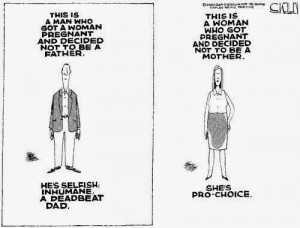
notadad

Opinion: The data are clear: The boys are not all right (9 February 2022) An example of the USA situation

Politicians can’t hear what men don’t say. An interview with Ann Widdecombe (1 February 2022) An example of the UK situation

Thank you Grace Tame. Abuse is well and truly out of the shadows (25 January 2022) Oops, well the abuse of women/girls anyway.

Bettina Arndt: The rape conviction rate – a scandalous deceit of parliament and the public (19 January 2022) Recommended reading

When America Embraced Wonder Woman and forgot G.I. Joe (21 November 2021) This paper is not specifically related to Australia, but interesting and relevant nonetheless.

Sorry, Snarling Clementine, but the UN says we’re a leader in treating women well and gender equity (11 March 2020)

The trumpet blasts of the monstrous regiment (26 September 2016)

It was great to see fitness advocate Michelle Bridges bravely speak out for male victims of domestic violence on the Studio Ten TV show, despite the fact that the comperes made their own pro-feminist views abundantly clear (10 November 2015)

http://www.australianmensrights.com/Fathers_Rights-Australia/Rise_of_Australian_Fathers_Rights_Groups_Worries_Australian_Feminists.aspx

Feminism: Past its use-by date? (1 August 2014) An ABC radio interview with Australian feminists and anti-feminist activist Janet Bloomfield (plus readers comments)

A lesson from the U.K. for Australian political parties thinking of wooing feminist voters (14 November 2014)

The article below was disseminated by a senior Australian politician, Bill Shorten, on 31 August 2024. What a truly pathetic effort, and one which clearly demonstrates the sad place where we are now at with regards to gender. 
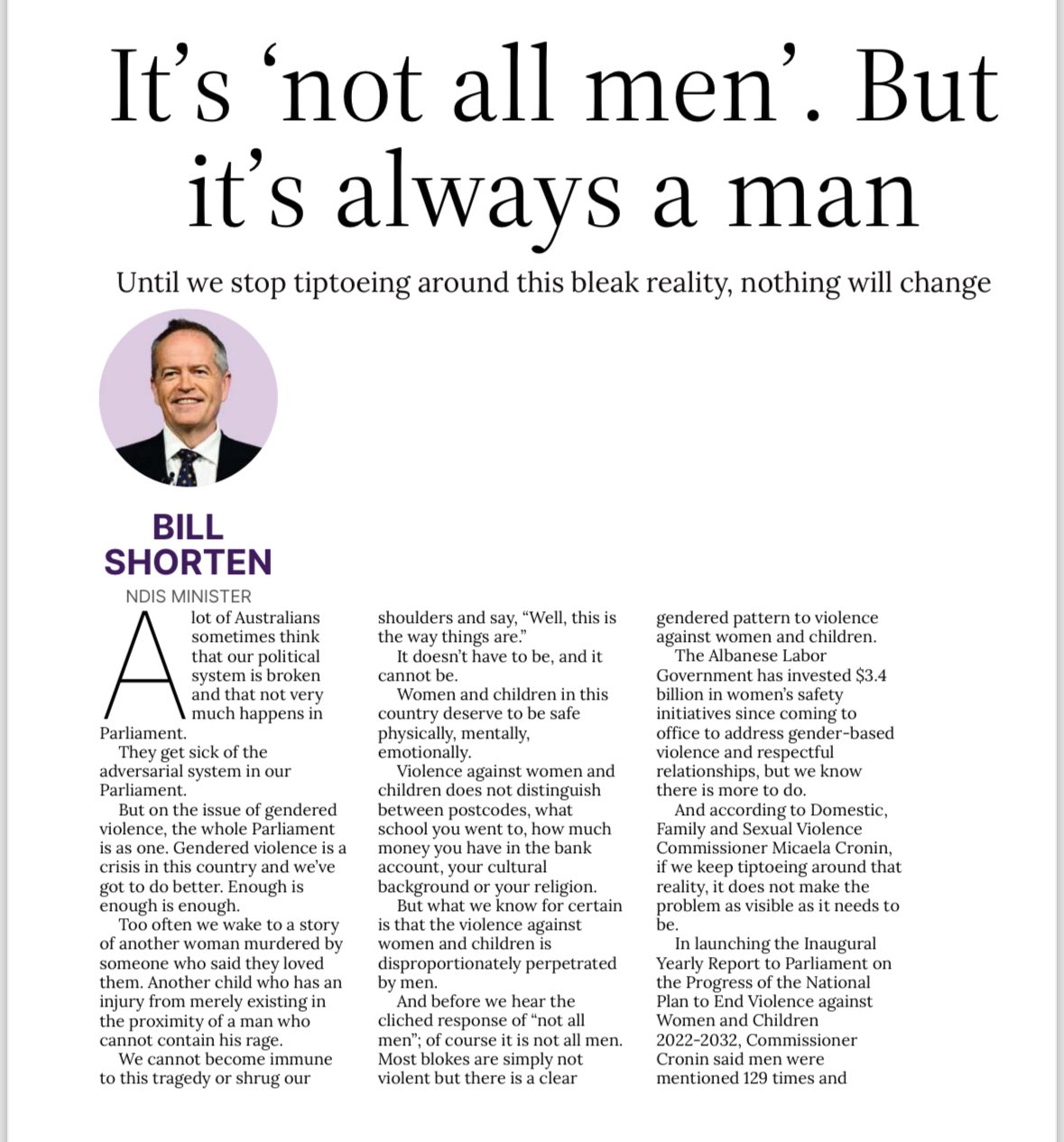
ImageImage


Finessing definitions to preserve the image of female victimhood

(NB: The following post is intended as a companion piece to Fudging the figures to support the feminist narrative)

Consider this scenario:

1. Feminist ideologues use either patently false statistical ‘information’ or misrepresent genuine statistical sources to make a case is support of one or more aspects of the feminist narrative. Alternatively, feminists resist efforts to correct outdated and/or unrepresentative methods of data collection in the knowledge that enhancements to data collection would work against their inbuilt bias.

2. Feminists get ‘called out’ enough times – in public and by suitably authoritative sources – to feel the need to manipulate data collection and/or presentation in order to continue to present a version of reality which reinforces rather than undermines the feminist narrative. Because remember, a lessening incidence of rape (or domestic violence/online harassment/workplace harassment/etc) not only undermines the credibility of the feminist narrative, but also weakens the case for feminist groups to receive additional government funding.

Question: What do you do when available statistics don’t support the image of men as empowered aggressors and women as powerless victims, that is carefully cultivated by the feminist movement?

Answer: You change the rules and/or move the goal posts.

And so a favored strategy is to raise the bar as to what constitutes victimization of men, whilst lowering the bar in relation to women. Thus the position that men cannot be raped, or (begrudgingly) they can but only if penetrated by an object. For women however, a sideways glance or accidentally brushing past someone in a crowded bus equals sexual assault.

The case of domestic violence: Early domestic violence definitions focussed on physical violence, and feminists run hard up against two problems here. The first problem is that the incidence of violent crime in western countries has, overall, been decreasing in recent decades. (Though paradoxically, violence by females is actually increasing). This makes it potentially awkward for feminists to continuing using terms like “a growing epidemic of violence against women“). The second problem for feminists is the increasing availability of independent unbiased research which has consistently found that there are as many female as male aggressors using the physical violence criteria. Gender parity in domestic violence undermines the feminist perspective. Whatever can we do?

  • Broaden the discussion of DV to include sexual violence, including sexual violence towards children (but being careful to exclude non-sexual abuse and neglect of children, because oops, that’s mostly perpetrated by women), and
  • place greater emphasis on criteria other than physical violence, such as psychological abuse, threats to withhold affection or sexual activity, or perceived motivations for aggressing.

A ‘good’ example of this is the section of IPV within the ‘Australian Longitudinal Study on Women’s Health’:

“Forty-five percent of women aged 18 to 23 reported some form of IPV, with 12% reporting one form of abuse, 8% reporting two different forms of abuse and 25% reporting three or more forms of abuse. The most common forms of IPV were being told they were ugly, stupid or crazy (28%), being harassed over the telephone, email, Facebook or internet (25%), and their partner trying to keep them from seeing or talking to friends or relatives (18%).” (Source) Clearly casting the net very wide to capture more ‘victims’, with this effect being accentuated through the use of very subjective criteria.

In another example, I was reading this article and noticed for the first time the use of the term “implied domestic violence“. I then googled on the term seeking background and/or a definition, and came across this:

“Credible threat, according to this new law, means a verbal or written threat, or a threat implied by a pattern of conduct made with the intent and the apparent ability to carry out the threat, so as to cause the person who is the target of the threat to reasonably fear for his or her safety or the safety of his or her family.” (Source)

The muddier the water the better, for intangible and subjective criteria makes future correction/undermining of data more difficult. We’ll have those silly MRA running around in circles for years trying to prove we are wrong.

Voila! Data adjusted on the basis of newly revised definitions of domestic violence magically skews the role of aggressors very firmly back towards men. Yay feminism!

See also:

Multiple research studies have shown that women are more likely than men to want to censor data that show certain sex differences (21 October 2025) Twitter discussion thread by James L Nuzzo

More than 1 in 5 Australians have perpetrated an act of sexual violence, survey reveals (10 July 2024) Refer for example to “The most common form of this was pressuring someone for a date or sex (3.8 per cent)”

Lies, damned lies, and STEM statistics (2 March 2019)

Trump administration ‘rolling back women’s rights by 50 years’ by changing definitions of domestic violence and sexual assault (24 January 2019). See related tweet here.

‘Understanding domestic abusers’ (undated) from the New York State Office for the Prevention of Domestic Violence. See “responsive violence”. Sure women are violent but only in order to “attempt to forestall attack, defend self and others, or control the situation

Feminists are the new mafia (24 January 2017) Video

many of he crimes [women] fall victim to are the result of broadened definitions of things like rape & DV

More than one in three victims of domestic abuse are now men (10 December 2016) UK. Refer comments by Polly Neate

The Future of Domestic Violence Prevention (1 November 2016)

Vera Baird has now posted a second sexist hate poster on her police force’s Facebook page (26 December 2015) UK

Domestic Violence is not on the rise (16 December 2015)

New domestic abuse law on controlling behaviour unveiled (18 December 2014)

A flood of DV insanity and doublespeak (4 December 2014)

Bullying husbands who shout at their wives could be found guilty of domestic abuse under new crackdown (24 November 2014)

http://reason.com/blog/2014/03/27/domestic-violence-defined-supreme-court

http://www.reddit.com/r/MensRights/comments/14vymr/disabusing_the_definition_of_domestic_abuse_how/

The case of sexual assault: Feminists are active on at least two fronts here to build on, or at least to maintain, the current status quo:

1. With regards to the sexual assault of women they are continually seeking to stretch the boundaries of what constitutes sexual assault in order to artificially ramp up the perceived incidence of this crime in the face of declining perpetration. Google on “stare rape” as an example of how ridiculous their assertions can be.

rapes_down

rape_stats

2. With regards to the sexual assault of men, feminists are resisting the efforts of men’s rights activists to ensure that official statistics include the many men/boys raped in jail (by both men and women) and to ensure that male rape statistics include incidents of acts currently designated as ‘forced envelopment’ or ‘made to penetrate’ rather than as rape. They do so, at least in part, because they know that if rape was defined as all ‘forced/unwanted intimate sexual activity’, then there would be gender parity. Again, to preserve the image of female victimhood, feminists must ensure that the definition of rape remains limited to sexual activity involving ‘forced penetration’ (i.e. excluding ‘forced envelopment’ or ‘made to penetrate’).

Another relevant aspect of this debate is that many feminists simply don’t recognise that men can be raped, it being their view that ‘men always want it’. Some women also incorrectly believe that the very fact that a man has an erection (necessary for vaginal penetration) is proof of his consent.

Scroll down to see the definition of ‘sexual violence’ on this page. It includes  “withholding sex and affection” yet how many times have I read in feminist web sites that men are never “entitled” to sex from their partner? Double-standard much?

Mary P. Koss considers it “inappropriate” to consider men who have been raped by women as rape victims, and prefers to call it “unwanted contact” instead. See related reddit discussion thread here (27 December 2015) USA

marykoss

FBI: Violent crime drops, reaches 1970’s level (10 November 2014)

Erasing male rape victims (15 September 2014)

More at University of Michigan: Withholding sex, Discounting feelings are ‘Sexual Violence’ (25 September 2014)

Do the math: rape stats don’t add up (26 September 2014)

The CDC’s rape numbers are misleading (17 September 2014)

The CDC updated its sexual violence figures – still does not include “made to penetrate” in its definition (5 September 2014)

NISVS 2011 released – Increased male victimisation (9 September 2014)

40% of rapists are women (19 October 2013)

How official rape statistics are distorted and inflated, by Angry Harry (August 2014)

See http://www.reddit.com/r/MensRights/search?q=cdc+definition+rape&restrict_sr=on which includes threads such as:

http://www.reddit.com/r/MensRights/comments/225npz/cdc_is_caught_in_a_lie/

http://www.reddit.com/r/MensRights/comments/1l11h4/this_constitutes_for_feminist_logic whichal_refutation/

http://www.reddit.com/r/MensRights/comments/1xcrov/attempted_rape_rape_but_only_if_a_girl_is_the/

http://www.reddit.com/r/MensRights/comments/271wqo/in_2010_half_of_all_sexual_violence_victims_were/

http://www.reddit.com/r/MensRights/comments/1btu0n/cdcs_response_to_whether_they_will_categorize/

http://www.reddit.com/r/MensRights/comments/27ubzy/upon_closer_examination_strange_data_emerges_from/

http://www.reddit.com/r/MensRights/comments/29s2ki/in_uk_law_female_rape_does_not_exist_its_a/

http://www.avoiceformen.com/sexual-politics/evo-psych/manufacturing-female-victimhood-and-marginalizing-vulnerable-men/

http://www.avoiceformen.com/feminism/legitimate-rape-advocacy-and-censorship/ (24 March 2013)

Child custody: As detailed in John Hirst’s groundbreaking 2005 Quarterly Essay, Kangaroo Court: Family Law in Australia, the legal tactic employed was to make false accusations of child sexual assault against the father. Based on unproven allegations of abuse, the Family Court would decide that a child could be at risk of harm and withdraw the father’s limited access visits.

The situation for fathers subsequently improved due to family law reforms introduced by the Howard Government. Women’s groups, with the help of sympathetic lawyers and academics, then began lobbying the subsequent (labor) government to water down the earlier reforms. They complained that women and children were being forced to have contact with violent and abusive fathers. At least six reviews were commissioned to prove this “fact”, yet none of the subsequent reports contained evidence that shared parenting was exposing women and children to harm.

“The Gillard government has got around this by deciding to redefine family violence. The Family Law Legislation Amendment (Family Violence and Other Measures) Bill 2011 has expanded the definition to include psychological harm, financial abuse and other threatening behaviour that controls, coerces or causes fear. Significantly, the government has ruled out requiring that fear of family violence be “reasonable”.

Based on past experience in the Family Court, the expanded definition will create a new and open-ended legal means by which good fathers are banished from the lives of their children. There also no longer will be any penalty (no cost orders) for knowingly making false allegations, and the friendly parent provisions, requiring parents to be supportive of each other’s role in their children’s lives, will be substantially diminished.” (Source)

The case of workplace harassment

See ‘A Man Is Out Of A Job (And Much More) Over This Innocuous Crap‘ by Amy Alkon (16 February 2015)

References that further demonstrate the above points can also be found in the my blog posts on the relevant topics (links provided below), and when I get a moment I will extract them and add them into this post.

Domestic violence is not a gendered issue – Why the pervasive sexist bias against men?

On sexual assault and unwanted sex and On the feminist myth of ‘rape culture’

On mens health: The statistics and the underlying factors

The life expectancy of both men and women has substantially increased over the past 130 years. Most people would recognise that women have always had a longer life expectancy than men. But did you did you know that the gap between the life expectancy of men and women is wider now than it was in 1884? Now why would that be?

Well the author of this paper has a theory:

“Feminism is wrong about which sex has it harder when it comes to health. Men are the real victims of biased public health programs designed to help women at the expense of men. But this section has only explored a few areas where feminism has created a false perception of which sex needs greater attention to their health issues. It should be clear that men have no special privileges when it comes to health. However, women’s health, both physically and psychologically, is taken very seriously, is far better funded, and women are privileged with longer healthier lives when compared to men because of the social and political privileges that are exclusive to women. Hence health is a men’s rights issue that needs to be addressed.”

In 2012, suicide was the third leading cause of death for American men and boys in the 10-14, 15-19, and 20-24 age groups along with the second leading cause of death for men 25-29 and 30-34. That year, it was also the leading cause of death for US soldiers. Overall, suicide was the 7th leading cause of death for American men in 2012 with males making up more than 78% of suicide victims for the year.

In 2012, more than twice as many boys aged 10-14 took their own lives than were victims of homicide. The only two causes of death that took more boys’ lives in this age group were cancer and accidental injuries. More than 72% of the children in this age group who took their own lives were boys. Even at a young age, boys are far more likely to end their own lives.

Data from http://www.cdc.gov/nchs/data/dvs/LCWK1_2012.pdf (as cited here)

The issue of suicide is addressed in this other post within my blog.

Further information concerning men’s health can be found in the various reference works listed below:

Is it ‘inevitable’ that men die more than five years earlier than women? (9 September 2025)

Video interview with Bettina Arndt regarding the Movember organisation (15 August 2025)

Movember rips off men’s health dollars, by Bettina Arndt (3 August 2025)

Sex-biased pollsters (24 July 2025), by James L. Nuzzo

The anti-feminist psychiatrist, by Bettina Arndt (23 June 2025)

Michelle Obama’s String of Falsehoods Reveals Why Dems Lost the Male Vote (4 June 2025)

Women Not ‘Excluded’ or ‘Underrepresented’ in Medical Research: Report (30 April 2025)

Australia’s Federal Budget Forgets Men (3 April 2025)

See this chart extracted from a US Government report called ‘Healthy People 2030’ (Refer Twitter thread)Image

Image

This Australian writer, James L Nuzzo, is producing a lot of good material on this topic (Source)

“Each year, about 14% of the NIH’s research budget goes toward women’s health and about 6% goes toward men’s health” (Source

Project star Sarah Harris shocked over co-host’s revelation (20 May 2024) The ‘Gender Pain Gap’. #FacePalm big time 

Bias against men in health research: one researcher’s journey from exercise science to men’s health, by James Nuzzo (11 July 2023)

A silent crisis in men’s health gets worse (17 April 2023)

Are men less willing to engage in traditional talking therapy because therapy has been feminised? (31 January 2023)

Why do men die younger than women? (18 December 2022) Zero mention of funding differentials re: research & treatment of men’s versus women’s ailments. Zero mention of ongoing feminisation of the health care sector and treatment methodology

Origin of Sex-Biased Mental Disorders: Do Males and Females Experience Different Selective Regimes? (12 September 2022)

Bias against men in health research: one researcher’s journey from exercise science to men’s health (11 July 2022)

Why do the World Health Organisation’s gender equity gatekeepers struggle to acknowledge that masculinity can be good for health? (30 June 2022)

End merit as we know it (14 February 2022) Eric Lander could have made a huge contribution to public health by curing cancer, but he upset feminists

Women’s health ambassador appointed (23 December 2021) UK

Why would you stand up for men and boys? Milgram’s message of hope to male psychology (2 December 2021)

4 in 5 Australians back more Government funding for men’s issues (14 June 2021)

80% of those diagnosed with oropharyngeal cancer are men, the leading cancer caused by HPV, surpassing cervical cancer. However, just 16% of men aged 18 to 21 years old have received a dose of the HPV vaccine, which is a cancer-prevention vaccine for men as well as women (29 April 2021) Reddit discussion thread

Are Clinical Psychologists, Psychotherapists and Counsellors Overlooking the Needs of Their Male Clients? (10 April 2021)

Gender bias in healthcare: Five ways men are left behind (December 2020)

10 Reasons government’s Injury Strategy must target men (November 2020)

Lack of men’s health strategies may have cost lives in pandemic (19 June 2020)

Is there really a men’s health crisis? (15 November 2019) USA

Australia’s National Men’s Health Strategy launched today (11 April 2019)

APA issues first-ever guidelines for practice with men and boys (2019)

Government medical research funding favors women (30 August 2018)

Uneven access to health services drives life expectancy gaps: WHO (4 April 2019) And yet again, the standard simplistic and blaming explanation is rolled out: Men choose not to go and see the doctor often enough or fast enough! See also related Tweet.

Men with prostate cancer wait four times as long for a diagnosis as women with breast cancer (20 December 2017)

Why Men Don’t Care About The Healthcare Debate (13 November 2017) USA

Men are killed at a greater rate than women in Australia – what can we do to reduce their risk? (28 June 2017)

Barbara Kay: Why does a report on ‘gender equity’ in mental health all but ignore the illnesses of men and boys? (16 May 2017)

Men DO open up about their problems – but no-one is listening (20 March 2017) Reddit discussion thread and linked article.

If men are favored in our society, why do they die younger than women? (8 March 2017)

The American Heart Association Is Sexist with #GoRedForWomen. More Men Die From Heart Disease So Why Not #GoRedForALL? (4 February 2017) Reddit Mensrights discussion thread.

38 new substance-use treatment beds for women opening in Vancouver (25 January 2017) Canada. See related Reddit thread here.

A total of 914 people died of a drug overdose in B.C. last year. Of that, 176 were women”.

Why males are more likely to die from conception to old age (26 August 2016)

‘Equal pay day’ this year is April 12; the next ‘equal occupational fatality day’ will be in the year 2027 (9 April 2016)

Men’s Health: A Global Problem Hiding in Plain Sight (24 March 2016)

The Canadian Federal Budget was just released. Take a look at the differences between “Men’s Health” and “Women’s Heart Health” in both funding and tone (22 March 2016)

STOP: Discrimination against Men by Psychologists (March 2016) Australia. A change.org petition

The Men’s Health Gap: Men must be included in the Global Health Equity Agenda (undated)

Obesity in women ‘as dangerous as terror threat’: Extraordinary claim by health chief as she uses speech to demand condition is added to list of emergency threats. But obesity in the UK affects far more men than women. Why is she only concerned about women? with related discussion thread here

Why is there a womenshealth.gov but not a menshealth.gov? (3 June 2015) Reddit mensrights discussion thread

Gender Bias In Osteoporosis Screening (5 November 2014)

Men’s Health – Not That Important – Still (27 October 2014)

Is the problem with men’s health, Gender Politics? (29 October 2014)

14 men open up about the devastation of divorce (17 October 2014)

Man flu isn’t a myth (17 October 2014)

The invisible blue taboo: The burden of boys and men (28 August 2014)

Death rate of Australian men is 50% higher than for women (21 August 2014)

Men die earlier but women’s health gets four times more funding (4 January 2014)

When men’s health doesn’t count (5 September 2013)

A notable case brought by Dr Alex Proudfoot was in relation to inequitable and gender-biased health funding (Proudfoot and Human Rights and Equal Opportunity Commission (1992) 28 ALD 734). The case was dismissed.

National Male Health Policy (Australia)

Research into gender differences in heart disease

Boys left out: no HPV vaccine immunization program in Canada (undated)

And one man’s account of what happened when he did go to the doctor

The unsafe sex: Should the world invest more in men’s health? (18 May 2014)

The President and the Women’s Lobby (29 October 2012)

Why is men’s health suffering in London? (25 June 2012)

Europe’s men need their own health strategy (29 November 2011)

To improve men’s health, treat the cause not just the illness (15 August 2011) Australia

Government’s Huge Cancer Funding Gender Gap (16 August 2009)

http://ideas.time.com/2013/08/23/women-should-pay-more-for-health-care/

Osteoporosis drug subsidised for women but not men

http://www.antifeministtech.info/2014/03/geeksgetcovered-is-obamacares-latest-attack-on-young-unmarried-men/

http://www.cms.gov/Research-Statistics-Data-and-Systems/Statistics-Trends-and-Reports/NationalHealthExpendData/Downloads/2004GenderandAgeHighlights.pdf

http://goodmenproject.com/good-feed-blog/mens-global-healthcare-is-woefully-underfunded/

http://www.angryharry.com/esbreastcancer.htm??note

http://www.harrysnews.com/tgUNCheatsMenWithGenderAgenda.htm?note

http://www.hookingupsmart.com/2014/03/20/hookinguprealities/an-increase-in-male-eating-disorders-reflects-confusion-about-what-women-want/

On Prostate Cancer

I read this article the other day noting an alleged fall-off in PSA testing by men during the Covid pandemic. I subsequently received this info via a tweet:

“In 2018, 2999 women & 35 men died from breast cancer in Aust. In 2018, 3,264 men died from prostate cancer in Aust. Nearly $3.5m has been given to fund research specifically into prostate cancer whilst breast cancer received $460m”

This data was subsequently confirmed via source1, source2, source3

Metastatic prostate cancer cases increase 72% in ten years (29 July 2016) Reddit discussion thread

Left to battle alone, 30,000 men dying of prostate cancer: Patients are not being offered enough support, say experts (20 March 2015)

http://dailycaller.com/2010/10/05/breast-cancer-receives-much-more-research-funding-publicity-than-prostate-cancer-despite-similar-number-of-victims/

Prostate cancer sufferer: ‘It’s either buy the drugs, or die’ (13 October 2014)

Discussion thread about the funding differential between prostate cancer and breast cancer (2 October 2014)

Prostate patients ‘get second-rate NHS care’: Report says sufferers are far less likely to receive the latest drugs or be looked after by specialist nurses (1 October 2014)

California offers free treatment for uninsured breast cancer sufferers, but not for prostate cancer (reddit discussion thread, August 2014)

Prostate cancer drug ruling a ‘fiasco’, says charity (15 August 2014)

Vasectomy increases risk of prostate cancer (11 July 2014)

Prostate cancer as male privilege (November 2011) Reddit discussion thread and original article/readers comments

prostate

On feminists actively undermining men’s health initiatives

In my blog I have listed hundreds of articles and academic papers that relate to various men’s rights issues. Within this collection there would be precious few that have been included purely because of how appallingly bad they were. This paper by Dr Michael Salter is therefore exceptional in that, and only in that, regard. His paper which attacks the involvement of men’s rights groups in lobbying for equitable treatment of men’s health issues displays a truly extraordinary degree of anti-male and pro-feminist bias.

This Reddit mensrights discussion thread is about feminists seeking to undermine the ‘Movember’ men’s health initiative on the basis of it supporting masculinity (20 October 2014). Here is one of the examples cited, and following it is a detailed response from a representative of the Movember movement. I think it’s well-worthy of being reproduced here and now:

“Pete Bombaci here, Country Director for Movember Canada. I’ve read the above and I want to clarify many of the inaccurate points written about Movember here.

You say that “what once started out as a harmless campaign has become sexist, racist, transphobic, and misinformed.” This is simply not true.

As you admit in your article, Movember isn’t just about raising money. It’s about having conversations. The magic of Movember is that it can unite different people from all sorts of socio-economic backgrounds under one flag: men’s health. You don’t have to be rich to wear a Mo, and you don’t have to be cool to change the world.

Thanks to our amazing Mo Bros and Mo Sistas, we are changing the world, and that includes changing standard definitions of masculinity. Movember isn’t about men being super tough or butch, though many Mo Bros and some of our Mo Sistas are so. Movember isn’t about growing the biggest, butchest, moustache. It’s about growing the best Mo you can personally grow. It’s about personal bests, about getting engaged in men’s health, about knowing yourself and taking care of yourself and your communities.

The Movember community is a global one that cuts across race, class and gender because cancer and mental health illness cuts across race, class, and gender. The idea that white cisgendered men shouldn’t raise funds for prostate cancer because they aren’t the ones most affected by it is antithetical to Movember vision. Making sure our fathers, brothers, uncles, lovers, friends, neighbours, coworkers feel safer being vulnerable talking about and taking care of their health, their bodies, and their mental health can only make life better for ALL OF US.

Some folks might argue that Movember isn’t a space for transpeople. This only speaks to the stigma and lack of understanding that transpeople face on a daily basis. We are well aware that some Mo Bros don’t have prostates. Whether it’s because a Mo Bro’s cancer treatment required the removal of his prostate, or whether he simply wasn’t born with one, we don’t discriminate against our Mo Bros for not having a prostate. For us, the truest mark of a Mo Bro is his willingness to change the world. The only binary we recognize is Movember and the rest of the year.

To your claim that Movember is sexist, I would say that Movember was and continues to be inspired by women’s health movements. Beyond that, women are a vital part of Movember as team leaders, teammates, and supporters. Women are substantial fundraisers. Women are, traditionally, the gatekeepers of family health and can be experts at one of our main goals: getting conversations about male health going. SinceMovember is about moustaches, we don’t typically encourage women to grow out their leg or armpit hair, though we’ll never turn down a nicely styled Mo,regardless of who wears it. We have one Mo Sista this year from Ottawa who is sporting a Mo every day for the entire month of Movember. Who would dream of trying to squash that kind of determination?

An important face to note here is that you represent Movember as No Shave November. Taking comments from No Shave November participants and portraying them as the opinions of our Mo Bros and Mo Sistas is inaccurate and disingenuous. Movember is not No Shave November and No Shave November is not Movember.

Movember suggests that folks show solidarity with each other by joining the Movember journey, in whatever form that looks like for you: go to a MOVE event; talk to your friends about their health, grow a Mo, or if you can’t, don’t. However, the Mo will always be our King because ultimately, our awareness program is powered by the growth of a new moustache and the obvious question that follows – why the moustache? Because our community members want an explanation for our change in appearance, a new Mo, those with Mo’s arm themselves with knowledge, provided by Movember, about men’s health.

The conversations started as a result of the moustache help to educate, breakdown stigmas, and ultimately change behaviour. From this program we know that 90% of Movember participants spend time thinking about improving their health, 75% discussed their health with family, friends or colleagues during Movember, and 66% of participants have had a recent general check-up. Globally in 2012 Mo Bros and Mo Sistas started 2.7 billion conversations about men’s health and Movember. We know that pairing this program with funding of world class men’s health research and programs helping men live with and beyond cancer and mental illness will help to truly change the face of men’s health.

You have also misrepresented our recommendation on PSA testing. Movember suggests: Men should talk to their doctor about prostate cancer testing. There are advantages and disadvantages to PSA testing. Understand the prostate cancer risk factors, discuss these with your doctor and decide if prostate cancer testing is right for you. You can find this here –http://ca.movember.com/mens-he….

You’ll also find a tool about the PROS and CONS of testing that we developed with the Societe internationale du urology. As Movember has grown we have worked with medical professionals to evolve our men’s health information and the materials available on Movember.com have been approved by national and international experts in the field.

It’s honestly disappointing to see Movember misrepresented in this way Movember. McGill continues to be one of the top supporting teams and the University has been an integral part of Movember funded research in Canada and on an international basis. We’re very proud of the community there and the work they have done. To date Mo Bros and Mo Sistas in Canada have raised an astonishing $13.5 Million for mental health.”

Image

Image