The Australian Government is developing a National Plan to End Violence against Women and Children 2022-2032 to replace the existing National Plan to Reduce Violence against Women and their Children 2010–2022.
The deadline for public submissions was 25 February 2022.
“The draft National Plan has been developed through consultation with victim-survivors, specialist services, representatives from the health, law and justice sectors, business, and community groups, all levels of government and other experts. This consultation opportunity builds upon previous consultations including:
The House Standing Committee on Social Policy and Legal Affairs Inquiry into family, domestic and sexual violence
Two national advisory bodies: the National Plan Advisory Group and the Aboriginal and Torres Strait Islander Advisory Council on family, domestic and sexual violence.” (Source)
I prepared a brief submission using the online questionnaire format which was relatively quick and painless, however I couldn’t easily save a copy to reproduce on this page.
Below are just some notes that I made earlier on in the process:
Let’s start nice and simple with a word search of the draft Plan looking for the terms ‘male victim’ and/or ‘female perpetrator’ and/or ‘abusive women’. How about a reference to the best known/established Australian organisation that represent male victims of domestic violence, the One in Three group? And what about the important term ‘bilateral violence’? Ok, surprise, surprise, no hits anywhere there.
Normally these sort of documents begin with a section entitled ‘What is domestic violence?’, and then trot out the tired claim that ‘whilst sometimes men may be victims of domestic violence, the overwhelming majority of domestic violence is perpetrated by men against women’ (and then aim to use this as justification for ignoring male victims for the remainder of the document). The draft Plan gets around that believability problem by entitling the relevant section as ‘What is violence against women and children?’, creating the impression that domestic violence is limited to that one form of action or behaviour. (Page 10)
The first modification of the Plan that I requested was a change in its name to the ‘National Plan to Reduce Domestic Violence in the Community’ (or similar). The current name of the plan is a ridiculous, outdated affront to the victims of abusive women/girls and their families.
Next, the draft Plan features a section identified as “Drivers of violence against women and children” (Page 12), wherein the authors note:
Violence against women is not caused by any single factor. However, Australia’s national guide to prevent violence against women, Change the Story, sets out that violence against women has distinct gendered drivers. Evidence points to four factors that most consistently predict or drive violence against women and explain its gendered patterns.
Driver 1: Condoning of violence against women.
Driver 2: Men’s control of decision-making and limits to women’s independence in public and private life.
Driver 3: Rigid gender stereotyping and dominant forms of masculinity.
Driver 4: Male peer relations and cultures of masculinity that emphasise aggression, dominance and control.
The primary driver of violence against women is gender inequality, however this also intersects with other forms of discrimination and disadvantage that can marginalise people and make it more likely that some groups of women and children will experience greater levels of violence than others.
But what of two factors that studies have shown to be absolutely seminal – although not in feminist-conducted research – in their influence with regards to fostering domestic violence? These are the initiation and routine use of violence by the female partner, and the childhood experiences of parental neglect and abuse of those people who become adult male abusers?
This is a job description that appeared in the Queensland Government’s website for vacant employment positions in December 2021.
You might well ask, ‘are there any equivalent positions available in relation to the prevention of violence against men and boys?’. Dream on!
Principal Program Officer, Justice and Attorney-General, Office for Women and Violence Prevention
The Office for Women and Violence Prevention support women and girls to participate fully in the social, economic and cultural opportunities that Queensland offers; and to achieve their full potential.
We deliver services and supports that victims and their children need to be free of violence, and that ensure perpetrators are held to account for their actions and given opportunity to change their behaviour.
We also drive reform to strengthen community and whole of government responses to gendered violence by changing community attitudes and behaviours, integrating service responses and strengthening justice system responses.
“The team leads and delivers the Investing in Queensland Women grant program, utilizing tools such as Smartygrants and P2i. We lead and support Queensland Government sponsorship agreements with high profile partners such as the Women of the World Festivals and the Australian Women in Music Awards to ensure benefits are delivered for Queensland women and girls. We also liaise with community groups and organisations across Queensland to engage the community on a range of initiatives that promote and protect the rights, interests, leadership and well-being of women and girls.”
Whilst that paper was the final trigger that led to me writing this post, the primary motivation was the seemingly endless stream of articles about sex and relationships by (invariably female) media columnists that preceded it.
At the outset let me state that I am not any kind of expert on the subject. Not at all. My only qualifications are being a male who’s had a reasonable amount of life experience, and being the father of a teenage boy about whose future welfare I’m deeply concerned.
Hands up who has read those articles about sex-related matters like consent, relationships, pornography and men’s (alleged) ignorance and many (alleged) psychological and physical failings in the bedroom. Just to provide an Australian example, think Nadia Bokody. And there is another one, but I can’t think of her name. [Several hours later: Oh, I remember, it’s Jana Hocking]. Both of whom, as an aside, have blocked me on Twitter – although that’s par for the course.
The annoying thing about these columns is their multitude of false statements and false assumptions, and their persistently negative views on men and masculinity.
That, and the fact that:
there is never a corresponding male perspective – other than a ‘white knight’ or male feminist perspective – presented to readers, and
the many real and potential negatives for males – of partaking in anything along the hook-up – courtship – marriage continuum are conveniently overlooked. Things like the threat of false accusations, revenge porn, paternity fraud and financial exploitation, bullying/abuse, rape, and so on and so forth.
In my experience at least, the current crop of female columnists tend to be extremely one-sided … to the point of either being deliberately misleading and/or being woefully ignorant of real-world relationship matters outside their own particular clique. They also rarely – and I think I’d almost go as far as to say, never – identify corresponding failings on the part of women. Well, other than in getting physical with all those wretched, exploitative and ungrateful men.
The fact that most of their social media posts now (deliberately) do not permit readers to post comments, suggests that many others are also fed up with their offerings.
Just a few points or examples … such columnists invariably state, assume and/or infer that:
All women/girls like or dislike or expect the same things as per other women/girls (and that individuals are consistent with respect to the nature of their own likes/expectations)
When men cheat (allegedly that’s relatively often) they are pigs whereas women rarely cheat, and when they do it’s usually their partners fault
Women/girls are knowledgeable about not just their own bodies, but also about men’s bodies and their sexuality
Women/girls express their views clearly and often, but they are deliberately ignored or disregarded by their male partners
Women clearly and truthfully express their views with regards to providing consent for sexual activity, and don’t often change their minds during the ensuing hours (if not minutes)
Women don’t just expect, but like, men to ask them for their consent at each stage of engaging in sexual activity
All of which I would place in the ‘Easter Bunny is real’ category … aka, nonsense.
Further, these online messengers of the matriarchy send a clear message that men are *lucky* to be chosen as sexual partners. And that if only they were better at doing whatever they are meant to be doing, then heaven awaits. And their ‘proof’ that women have their ‘act together’ in the bedroom? That’s because significantly more men orgasm than do women. Wow. I always thought that was simply reflective of men’s greater ability to close their eyes and imagine that they were with someone desirable.
Oh please! Hands up guys, putting aside the brief and very temporary relief of sexual hunger, how lucky do you feel when *it* occurs? Is sex that great for you? How many times, at the end of the day, do your sexual encounters – all factors considered – rate as even a net positive experience? And if you could travel back in time, how many encounters would you readily opt to excise … and simply skip to good coffee and hot shower?
One of the things that the matriarchal mouth-pieces conveniently neglect to mention is (for example) the proportion of women who won’t not have sex unless they are drunk. And it’s not unusual for women to readily admit this to their suitor. This might be their response to a buffet of hang-ups, and/or them being so awash with guilt/shame about just the thought of it.
I suspect that a primary reason for drinking is that, if/when their post-coital mood changes, they feel not merely justified – but comforted – in thinking (or even telling others) that they only did ‘it’ because they were drunk. Or more often, because ‘the guy got me drunk’. Or they can up-size their night out and call it drink-spiking. And then not only is shame/blame hoovered away, but sympathy is almost certain to be on-tap.
And those fellows who happily oblige the ladies, get to share a bed with a drunk – with all that that often entails (think: up-ended klutzy turtle that’s prone to vomit). But more importantly, those *lucky* men are then wading into quicksand with regards to the possibility of facing false accusations of abuse and/or rape – as well as their own feelings of concern and/or regret.
Am I alone in this regard, with views such as these? Feel free to let me know what you think. I could delve into considerable further detail in this post but currently at least, find myself shyly reluctant to do so.
Husband’s ‘evil’ act exposes why women are leaving marriages (10 January 2024) And as usual, exactly 0% of responsibility for the ‘problem’ is attributed by the MSM to the actions & attitudes of women. Do you think this might be part of the problem?
Nadia Bokody: Lie men tell about ‘kinky’ sex (24 April 2022) Because women with a penchant for violence don’t exist, right? Any apparent exceptions to be explained with ‘the men made them do it’ or ‘they only did it to please a man’ lines.
“And because I know someone is going to protest, “Why are you demonising men?! Women can be creeps, too!” it should be noted I’m not suggesting otherwise. However, it would be folly to treat these as comparable issues”.
Damn right it’s not comparable. Police/friends/whoever are not going to believe the male if he (or she) claims sexual assault!
Nadia Bokody: Hilarious sex post angering men (11 December 2021) Hands up how many men found this piece hilarious? And don’t even think about the response you would get from female readers were you able to publish something poking fun at women.
The brutal truth about women and cheating (12 July 2019) Women suggesting ways to change & spice up the sex? Sure that occurs occasionally, but I’d suggest that usually it’s a matter of silence & negative/defensive reaction when such a suggestion is made by the guy.
What finally prompted me to write this post was a tweet issued by the Australian Human Rights Commission yesterday about ‘Scam Awareness Week’, with an associated forum apparently being run by a group called the eSafety office.
I mean to say, imagine an agency heavily funded by tax-payers (predominantly male) to support and protect all Australians, but which devotes the overwhelming majority of its efforts on services for women/girls … sounds like a potentially scam-rich environment to me. And who better qualified to champion such a model than the #AHRC?
The Office of the Children’s eSafety Commissioner was opened on the 1 July 2015, with an initial budget allocation of $2.4 million per annum. My, my, how it has grown since. They described themselves in the following manner:
“The Office of the Children’s eSafety Commissioner is a one-stop-shop for online safety. The Office provides Australians a range of up-to-date information and resources, coupled with a comprehensive complaints system to assist children who experience serious cyberbullying.” Sounds good so far.
“The eSafety Commissioner (eSafety) is Australia’s national independent regulator for online safety” (Source). Their mission is to “safeguard Australians at risk from online harms“. Not ‘women’ mind you, but ‘Australians’. The key legislation that it operates under is the Enhancing Online Safety Act, 2015, but in its Plan it’s noted that its “remit has been broadened since our establishment four years ago” (p3). I’d suggest that perhaps it’s narrowed, in fact.
eSafety is an independent statutory office supported by the Australian Communications and Media Authority (ACMA). It’s budget, courtesy of Australian tax-payers, is considerable. This year, for example, their allocation includes $21 million for “a women’s online package” (Source).
ACMA/eSafety currently reports to the Hon. Paul Fletcher MP, Minister for Communications, Urban Infrastructure, Cities and the Arts.
The e-Safety Strategy doesn’t seem to hammer home a strong bias towards barracking for women/girls versus men and boys – just a few mentions re: gender – in fact. Under ‘Programs’ for example it mentions the provision of support for “those who are most susceptible to online harm. These include women experiencing domestic violence …” (p8). And men experiencing domestic violence aren’t harassed online? Oh, sorry, I digress. The Plan also notes that “in 2017 parliament expanded our remit to all Australians” (p12).
Now let’s briefly look, mainly with reference to their web site and primary Twitter account (@eSafetyOffice), at what the Commission actually does nowadays. And how it interprets the term “all Australians“. A good place to start is the e-Safety women’s page … because “all women have a right to be safe online“. And no, there isn’t an e-Safety men’s page. I’d suggest browsing the women’s page now, before continuing with this post.
See, for example, the paper entitled ‘Lifeline or weapon? How technology is used to control and silence women‘ (7 September 2021) which is one of the listed papers and media releases with a gender focus. Nowhere is mention made of women as perpetrators and/or males as victims, and that’s not because such folk constitute rare aberrations. It’s essentially because of the pervasive , and largely unchallenged, influence of feminist ideology. Minister, are you awake?
Next you might perhaps take a look at ‘Understanding the attitudes and motivations of adults who engage in image-based abuse‘ (12 September 2019). More than 50 mentions of the term ‘men’ here, but all such references relate to portraying men as perpetrators of abusive behaviour and/or as attendees of behaviour change programs. No women are presented in this manner – not one. And yet – reverting to real life now – look at the significant number of court appearances of women for ‘revenge porn’ – targeting both men and other women (examples here).
The word ‘women’ appears 62 times in the report whilst ‘men’ appears 0 times.
The gender ratio of Authority members who are male/female is 2:7, and the gender ratio of Executive Management members who are male/female is 1:6.
The annual base salary of the (female) CEO = $344,631, and the annual base salary for nominated ‘Key Management Personnel’ = $2,656,056 (this group includes seven females and one male).
The budgeted revenue from government for ACMA/eSafety in 2020/21 was $100,615,000 (p161 of Annual Report)
In the ‘Commissioner’s Foreword’, the number of references to men/boys was 0 (p201 of Annual Report), whereas in ‘Our year at a glance’, the number of references to men/boys was 0 (p204 of Annual Report)
Finally, I’ll now run through the corresponding programs and consultancies that the Office thoughtfully provided specifically for the assistance of men and boys …
<the sound of crickets chirping>
Oh, and news just to hand, the eSafety Commissioner’s contract has just been extended for a further five years.
Thank goodness, presumably that means there’ll be more time to reach out and help women like this:
To suggest that the Australian Government is currently committed to achieving gender equality is an absolutely farcical proposition. Can an organisation be only half committed? I think not.
I say this as the extent to which the government acknowledges and supports men/boys, relative to the support it expresses for women/girls, overwhelmingly favours the latter. Further, not only is this bias not seen as a problem, it is considered by many to be fair and appropriate.
Neither politicians nor senior bureaucrats dare ask ‘why?’, let alone say ‘stop!’, to proposed developments that might further this imbalance. They know full well that any such gesture would result in immediate negative sanctions. And conversely, that few would be likely to publicly speak in their defence. Such is the overdone mood of the matriarchal moment.
One element of the problem is the lack of a government agency, or even a section within an agency, that is designated to gather or disseminate information, or develop policy, in support of men and boys.
Another is the issue of remnant chivalry, a factor that in an environment of true gender equality, would be recognised as nought but an outdated traditional gender stereotype.
Q: Is there a Minister for Men and/or an Office for Men?
A: No, there is neither, and none is proposed.
Q: Do government agencies provide as much public acknowledgment and support for men/boys as they do for women/girls? A simple example might be publicly acknowledging International Men’s Day versus their response to the multitude of recognised and supported days for women and girls.
A: No, they do not. International Men’s Day is ignored entirely by both state and federal agencies.
Ask the Australian Human Rights Commission, for example, if they have ever issued a tweet or social media notice to celebrate International Men’s Day. Ask any state or federal agency.
Q: Does the government invite representatives of men’s and/or father’s rights groups to participate in committees, in fora and/or (for example) regulatory reviews related to gender issues? For example, the One in Three organisation (http://www.oneinthree.com.au)
A: No, they do not. Nor do they support the establishment and operation of such organisations.
Q: Do women of high public profile (for e.g. female politicians) and/or women’s groups seek to support men/boys either generally or in relation to specific issues?
A: No, generally not. Contrast this to the actions of many high-profile men.
Q: Does the government fund research that explores aspects of the reality experienced by men/boys and/or encourage gender-related research to address or consider issues from both a male and female perspective (for example via the actions of the Australian Research Council)?
A: No, they do not. More and more often males are not surveyed in such studies, unless asked in relation to their views on women’s issues (and with zero reciprocity applying)
Q. Is there compatibility with regards to the extent of funds that the government assigns to groups/agencies and/or issues that primarily affect men/boys, versus what is provided for women/girls? Where relative advantage to a particular gender can be recognised, does the government assign approximately equal support for each gender?
And what about with regards to our foreign aid program?
A: No, they do not. There is a huge disparity in favour of women/girls. The government doesn’t even appear to keep track of how much is spent on men/boys (i.e. there is no Budget Statement produced for men/boys). And not only that, many of the groups that are funded often express views that are particularly negative towards men/boys.
Meanwhile, our foreign-aid program is now deliberately skewed towards providing support for women/girls.
Q: Do government or government-funded agencies devote as much time and energy to acknowledging, supporting and remedying issues that affect men/boys as they do in the case of their representations for women/girls?
Some examples of organisation to consider might include WGEA, the Australian Human Rights Commission, the Australian Bureau of Statistics, ANROWS, the Australian Institute of Family Studies, and the Australian Institute of Criminology.
A: No, they do not. There is a huge disparity in favour of acknowledging, celebrating and supporting the preferences and privileges of women/girls. This often appears to occur in association with a saturation of staff and management who are devotees of feminist ideology.
Ask the Australian Human Rights Commission (for example) if they have ever had a male appointed to the position of Sex Discrimination Commission. Ask them how many times, in (say) the past ten years, they have developed a program or policy that intended as being primarily supportive of men/boys (and was publicly identified as such)?
The AHRC is the ‘go-to’ agency for those seeking to act in a manner that may be seen as providing unequal benefits for one gender over another … an example being to offer a scholarship only to women, or to publicly recruit (only) women for a particular role. Ask the AHRC to state the percentage of times they have exercised this power in a manner that favoured women over men.
Ask the WGEA about how much they have looked at the costs (financial and otherwise) faced primarily or solely by men and boys. And about the growing number of segments in the labour market where women’s salaries exceed those of men. And about those organisations where the staff gender ratio for female representation well exceeds 50% (for example the federal public service), and what (if any) remedial action has been taken.
Q: Domestic Violence is perhaps the highest profile issue in the whole gamut of gender-related topics now being addressed. Many studies support the notion that at least 1/3 of the victims of domestic violence are male (and up to 2/3 in certain contexts).
The Government spends hundreds of millions of dollars ostensibly trying to remedy this scourge. How much of this money is used (for example) to psychologically treat abusive and/or violent women? How much is spent to assist male victims of abuse?
What action is the government taking to ensure both fairness and effectiveness of expenditure? How many of those receiving taxpayer funds are driven by feminist ideology. Does this detrimentally affect their performance for example via prompting them to persist with ineffective principles and strategies, purely because doing otherwise could be seen to compromise their belief system?
A: Well under 1/10th of the money allocated to treating domestic violence finds its way to assist the male and female victims of violent and abusive women. This is a disgrace, and meanwhile the (seemingly allowable) response from the feminist lobby is to cry ‘epidemic!’ and demand that the government give them more money. Meanwhile more men suicide.
Q: The so-called ‘Gender Wage Gap’ is another high-profile gender issue, and one in which the WGEA has been, and remains, closely involved. Has the manner in which this issue has been presented and addressed to date, been indicative of a commitment to gender equality?
A: No, anything but. The WGEA has even been criticised for the biased manner in which the issue has been approached. Depending on how one drills down into the data, there are several, and a growing number of, instances where female wages exceed male average salaries. This aspect is largely invisible in the public coverage of the topic. Somehow, I very much doubt that’s a coincidence.
Q: With regards to the specific issue of workplace conditions and workplace safety, is as much emphasis placed on key issues as viewed from a male perspective, as from a female perspective?
A: No, very little emphasis is placed on the consideration of issues from a male perspective, with the exception of the multitude of situations where men’s welfare is ignored entirely.
The Government’s commitment to ‘gender equality’ is largely limited to championing the legitimate and purported interests of women/girls, whilst doing little or nothing about the multitude of negative factors impinging on the health and happiness of boys/men.
Rather than continuing with the use of the feel-good term ‘gender equality’, the current situation can best be viewed through reference to the notion of ‘Gamma Bias’.
“Gamma bias occurs when one gender difference is minimised while simultaneously another is magnified.
The gamma bias phenomenon can be conceptualised as a symmetrical 2*2 matrix of cognitive distortions, the gender distortion matrix. The matrix below describes examples of gamma bias, where perceptions of men and women are differentially magnified (capital letters underlined) or minimised (lower case letters in italics).
Women’s leadership and development program (8 September 2022) All about 76 projects set to receive $15.84 million in federal grant funding. Anything equivalent for men/boys? Dream on
Fast-forward now to 2024 and the WGEA is still doing nothing for men …
Well dear readers, my family was eating lunch at a cafe today. At a nearby table was a large group of teen girls with a couple of totem male friends (unsurprisingly, placed on the end of the table). As is now so often the case, they were inclined towards the noisy, vulgar and skimpily-dressed end of the spectrum.
My wife said to our son something along the lines of ‘don’t even think about bringing one of them home … we’re not sharing our stuff with the likes of them. If you want to be exploited, don’t get us involved.’ She’s only a small ‘f’ feminist, you see.
We briefly spoke about the need for him to exercise careful judgement in this regard, drawing on a couple of personal examples we know of.
Oh, and there was also a bird doing the rounds at the cafe too. An ibis. A waitress stopped and asked me if it was bothering me. ‘No’, I said. ‘I’m used to them by now’. My son mentioned that the popular name for these birds was ‘bin chickens’. They seem to be a bit like feathered rats, poking around much of the the time to get a free feed.
Which brings me to the point of this post. It’s a worrying time to have a teenage son. If you’re in the same situation, what are you doing to get him ready for the coming onslaught? And sex is only part of it.
Are you putting a book or books on his pillow? If so, which ones? One possibility might be Jordan B Peterson, for example.
What are you telling your son/s, and what are you leaving for him/them to discover for themselves?
Feminism and Buddhism – Another shared cafe experience but with female attendees drawn from the next higher age group. And I don’t remember there being any birds present.
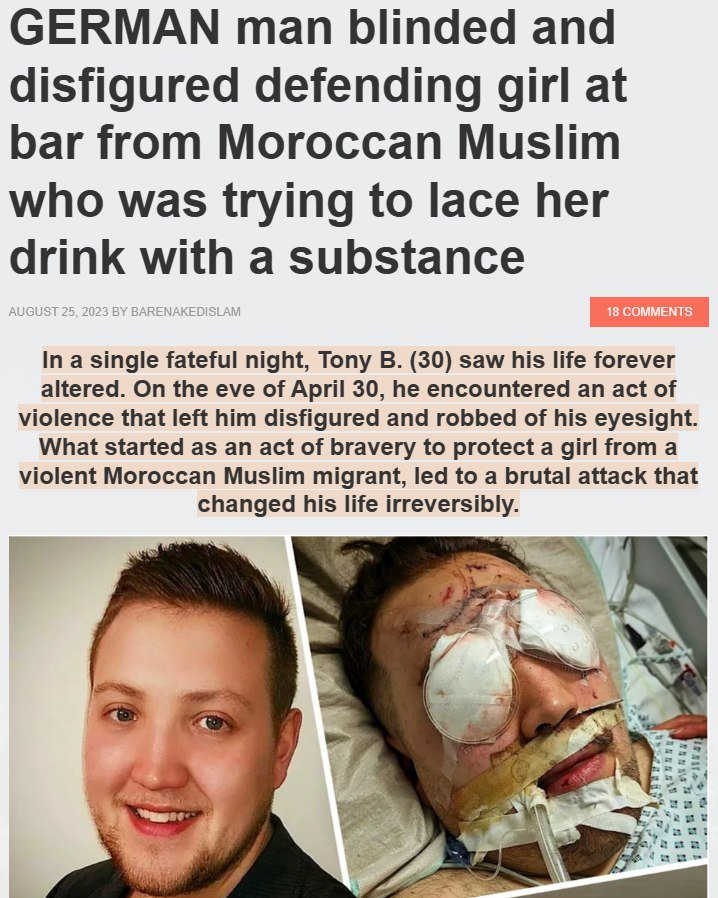
Here are some articles related to the phenomenon often referred to as ‘drink-spiking’ that appeared in the Australian media from late 2021 to late 2022, with more available via google search:
This Twitter stream lists extracts from a series of article in the ‘Liverpool Echo’, all unquestioningly accepting the relentless bogeyman meme.
I’m sure you’ve previously seen others with the same or similar theme … poor innocent women just wanting a fun night out but some creepy character (=guy) puts something in their drinks and they wind up doing something that they’d never do otherwise …
This Wiki item for ‘Date Rape Drug’ mentions various women who claimed to have been sexually assaulted after their drink was spiked, yet in almost all cases they were not found to have any drugs in their bodies.
Might it be that many women are exercising bad judgement and then, rather than accepting accountability for what subsequently occurred, look about for someone or something to put the blame on? If this was symptomatic of a broader trend re: women’s propensity to shift blame, then clearly there would be very considerable potential for false rape allegations to occur.
Here are some links to further related articles/papers:
But thank goodness women don’t do stuff like that (oops, oh, wait …)
In fact I’d suggest that it’s entirely likely that there are more instances of drink-spiking by women – particularly with the intention of theft (first example here).
(Note that this post remains a working draft – to be continued)
Whilst browsing in Twitter today I came across a mention of a new study that sounded rather interesting. Here is a link to the tweet I saw, plus a link to the relevant page in the web site of an organisation as ANROWS (Australia’s National Research Organisation for Women’s Safety Limited). It appears that ANROWS commissioned the study.
ANROWS receives substantial government funding support (in 2019/20 this amounted to $10,410,025). The feminist leanings of that organisation, are made quite clear in this paper, for example.
Additional information about the project can apparently also be found on the Monash Gender and Family Violence Prevention Centre website. As it turned out, the study was more interesting (and disappointing) in relation to what it didn’t say, rather than what it actually said.
Here is a link to the ‘Research Summary’ which I will now address in this post. If I have sufficient time & energy then I might also review the ‘Research Report’.
Let’s start with a document word search. ‘Men’ appeared 51 times, generally with words like ‘department’ or ‘women’. An exception were references to men as perpetrators of domestic violence (p3). ‘Women’ appeared 14 times, mostly within titles of reports or organisations. One exception was “the judicial officer as a powerful voice in a good position to capture the attention of the perpetrator and to denounce violence against women and their children” (p6). The term ‘victim’ did not appear once.
Next, what topics would I hope to see, and perhaps even expect to see, addressed in a project like this?
– the accuracy or otherwise of judicial officers understanding of the nature, extent and trends with regards to domestic violence – and particularly with regards to gender differences
– the virtual absence of perpetrator intervention programs for female offenders
– the shortage of refuges or treatment facilities for male victims (some with children)
– the apparent gender inequity with regards to being taken to a police station, arrest, sentencing, etc.
– gender differences in the cause and/or underlying factors common to perpetrators of abuse and/or violence
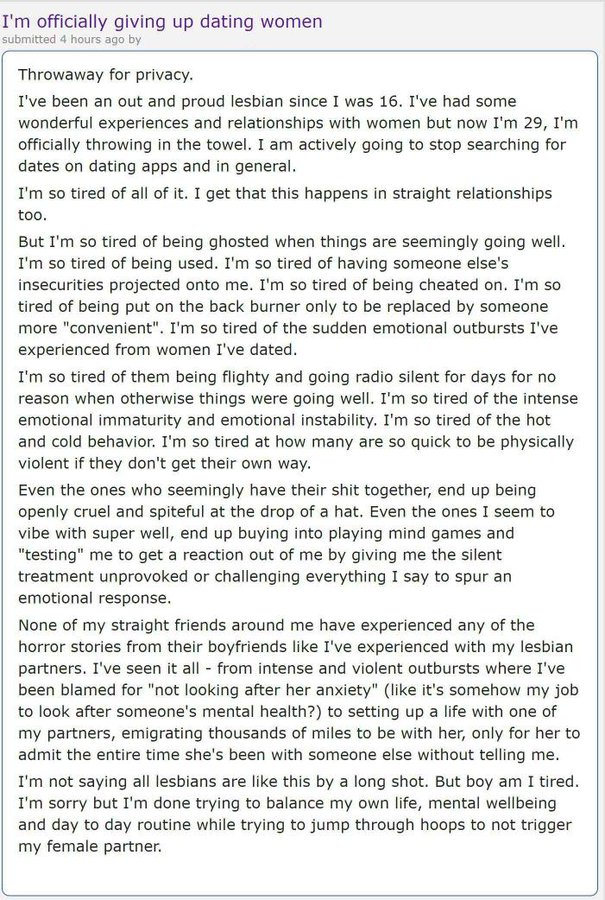
Whilst reading this it occurred to me that, with just a few modifications, it might have been written by a guy in relation to his unsatisfactory dating experiences (though no one would publish it, as it would be considered misogynistic and brimful of ‘whataboutery’.
I have been meaning to create a post about dating for some time now. There are already, however, a selection of articles regarding dating/courtship in the following posts:
Anyway, so how about I make an attempt at modifying Andrea’s article myself in order to reveal the male perspective? Here goes …
Believe it or not, once upon a time I was just a caring, optimistic guy looking for love in my life. I minded my Ps and Qs, showed my genuine kindness and enthusiasm and behaved with grace with every girl I met. One by one, my enthusiasm went from George Clooney sweet to burn all of your crap ??? Beyonce — I’m literally over these entitled narcissists that make up the majority of our dating pool. I wasn’t always a douchebag, but modern dating culture made me this way.
1. THE FISH IN THE SEA HAVE TURNED INTO MUTANTS IN THE SEWER. It used to be that coming across good girls, or at least girls with actual normal manners, weren’t so few and far between. These days, you have to hike up Everest and nearly die of hypothermia before you come across a small glimmer of hope. How is it possible for so many bitches to exist at one time? Ugh.
2. MOST GIRLS AREN’T WORTH PUTTING ON PANTS FOR. Getting ready for another date just to sit across from a girl who talks about her needs and continually seeks validation makes me want to vomit in my beer. I’d rather sit at home in comfort, blissfully unaware of the flake I’m not missing out on.
3. I LIKE NETFLIX MORE THAN DEALING WITH ACTUAL WOMEN. Who needs a girlfriend when I can sit in my jocks with a beer and marathon through the new season of House of Cards. That’s right, no one. Stress-free relaxation is just a button press away.
4. IT’S HARD TO BELIEVE GOOD GIRLS ARE STILL OUT THERE. In all honesty, I’ve met so many douche canoes that I’m starting to wonder if real and grown-ass women still exist. Are you out there? Hello? Will the real good girls please stand the hell up? Geez.
5. I’M SICK OF COMPETING. I didn’t sign up for any BS reality TV type of love, so forgive me if I’m not about to be just another contestant in the lineup. No one dates honestly anymore, so why should I care about dating at all?
6. THERE’S ZERO EFFORT MADE THESE DAYS, SO WHY AM I WASTING MY ENERGY? I’m rarely impressed by women now and it’s not because of anything they did wrong; it’s more the expectation that they’re going to be a huge disappointment like every flake before them. I’d like to be hopeful that one woman will eventually change my mind, but I have yet to come across a woman who isn’t a lazy jerk that just wants me to buy her stuff and shower her with attention. So forgive me if I’m not swooning with charm right off the bat — she needs to earn it first.
7. I’VE BEEN GHOSTED ONE TOO MANY TIMES. I haven’t been ghosted just once or twice — it’s literally 80% of the time I meet someone. Women these days just cower and turn into ill-mannered jerks that can’t formulate a simple sentence to say goodbye. After about a dozen, I stopped caring to go above and beyond to remain the nice guy. I’m done.
(I gave up at doing the gender swap thing at this point, but you get it? Right?)
8. I’M SICK OF BEING TREATED LIKE A SEXUAL OBJECT. Because why would I want to subject myself to a selfish idiot who doesn’t respect me as a person and just wants my body? I’m perfectly good at satisfying myself. I don’t need to subject myself to one more loser who is most likely going to activate my bitch flag just so he can feel temporary enjoyment. No thanks.
9. BEING A BITCH FEELS INFINITELY BETTER THAN BEING A DOORMAT. I refuse to let myself fall back into the trap of being a doe-eyed princess looking for her Prince Charming — I’m over it. I used to be naive and I used to wish for my fairy tale ending until one too many penis pictures brought me back to earth. It’s a dog eat dog world out there when it comes to dating and I’m done getting taken down by being too weak. Bitch mode is on and it’s here to stay … unless my unicorn finally falls from the sky in front of me.
10. I’VE LITERALLY RUN OUT OF CARE. It’s not that I’m a complete bitch — I have a good side too, but I’m sick of giving it out freely to guys who end up walking all over me and taking advantage of my kindness. From now on, if you want me to put on pants and leave my apartment for you, you need to show me some real respect first. If you don’t, you’ll be meeting the bitch soon. I have zero care left.
30yo reveals question single Aussie men don’t ask anymore (1 September 2024) Yet another one of these articles written by some embittered hit-the-wall woman who has never bothered to read/discuss the male perspective on the issues she raises.
Man’s text exposes ‘brutal’ TikTok dating trend (23 April 2022) Men put up with put-downs from the time they hit puberty, but if/when they return the favor then it’s suddenly an “alarming trend”. Welcome to gender equality ladies.
In another of my posts entitled ‘Finessing definitions to preserve the image of female victimhood‘, I talk about the propensity of the feminist lobby to expand in influence (and finding) via inventing newer and worse ways to ‘prove’ the unutterable beastliness of the patriarchy. Two of the newer buzz-terms being bounced around the domestic violence sector are ‘parental alienation‘ and ‘coercive control’.
“Coercive control is often defined as a pattern of controlling behaviour, used by a perpetrator to establish and maintain control over another person. Coercive control is almost always an underlying dynamic of family and domestic violence and intimate partner violence.” (Source)
Here in Australia, a joint select committee on coercive control was established on 21 October 2020 to inquire into and report on coercive control in domestic relationships. In conducting the inquiry, the committee was to consider the NSW Government discussion paper on coercive control and answer the questions posed in the paper. Submissions closed on the 29 January 2021, and hearings were held in February and March 2021. Here is the June 2021 report produced by the Inquiry.
“The consultation process will involve an online survey, targeted roundtable discussions and further advice from an Advisory Group made up of victim-survivors, family and domestic violence experts, and representatives of people at increased risk of coercive control.
You can contribute to a shared national understanding of coercive control by providing your feedback on the Consultation Draft using the survey link” (which can be found on the linked page above).
That project was scheduled to close on 11 November 2022.