Blog posts

Achieving personal financial security is important for everyone. Dodgy research helps no-one

Why slave away crafting a serious academic research paper when you can knock out an under-graduate quality effort that will still be published provided it pushes the appropriate PC buttons? One gets to bang the feminist drum to one’s heart’s content, virtue-signal across the chattering class, and pad out one’s resume all at the same time.

Anyway, accuracy, objectivity and academic rigor are so last century!

Young women can budget in the short term but struggle with long-term investments: survey’ (14 February 2017)

This unexceptional article merits its own post only by virtue of the way it exemplifies several of my concerns regarding pro-feminist research:

  • presents a non-gendered issue as gendered
  • only surveys women yet uses the results to argue a case of relative female disadvantage
  • features lamentably weak research methodology
  • only identifies contributing factors consistent with a predetermined conclusion based on feminist dogma
  • infers that men are primarily responsible for both causing and resolving the alleged situation of female disadvantage

My comments are inserted within the body of the article, and shown in blue font.

The main premise of the article is that women are significantly disadvantaged in terms of achieving financial security, and warrant special assistance in this regard. This disadvantage is said to stem mainly from a lack of awareness of investment options and strategies. In supporting this position the paper grasps at various feminist chestnuts such as the gender wage gap, the superannuation gap, and gender bias within schools and specific employment sectors.

“Our investigation into the financial literacy of young women finds they are confident in implementing budgeting and savings strategies, but lack the knowledge and confidence required to implement long-term financial strategies.”

The first thought that sprang to mind was ‘Why focus solely on young women?’, especially if the intention is to assert gender-based disadvantage. What exactly was the goal of this research project? Better understanding a problem that affects many PEOPLE with a view to identifying strategies to help those in need? Or simply opportunistically seizing on the issue of savings and investment in order to add to the chorus of ‘women have it tougher’?

The justification for excluding men from the study is hardly compelling:

  • the average level of retirement savings for men is greater than the average for women
  • men are claimed to be, again on average, more financially literate than women.

What of the fact that many men fall below the male average, and quite likely also the female average? There would certainly be no shortage of men who “lack the knowledge and confidence required to implement long-term financial strategies“. Consider too that some women would exceed male average savings, and that this segment is sure to increase in coming years.

Bear in mind too that men’s savings are not necessarily their own, and will more often be used to support dependents. For example, many women are financially supported in later life by current or previous male partners, whilst relatively few men are supported in such a manner. And indeed, far more men than women will have some or all of their savings confiscated via court-ordered settlements following separation or divorce.

“This is surprising given that financial literacy usually refers to not only an understanding of how money actually works and how to make and manage money for day-to-day affairs but also how to use this in preparation for the future.

While our results are preliminary, based on social media users and require more detailed research, our results begin to draw links between social, institutional and personal attitudes towards financial knowledge.

A survey we distributed across social media found that 91% of 175 respondents had confidence in their ability to implement savings strategies (varying from simple to complex), and 89% were confident in their ability to budget. Strategies included everything from planning for a holiday to managing credit cards. Participants also considered budgeting and saving to be the most important aspects of their finances.”

It appears that all the survey respondents were female – a major oversight – and were likely self-selected from within the ranks of the researchers’ friends/associates. What likely degree of survey bias did this entail? In other words, to what extent are the results meaningful even in a purely statistical sense?

However, our survey participants expressed a distinct lack of appreciation for longer-term financial goals. While 72% of respondents felt that savings were extremely relevant to them, only 38% said the same about superannuation, and they showed even less interest in other long-term investment (23%).

Knowledge and confidence in implementing long-term investment strategies were even more concerning. Only 17% of respondents said they had a “medium” knowledge of superannuation and only 1% (or two of 175 respondents) felt that they had an in-depth understanding. In contrast, 55% indicated having little or no knowledge whatsoever.

The numbers look even bleaker for responses about investments. A low 12% of survey participants had medium levels of knowledge in this area, while again only 1% felt their knowledge was in-depth.

When asked about why they lacked financial knowledge, the barrier most commonly acknowledged by participants was lack of financial information taught at school (91%). Also 55% of participants reported feeling discouraged from learning about finance because they were women. This is consistent with reports of female students being discouraged from studying subjects such as science, technology, engineering and mathematics (STEM).”

Oh please! That’s a reach isn’t it? Did male students receive additional education regarding financial information at school? With no corresponding results for young men, the value of the stats provided above – in terms of supporting a gendered agenda – are dubious.

And as for the validity of measuring how people “feel” about things, I would refer you to this paper.

Why financial literacy matters for women

Women working full-time currently earn 84% of a man’s pay – at a 20 year average. The impact is this: women will earn around [A$650,000 less than men across their lifetimes].

While the pay gap is considerable, the “super gap” is even greater. On average women will accumulate 46.6% less in superannuation than men, and one in three women retire with no super at all. Superannuation is the second largest asset for most Australian households, (second only to housing) and contributes significantly to economic security and savings at retirement.

The pay gap is based on the average for all men and all women, and when analysed it becomes clear that there a significant variations in the extent of the gap (even with respect to which gender is favoured).

Insufficient superannuation and savings at retirement have also been linked to high rates of homelessness experience by older women – a point that has been emphasised by Homelessness Australia. While there are many factors that contribute to homelessness, from drug and alcohol abuse, lack of affordable housing and domestic violence, a 2013 study by Adam Steen and David MacKenzie suggests that the little research done is this area indicates poor financial literacy is also a contributing factor.

Difference in superannuation savings between women and men are driven by interrelated factors including: the gender pay gap, more frequent participation of women in lower paid industries and jobs, disproportionate participation of women in part-time and casual positions. Also influencing this trend are the fragmented work patterns as a result of time taken off for unpaid care and pregnancy related workplace discrimination. Women also typically retire earlier and live longer than men – up to 4.4 years longer for a female born today.

These are mainly issues of personal choice. Choose different options, for example taking a job in a higher paid sectors, and the situation changes regardless of gender – as stated in the following paper (and countless others).

“A Department of Labor study released in 2009, which reviewed upwards of 50 peer-reviewed papers, concluded the wage gap, “may be almost entirely the result of individual choices being made by both male and female workers.”

“Women, more than men, show a demonstrated preference for lower risk occupations with greater workplace safety and comfort, and they are frequently willing to accept lower wages for the greater safety and reduced probability of work-related injury or death”” (Source)

In addition to these structural and social factors, our data suggests that women are ill-equipped to manage long-term financial investments.

That sounds almost sexist doesn’t it? … whilst readers can only speculate how much better-equipped men in the same cohort are, as the relevant information is omitted from the “data”.

And then there are the other factors that might have a bearing on women’s relative unwillingness or inability to commit to long-term financial plans. One of these is female hypergamy, and one of the authors responded to this suggestion in the following manner:

Do you, dear reader, consider the author’s response to be a) Objective b) Scholarly or c) Butthurt (Circle correct answer/s)

Some other possible factors are mentioned in the readers comments that follow the article, for example the relative confidence of men v women (as distinct from actual knowledge or skill). Willingness to take risk was also mentioned.

Reduced financial literacy amongst women in comparison to men was acknowledged by the Australian government in 2008 and again by the NSW Council of Social Services in 2016. Likewise it has been acknowledged in the United States and further afield. Our data suggests little has changed.

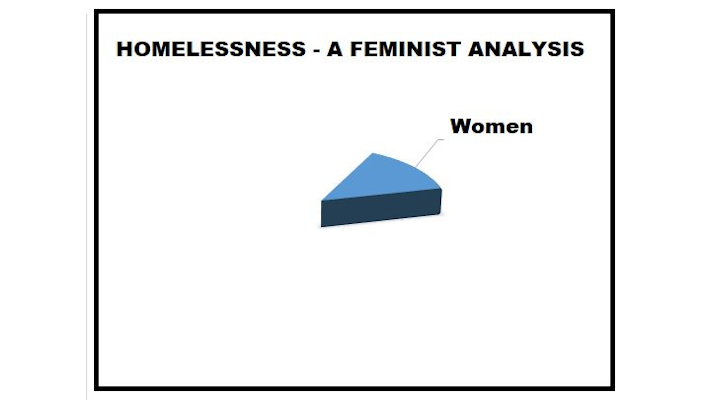
But the authors earlier asserted that homelessness was highly correlated with financial literacy, and yet there are far more homeless men than women. Would someone please explain?

I’m perfectly willing to accept that financial literacy is a significant factor, for both men and women, in achieving financial security later in life. And yes, this should be a major focus in terms of designing appropriate remedial action.

What I am not willing to accept however is:

  • Designing and providing educational programs for financial literacy that are not available to both men/boys and women/girls
  • Extending financial support or other incentives to women, but not men (as in the case, for example, of the ANZ staff Super payment mentioned in this blog post).

And more publicly-funded ‘research’ like this!

See also:

Sex of employees at the Australian Research Council (12 August 2025)

‘Wasn’t cutting it’: 21yo’s mortgage hell after using inheritance to buy first apartment (5 December 2024) Financial idiocy from an empowered womyn and news.com.au

Women and wealth, by Bettina Arndt (19 August 2024)

Australian superannuation company (HESTA) plays straight from the feminist song-book (August 2024)

Labor MP mistaken on homelessness figures (10 May 2023)

The shameful secret behind this photo of a mum and her three kids (3 May 2022) and ‘Horrible’: Why we need to change this appalling reality (2 May 2022) Note that language

Calls for government to pay superannuation for women on parental leave | news.com.au (17 September 2021)

Inconvenient truths about impoverished women and privileged men, by Bettina Arndt (11 April 2021)

Women’s superannuation not so super: The $120,000 gender gap (27 October 2017)

Aussie retirement gender gap much larger than US, UK (17 October 2017)

Brisbane small business to pay female employees more superannuation than male co-workers (28 September 2017)

Superannuation is sexist (6 September 2017) Video

Claims super is ‘biased’ against women are nonsense (30 July 2017)
Image

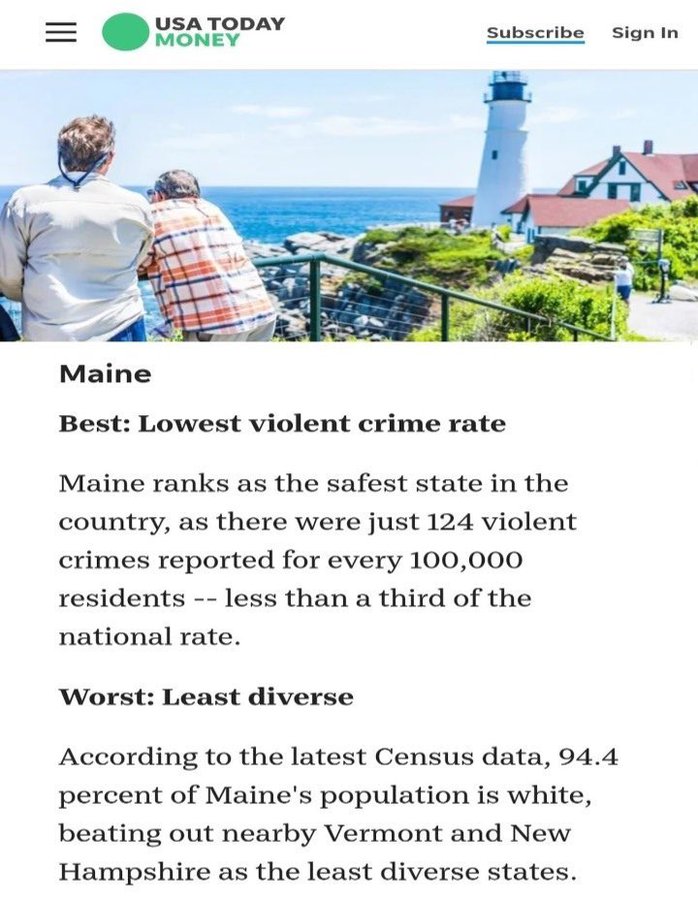
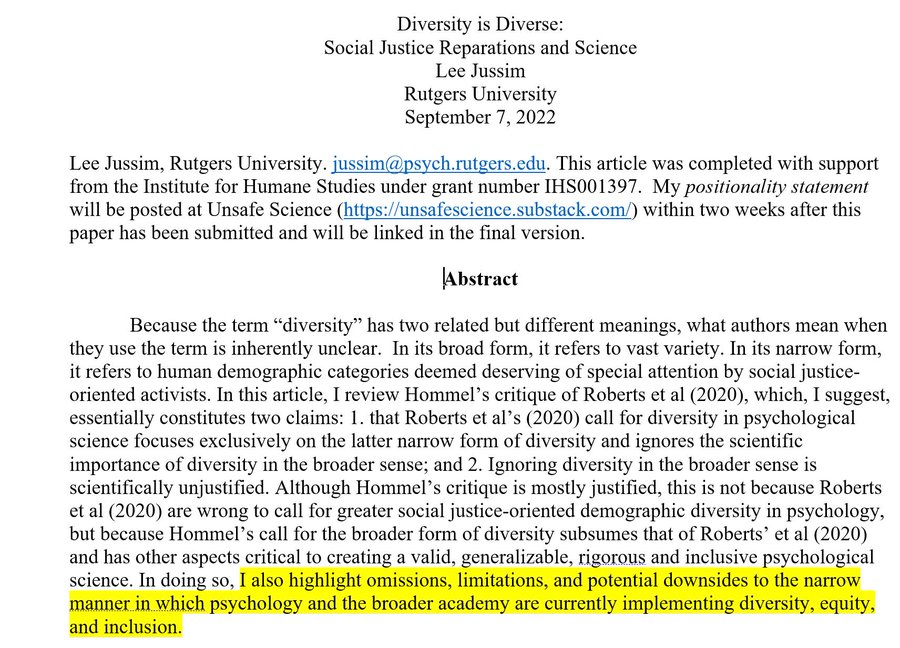
‘Diversity’: A buzzword that sounds good but is often misused

Diversity is another one of those buzzwords du jour – and apparently the cure for all that ails. Except there are a few problems.

Firstly, diversity is often not – in practice – extended to embrace many within the community. I’m thinking here, for example, of white men, non-feminists, and those with a conservative or right-of-centre political persuasion.

In this blog post for example I examined the example of a debate organised by the Diversity Council of Australia. In that example, diversity meant assembling two debating panels that represented or supported a range of feminist perspectives.

A couple of other examples are provided in these other blog posts:

A couple of queries concerning ‘Balancing the future: The Australian Public Service gender equality strategy 2016-19’

We’ve set a target of having 10% of our senior management team female by 2017

Martin Daubney in the UK has drawn attention to this July 2013 article about part-time workers in Britain, which includes the following extract:

“For years, the term “part-time” has been synonymous with junior responsibility and low pay. And yet the pool of people who want to work in this way is incredibly diverse.”

Martin points out that only 12% of those featured on the ‘Power Part-time Top 50’ list mentioned in the article are male. Not so diverse in that regard, huh?

Elsewhere Martin provides the example of the organisation ‘CMI Women’, within whose web site we see an exhortation for gender diversity which starkly contrast with their own board membership (100% female).

Secondly, those who lobby for diversity tend to want to have it imposed by way of gender or racial quotas, selective recruitment, and the like. They do so despite the fact that such measures need not result in measurable improvements to organisational performance or community harmony, and may even be counter-productive in this regard. Indeed they are not averse to exaggerating or otherwise misrepresenting the benefits of diversity.

This aspect is discussed in these blog posts and others:

Less than 50/50 representation does not automatically imply ‘gender bias’
On affirmative action and the imposition of gender quotas
About what happened in Cologne

Thirdly, those who lobby for diversity fail to acknowledge, let alone analyse and debate, the negative outcomes that arise when achieving becomes the major determining factor when adopting government policy. Indeed, if we look at what is happening in some European countries now, such as greatly increased criminal activity, there is evidence of efforts being made to suppress such information.

(Postscript: It’s now 11 January 2023 and the Diversity Council has blocked me from their Twitter feed. I must be too diverse for their tastes. Or something)

Image

See also:

The gender gap is taking us to unexpected places (12 January 2022)

University students show they’ve bought into the diversity delusion (24 February 2020)

Goldman Sachs will no longer do IPO’s for companies with all-male boards (23 January 2020) From 1 July 2020 Goldman Sachs will not work on IPO’s from companies that don’t have at least one “diverse” board member

Commissars in our universities (27 April 2019)

The ever-growing ‘diversity industry’ is overtaking higher education (25 April 2019) USA

Want viewpoint diversity on campus? Here’s how (16 April 2019)

Finally some robust research into whether ‘Diversity Training’ actually works – Unfortunately it’s not very promising (10 April 2019)

Ex-diversity officer smacked with massive fine after giving husband fellowship (15 March 2019) USA

Apple’s diversity VP apologizes for controversial statement at summit this week (14 October 2017)

A memo to Google – firing employees with conservative views is anti-diversity (11 August 2017)

Diversity Authoritarians (17 July 2017) Video

Opinion: Screen Australia’s sexist policies proof it is biased against men, by Mike O’Connor (12 May 2017)

Social Justice is winning (29 March 2017) Video

“Massive immigration and forced assimilation is called genocide when it’s done in Tibet. When it’s done in White countries it’s called “diversity.”” (Source)

College ‘Diversity Council’ Admits to Posting Fake Racist Flyers On Campus (23 March 2017)

Misguided drive for diversity is sending us headlong off a cliff (28 February 2017)

By promoting diversity over fighting ability the Army is alienating its warriors (25 February 2016)

Why Diversity Programs Fail (July-August 2016)

Thomas Sowell on ‘diversity’ – the World Champion of a Word That Substitutes for Thought (8 May 2013)

Image

Related Twitter discussion thread re: the above quote

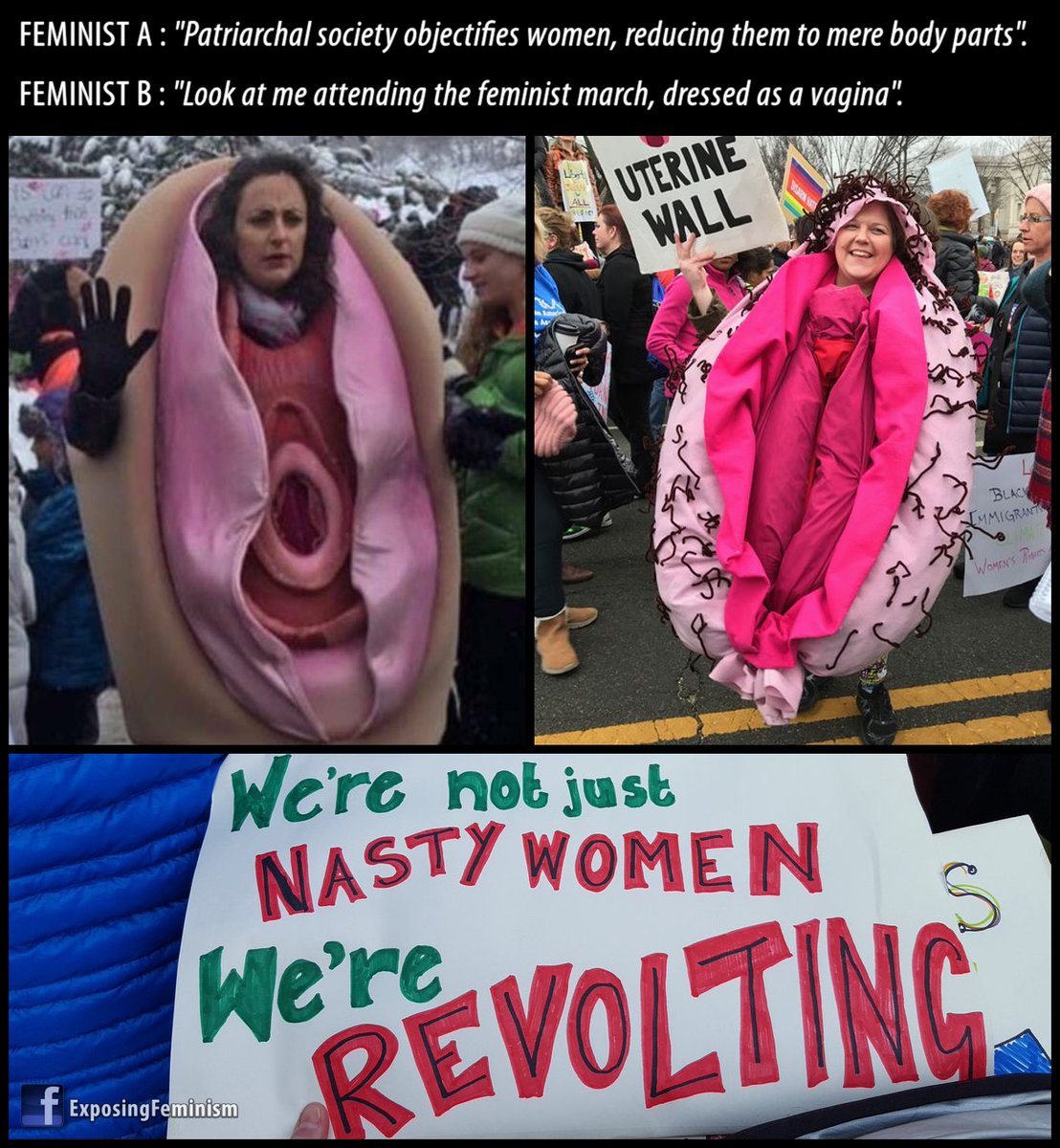
The 2017 Women’s March, Women’s Strike & other anti-Trump protests

As you are no doubt aware, in November 2016 the American people chose a new President. He’s a bit different from the previous one, and some people aren’t too happy about this. Piers Morgan provides further context in his article entitled:

Memo to millennials, that awful feeling you’ve got is called losing. It happens. If you want to know how to win, stop whinging for a bit and learn some lessons from Trump

In this post I have thrown together a few snippets concerning the troubling, unproductive and all-too-often violent leftist/SJW/feminist response to the democratic process …

Some related articles:

Women’s Marchers Say Pro-Lifers Can’t Be Feminists

Limo torched in anti-Trump protests belonged to Muslim immigrant who faces £80,000 bill

Commentary: After assault by inaugural protesters, a call to redefine nation’s character

Women’s March featured speaker who kidnapped, raped and tortured a man (with related Reddit discussion thread here)

Feminists should face their own flaws, not sneer at Melania Trump

Ann Widdecombe Calls Women’s March ‘Pathetic’ on Good Morning Britain (video)

College Professor Exposes Women’s March on Washington (video)

Dear Daughter: Here’s Why I Didn’t March For You by Mary Ramirez

Women’s march: #ButItsAboutEquality! by Hannah Wallen

White Women behaving badly by Janet Bloomfield

More divisive that Trump by Corrine Barraclough

About the organisers/speakers & celebrity hangers-on:

The celebrities shown here loathe Trump because of how he objectifies women

What others thought of the Women’s March and preceding protests:

Tangible outcomes of the Women’s March:

And after the Women’s March came the Women’s Strike on 8 March 2017:

A Day Without Women, A Defamation of Men (8 March 2017)

Meet the terrorist behind the next women’s march (25 February 2017) See related Reddit discussion thread here.

Women’s strike could be coming and history tells us what will happen by Jane Gilmore (8 February 2017)

Pray men never take a day off by Janet Bloomfield (18 September 2013)

A few observations in relation to yet another article critical of men

The mainstream media is awash with articles infused with anti-male bias. Indeed after being conditioned through decades of exposure to this material, most people accept what they are told. In comparison to most of those articles, the focus of this post regarding alleged male risk-taking behaviour is admittedly rather benign. Indeed, if taken at face-value it appears to be sympathetic to the welfare of men & boys.

Examined more closely however the article reflects the contrasting and hypocritical manner in which the media addresses men’s & women’s issues.

The same day I noticed this article I came across another in a similar vein. That article mocks men in relation to another trait associated with masculinity – demonstrating protective behaviour towards women.

No there is nothing controversial about shaming men – just men – about pretty much anything nowadays. That’s kind of my point. And the article isn’t so much about “asking why“, but telling us why … apparently men are foolish.

And oddly, whilst this is an article about men’s behaviour, it begins with an account of the drowning of a 23 month old toddler. This seems to infer that even very young boys are dying due to masculinity-induced recklessness. Presumably female toddlers are more careful.

As the article is relatively brief, I’ll provide it here in its entirety:

Drownings blamed on men’s risky behaviour‘ (The Australian, 30 December 2016)

“The twin brother pulled unconscious from a Sydney swimming pool has died three days after his sister, in what has been described as a “deeply disturbing” week for water deaths.

Charli and Robbi Manago, 23 months, had been fighting for life in The Children’s Hospital at Westmead since they were found in their family’s pool around 7pm on December 20. The hospital last night confirmed Robbi had died.

His death takes the number of coastal and inland waterway fatalities since Sunday to 11. Nine of the dead were men.

Experts say a deadly cocktail of conditions — male bravado, consistent warm weather, and a poor understanding of water dangers — has led to the deaths.

As police and volunteers return to Sydney’s Maroubra Beach to find the body of missing teenager Tui Gallaher and search a Wagga river in the south of NSW for a 42-year-old man, experts have warned people not to overestimate their abilities.

Between 80 and 90 per cent of drowning victims are male, according to recent figures.

Four people died on Boxing Day, including 60-year-old Geoffrey Blackadder, who died trying to save young relatives from a rip on the NSW north coast, and 25-year-old Amine Hamza, who died after swimming with friends at Bents Basin in Sydney’s west.

“It’s deeply disturbing. Men are more likely to overestimate their swimming ability and underestimate how dangerous conditions are,” said Justin Scarr, chief executive at the Royal Life -Saving Society Australia.

“Men are more likely to swim in locations away from lifeguards and crowds, and they’re also more likely to consume ­alcohol.””

As you can see, the premise of the article is that substantially more men die from drowning due to those men taking excessive and presumably avoidable risks.

May I ask you, when was the last time you saw a headline “X blamed on women’s risky behaviour”? Where ‘X’ might have been death/rape/injury/cosmetic surgery/whatever. 1965? That’s because journalists know that when they discuss any such situations they must, at all costs, avoid be called-out for ‘victim-blaming’. And yet the same consideration is not on offer when men are the victims. Gender equality when it suits?

The assertion that drowning deaths result from men taking undue risks appears unproven. The examples of swimming outside the flags and drinking are provided, although neither of these behaviours are exclusive to men.

There are other possible explanations for a gender variation in deaths, particularly the likelihood that men venture into the water more often, and for longer periods, than do women. Clearly those who don’t go to the beach, or who lie on their towels 95% of the time, are less likely to drown in the ocean.

All outdoor activities have some degree of inherent risk, i.e. they are all “risky”. Given that men are significantly more likely than women to participate in almost all forms of outdoor recreation, they are clearly more likely to be injured or killed participating in such activities. One of the few exceptions is netball, a sport recognised as having a low risk of drowning.

If a significant number of drowning deaths were due to medical emergencies then it would make more sense to focus on men’s health, than male shaming. It is likely that some of the male drowning deaths were also the result of men attempting to rescue others.

For the purpose of this discussion let’s concede that “risky behaviour” (to be defined) may indeed result in more men drowning than women. And of course it would be preferable that those tragedies not occur. But before rushing to judgement let’s also consider the issue of risk-taking by men in a broader context.

Men tend to take more risks than women, and this risk-taking results in a range of both positive and negative impacts on society. On the positive side I would go so far as to propose that risk-taking by men has been and continues to be the powerhouse of civilisation.

Need someone to step forward to defend a woman being attacked? Men are expected to step forward, and are shamed if they do not. Need someone to defend a country from attack? Ditto.

In Australia 97% of workplace deaths involve men – around 175 people in 2016. Men working in dangerous and unpleasant jobs that women generally won’t accept. Where is the outrage about the risks these men take in providing necessary services to the community?

Based on media coverage, or lack thereof, it would appear that men taking risks in the name of chivalry, industry and national service is acceptable if not expected. In contrast, men taking risks during their leisure hours is unacceptable and worthy of negative media attention.

Men don’t deserve to be shamed for exhibiting the trait of risk-taking, nor for choosing not to do so. In fact greater recognition that male risk-taking more often benefits society would seem appropriate.

Sure there will be times when some men deserve a thoughtful journalistic rap over the knuckles, but this should not be the default position. Similarly there are times when women’s behaviour merits a commensurate sanction. At the moment however women are rarely subject to criticism, are encouraged to take risks, and the blame for any negative repercussions more often placed at the feet of men.

It’s time everyone got on the same page with gender equality, and recognised that there should be one standard to which we are all held. And that support and empathy should be consistently applied and gender-blind. Anything less will see more of the same unfortunate and divisive gender bias that now permeates the mainstream media.

See also:

Reader posts in a related Reddit discussion thread here

Former senior judge Richard Gee latest to die in summer drowning tragedy (3 January 2016)

Further related blog posts that may be of interest include:

On chivalry

Persistent pro-feminist and anti-male bias in the mainstream media

On masculinity and ‘real men’

How men are portrayed … Haw Haw Haw! The jokes on us

Women are held accountable for … (say hello to the Teflon Gender)

Men do more of most things … get a target painted on their backs

On being male or female (incl. innate differences, stereotyping and so on)

Men’s Referral Service: Clayton’s* support for male victims of domestic violence

“The Men’s Referral Service provides telephone counselling and referrals for Australian men impacted by family violence.” (Source)

The Men’s Referral Service (‘MRS’) web site does not provide any information about the management of MRS nor its legal or financial details. Readers are informed that:

“The Men’s Referral Service is a service of No To Violence, Male Family Violence Prevention Association (NTV). Find out more about NTV.”

Further details regarding MRS can however be accessed in their ACNC register entry, including their constitution, list of directors, and financial returns. The most recent financial report (year ending 30 June 2015) showed annual income of just over $2 million, of which just under $1.7 million was received in the form of government grant/s. The biggest single expense, just over $1.7 million, was listed as “staffing costs”.

Whilst the material provided in the MRS web site provides some pretence about their interest and involvement in supporting male victims of domestic violence, they are very much a pro-feminist organisation whose primary interest is the isolation and treatment of abusive men.

The MRS was recently thrust into the limelight as a result of a decision by feminist NSW Minister, Pru Goward, to award them an extremely lucrative grant ($13 million over 4 years) to ostensibly provide support services for male victims of domestic violence.

That ill-judged decision was discussed in some detail in this Nov 2016 article by Bettina Arndt, and also in this media release from the One in Three advocacy group – which I would recommend that you now take a moment to read.

This news came some time after the original media release announcing the availability of funding for male victims of domestic violence. This was much- applauded at the time by individuals opposed to the gender-biased nature in which government grants had been dispensed up to that point in time:

“For the first time in NSW, male victims of domestic and family violence will receive dedicated support, NSW Attorney General Gabrielle Upton and Minister for the Prevention of Domestic Violence and Sexual Assault Pru Goward announced today.

“As part of a record investment in domestic and family violence prevention, the 2016-17 Budget included $13.3 million over four years to make it easier and faster for men and boys to get help when they need it,” Ms Upton said.” (Source)

Thus this has been very much a case of two steps forward and one step back in terms of achieving a reasonable and equitable level of support for male victims of domestic violence.

*To learn the meaning of the term Clayton’s see here

See also:

Inside the Men’s Referral Service, a call centre dealing with Australia’s abusive men and domestic violence (3 May 2020)

One man’s grassroots insight into the Duluth Model domestic violence perpetrator programme (15 December 2016) Helps explain, amongst other things, why unsuitable groups like MRS are awarded contracts like this one.

Should we scrutinise ALL reports of family violence? (2 December 2016)

Someone has described how the new feminist DV intervention system in Australia works in menslib and askfeminists. Its absolutely disgraceful (February 2016) Reddit mensrights discussion thread

Elsewhere in this blog you might also be interested in reading:

On recognising and supporting male victims of domestic violence

Partners in alms: A primer on the ‘Domestic Violence Industry’

Australian taxpayer-funded organisations that do little/nothing for men (other than demonising them)

Another government inquiry to tell us that domestic violence = men beating women because patriarchy

Excuse me NSW Government, your gender bias and lack of objectivity is showing (again)

More feminist censorship: Cancellation of the Australian premiere of The Red Pill movie

“When feminist filmmaker Cassie Jaye sets out to document the mysterious and polarizing world of the Men’s Rights Movement, she begins to question her own beliefs. Jaye had only heard about the Men’s Rights Movement as being a misogynist hate-group aiming to turn back the clock on women’s rights, but when she spends a year filming the leaders and followers within the movement, she learns the various ways men are disadvantaged and discriminated against. The Red Pill challenges the audience to pull back the veil, question societal norms, and expose themselves to an alternate perspective on gender equality, power and privilege.” (Source)

The Australian premiere of The Red Pill was to have been in Melbourne in early November 2016. That didn’t happen. A feminist petition on change.org saw Palace Cinemas crumble and give in to their demands to cancel the event. This discussion thread looks at some of the misrepresentations made in the text accompanying that petition.

There were then several change.org petitions underway seeking to have Palace Cinemas reverse its decision, a link to one of which is provided below:

Stop Extremists Censoring What Australians Are Allowed To See. Save The Red Pill screening

More than 8,000 people signed this – almost four times the number of people who signed the petition that saw the screening axed! This petition provides a copy of the letter sent by Palace Cinemas advising that they were cancelling the event. The comments added by petitioners are also quite instructive.

In response to the number of people calling on Palace Cinemas to reverse their decision, feminists then rallied in opposition to make sure the film did not go ahead.

Feminists say publicly that they don’t want The Red Pill screened because of it’s alleged hateful and misogynistic message. That’s only partly true. In actual fact they are more frightened by the prospect of:

a) ordinary people being exposed to an alternative perspective on various gender-related issues, and in particular the public becoming aware of, and sympathetic towards, the men’s rights movement

b) the public questioning aspects of both the feminist narrative and the actions of feminists in the community. They are quite simply terrified of the prospect, knowing that exposure to those ideas will inevitably further erode the already dwindling level of support for their tainted ideology.

To my knowledge (at the time this blog post was originally uploaded) no-one in Australia had yet seen The Red Pill. Not the feminists who started and signed the petition, nor Palace Cinemas, no one. All we know about it comes via interviews with the film-maker, a movie trailer and reviews from screenings in the USA. There is no evidence to indicate that the film contains anything offensive or upsetting to the average adult.

This is what feminists do. Not the benign dictionary-definition feminists, I mean the ones in real life. You only need to see how often the ‘censorship’ tag appears in posts in this blog. Censorship and the erasure of dissenting voices, by whatever means, is absolutely a central theme in gender feminism.

What does that tell you about the inherent nature of this ideology? Why do not more people recognise this for the enormous red flag it is, and speak out accordingly?

This video is a good intro to the nature of this ground-breaking film.

Update April 2017: Dendy Cinemas in Canberra and Newtown cancelled scheduled screenings of The Red Pill. And again a petition was started calling on the cinema operators to reverse their decision.

Update June 2017: Cassie Jaye visited Australia to speak at the International Conference on Men’s Issues. During her stay she was a guest on Channel 10’s ‘The Project‘ and on Channel 7’s ‘Sunrise‘ program, both of which generated a lot of media attention.

Rachel Corbett (who was on the panel for The Project when Cassie was ‘interviewed’) wrote an article, and this is Paul Elam’s response.

This tweet and the comments appended is typical of the response to the ‘Sunrise‘ interview on social media … zero support for the program hosts

“Extreme misogynists”: Cassie Jaye vs the Aussie media (13 June 2017) Video

Director of “anti-feminist” documentary leaves The Project panel in stunned silence (8 June 2017) Despite this being a feminist forum, most of the reader’s comments are supportive of Cassie Jaye and/or her film.

A remarkably biased and unprofessional interview on ‘Sunrise’ TV show (11 June 2017) The following viewer asserts that many comments were subsequently removed from the Sunrise Facebook page. I can confirm that a video of the segment was not available via their Facebook page when I checked, and there was no relevant entry in their timeline.

Not content with that, in the face of a tsunami of condemnation on social media, Sunrise then demanded that Facebook remove copies of the interview from The Red Pill’s FB page and presumably elsewhere. So rather than do the right thing and apologise, Channel 7 tries to hide the evidence instead. This mishandling of the incident has only served to create further publicity for the film (and again here). Such clowns, and what a great example of why people have lost all faith in the MSM.

Our feral media attacks Cassie Jaye, by Bettina Arndt (12 June 2017)

A message for Andrew O’Keefe (12 June 2017) Video

Go ahead and see this prize-winning film for yourself:

There are now many avenues via which you can rent or buy The Red Pill.

The Red Pill Movie Facebook page / comments added to the Palace Cinemas Facebook page

IMD movie review page for The Red Pill

Further related articles:

The Cassie Jaye interview: reflections on The Red Pill movie, five years on (2 December 2021)

Cassie Jaye’s film on the men’s rights movement shocked Australia. Why? (29 July 2017)

A feminist review ‘The Red Pill’ (26 June 2017)

Sargon of Akkad comments on the University of Sydney protest at the Red Pill screenings (16 May 2017) Video, and here is a video on the incident by Karen Straughan

Professor writes dishonest review of The Red Pill Movie, gets REKT by Cassie Jaye’s mother (12 May 2017) Cassie’s mum goes feral at some jerkov named belov, who wrote this article (note the reader’s comments section).

Protesters clash, one arrested, outside The Red Pill screening and The Red Pill: What happened at the Sydney University screening protest (11 May 2017), which were followed by
The Red Pill screening divides campus ‘libertarians’ from pro-women groups (13 May 2017)

Articles in response to Dendy Cinemas shutting down scheduled screenings (April 2017): here, herehere, and here. Some letters to the editor of The Australian can be found here.

University of Sydney Union Board disallows screening of men’s rights film THE RED PILL (11 April 2017) Australia. Further discussion of this matter here

Jaye’s Red Pill documents social failure to promote gender equality (10 April 2017)

Well met, Professor Sullivan (13 March 2017) Video with Karen Straughan

The Red Pill takes top award at Idyllwild International Festival of Cinema (18 January 2017) USA

Feminists you’re wrong. The Red Pill is not a hateful film (17 January 2017)

The Red Pill in Brisbane: a hero’s journey (15 January 2017)

The Red Pill – An uncomfortable but important conversation (9 January 2017)

Feminists, don’t ban The Red Pill, watch it instead (7 January 2017) Even when feminists try really hard to appear mature and empathetic, they fail to convince … e.g. “a movement based on the notion that men and boys, not women, are the real victims of structural inequalities in modern society“. Said by no MRA, ever, Lauren. MRA assert that men and boys are ALSO “victims of structural inequalities in modern society“.

Are the Cards Stacked Against Men?: Censored Filmmaker Speaks Out (4 January 2017) Video

Now playing at a theatre near you: Attack of the feminist killjoys (3 January 2017)

Wedding Reception Under Feminist Attack Over Movie Screening (23 December 2016) with related Reddit discussion thread here.

Video interview between Steven Crowder and Cassie Jaye (16 December 2016)

Video regarding the difficulty experienced by organisers in screening The Red Pill in Canada (3 December 2016)

Men are now the downtrodden sex: Feminist (and mother of a son) reluctantly admits women’s fight for equality has gone too far – as two men reveal how they were pushed to the brink of suicide (1 December 2016)

Permission to screen ‘The Red Pill’ at Western Sydney University denied (29 November 2016) The author of this letter to WSU points out the double standard in relation to the University’s screening of ‘The Hunting Ground’

A Young Feminist’s Compassionate View of Men (28 November 2016

Some thoughts on the Berlin screening of ‘The Red Pill’ (17 November 2016)

The Red Pill, by Bettina Arndt (5 November 2016)

Is this the world’s most dangerous feminist? by Bill O’Chee (3 November 2016)

How a feminist petition to stop a film became an own goal (2 November 2016)

Dear Feminists, please stop telling us what to do, by Corrine Barraclough (31 October 2016)

Another feminist petition (31 October 2016) I live in hope that this one will turn out to be a hoax. Failing that these people need the assistance of mental health professionals.

Video interview with the organiser of the Melbourne screening (30 October 2016)

Studio 10 TV show debates the banning of The Red Pill (30 October 2016) It’s concerning to see Jessica Rowe (and others) adopting a view, and imposing it upon others, with so little effort made in terms of research or impartiality.

The Red Pill makes the Cut in Crowded Race for Oscars (29 October 2016) Reddit discussion thread and linked article.

Cassie Jaye’s Red Pill too truthful for feminists to tolerate, by Bettina Arndt (29 October 2016) Related Reddit discussion thread here.

Even Clementine Ford thinks the Red Pill should be shown (28 October 2016) Reddit mensrights discussion thread

Security guards hired for Melbourne screening of The Red Pill (27 October 2016)

Will you take the Red Pill? (27 October 2016)

Media coverage of The Red Pill (27 October 2016) Reddit discussion thread

Why Australian Men’s Rights Activists Had Their Bullshit Documentary Banned  (26 October 2016) The article belongs in the bottom of the cat litter tray, but some of the readers comments are good.

The Red Pill film review ~ Inciting compassion for men’s issues (26 October 2016)

Men’s rights group vows to push ahead with documentary screening (25 October 2016)

Cassie Jaye on Feminism and Men’s Rights Activists (24 October 2016) Youtube video

More Reddit/r/mensrights discussion threads on The Red Pill movie

redpill3

Excuse me NSW Government, your gender bias and lack of objectivity is showing (again)

On 21 October 2016 the Daily Telegraph published an article entitled ‘Domestic violence: Perpetrators would receive warning texts and videos‘.

I have reproduced the article below with my own comments inserted and shown in blue, and with further comments following the article:

DOMESTIC violence thugs would be sent texts messages and videos to remind them not to hurt their wives or drink too much under a Baird government trial to overcome the “existing service gap” for serial offenders.

A large percentage of perpetrators of domestic violence are female – see an abundance of research listed in this post

The bid to “break new ground” in the war against domestic violence comes as new figures show “almost half of those who reoffend do so before the court case is finalised”. The average court time frame is about four months.

“This means a large proportion of DV offenders reoffend before they have had any contact with Corrective Services NSW or access to any programs provided to them,” government documents say.

Female DV offenders don’t have access to programs regardless of the “average court time frame”, because the NSW government only provides programs for male offenders

The Department of Premier Cabinet’s “Behavioural Insights Unit” is calling for a “digital solution” to “support behaviour change in domestic violence perpetrators”.

Just out of curiousity, how many staff in the Unit are self-professed feminists versus others?

It said there was growing evidence “timely prompts” via apps or “digital channels” can help stop serial behaviour.

Can someone please provide links to this evidence? Who undertook it? Was domestic violence specifically included in the definition of “serial behaviour”?

Examples that should be looked at included “videos showing the impact of DV on victims”. One example contained in the documents shows a text that reads: “Hi Rick, if you’re going to the pub tonight don’t forget to make a plan for where you will sleep. Remember you are doing this for Matt and Susan.”

The Baird government wants to cut domestic violence reoffending by five per cent by 2019.

Opposition Family and Community Services spokeswoman Tania Mihailuk said a mobile phone app was a “waste” of money.

“This government has got its priorities wrong, its focus should be on secure accommodation for women and children fleeing violence,” she said.

For a fleeting moment I thought the Opposition might have had something sensible to add there. Bad luck about the men fleeing violence huh? Tania, everything mentioned in this article is a “waste of money”

Domestic Violence NSW chief executive Moo Baulch said “well resourced non-government specialist services” were needed.

With substantial emphasis on ‘more money for private organisations‘ and ‘only for womenfolk’. Read more about Moo and her gender-biased organisation here

A DPC spokeswoman confirmed it was testing the market to “gauge interest, ideas and cost for developing resources to support behaviour change in DV perpetrators”.

Wait, you mean behaviour change in male DV perpetrators, right? Because the NSW Government is apparently happy to look the other way re: female perpetrators.

**article ends here**

Conclusion

I can’t believe that the NSW government or any government would be associated with such an asinine proposal as this. It just highlights the gynocentrism, anti-male bigotry and the arrogance of all involved.

Can you imagine a proposal to send out text messages to female teachers about not interfering with their students? to mums about not neglecting or abusing their kids? or for that matter to aboriginal youth about stealing cars or breaking into homes? No? Now why would that be?

But more than that, I just cannot believe that it would make one iota of difference to the incidence of DV.

We so need a new approach to tackling DV – and a whole new team of people to drive the process. People who can think above and beyond their cherished feminist ideology, and who would be willing and able to recognise and address the whole issue.

(Postscript 10 December 2022: NSW government caught discriminating against men, with phone call. Video)

(Postscript 3 May 2024: NSW government to announce urgent reforms to address crisis of male violence against women)

On bigotry as art (#KillAllMen at NIDA)

NIDA →Productions & Events →#KillAllBlacks

#KillAllBlacks

Date/Time: 19 Oct 2016 – 25 Oct 2016

Eight men create an internet utopia where they discuss the most intimate details of their lives, the most righteous, and the most hilarious. Drinking, sports, work, activism, and how to be an out and proud Klansman. But when one of them disappears after being attacked everything changes. #KillAllBlacks suddenly moves from joke to reality.

OK, relax. I’m just pulling your leg. Australia’s prestigious Institute of Dramatic Arts didn’t really fund and host a production called #KillAllBlacks. That would be bigoted beyond belief. Can you imagine the uproar? Chortle, chortle. As if!

No, in fact they funded and hosted a production called #KillAllMen. It’s still bigoted of course, but the essential difference is that men are a social group that one may now denigrate without fear of repercussion. The #KillAllMen hashtag has quite a history, as discussed in this further blog post.

Oh, I can hear some of you chorus “but there is no comparison at all – men have all that privilege. Look at all those male politicians and CEO’s!“.

Ignoring all those men of colour for a moment, just what percentage of men are politicians or CEO’s? One per cent? Even that?

The writer, Nakkiah Lui, identifies as an aboriginal. One might have thought she would possess an abundance of empathy regarding bigotry. Or at least enough to avoid such a grotesque mis-step. But clearly her feminism trumps her empathy.

Hypocrisy is the short answer, but those preferring the challenge of a TL:DR version can chew on ‘cognitive dissonance‘.

Bigotry dressed up as art is still bigotry. Shame on NIDA

killallmen

Addendum: Ms. Lui was aware of this post as of the day it was uploaded, and was invited to offer a rebuttal. Subsequent feedback consisted of witless ad hominem delivered in a manner reminiscent of terriers yapping behind a screen door. The one criticism that contained even an ounce of substance, was that I had not seen the play.

How ironic then that feminists have just succeeded in having the Australian screening of a film about mens rights cancelled. A film that, ahem, not one of them had seen.

redpill

So on the one hand we have an individual castigated for saying bad words about a feminist production in a personal blog, but with no serious intent of having the play cancelled. On the other hand we have 2,000+ feminists and white knights deliberately setting out to deny everyone the opportunity to experience a production. The former production finished its run, the latter never got started.

Again, this patriarchy of ours sure does work in mysterious ways.

See also:

Hateful Clementine Ford (6 January 2024) Scroll to the last two paragraphs to read about her proposed publicly-funded theatre production

Why it’s not OK to say ‘Kill all men’ (2 December 2021)

New Zealand journalist labels men as the ultimate predators

I had the misfortune to read an article in the NZ Herald entitled ‘No predator more dangerous than the human male‘ by Rachel Stewart.

This is the self-same journo who last year informed us that There’s no doubt that New Zealand’s epidemic of domestic violence lies firmly at the feet of men. As does the solution.Oh dear, someone hasn’t bothered to even dip their toe into that extensive body of domestic violence research that didn’t pass through the feminist filter.

But back to yesterday’s article about men as predators. You can probably guess the bulk of its contents. Comparisons between men and different wild animals. The writer alleging the receipt of abuse and death threats for speaking out for women. (Presumably these threats came from male predators, because feminists don’t do stuff like that) And then some more about men being horrible. Oh, and a bit of Trump-bashing to freshen up those other tired feminist cliques.

The final paragraph read:

“Before I hear you shriek “not ALL men”, how about you good guys start calling out the bad guys, as well as sexual predators. Because you know who they are.”

Yes that’s right all bad guys show a secret sign that only other men can see, and which signals that they are bad. If only the good men then did their duty, presumably by way of citizens arrests or possibly even summary execution, allowing the womenfolk to remain safe whilst going about their business.

Thankfully there are no bad women, thus the issue of good women having responsibility for calling them out is moot. We can disregard the countless rare aberrations detailed in the following blog posts as but rambling inventions of an unhinged MRA and his vast army of similarly brain-washed academics, journalists, public servants, etc:

On violence perpetrated, or instigated, by women and girls
Regarding female perpetration of paedophilia and underage sex
On deaths related to domestic violence
On recognising and supporting male victims of domestic violence
Mostly female perpetrators, so child abuse is a gendered crime then?
The often contrasting media reaction when mums and dads kill their children

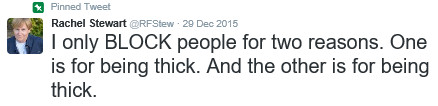
Rachel went on to tweet:

stew5To which I responded:

stew3

The article to which I linked was this fabulous offering from Janet Bloomfield (aka ‘Judgy Bitch’). Please take a moment to read it now if you are not familiar with this work.

Heavy lifting” by feminists … what a joke! If there’s any lifting to be done they just start a hashtag and recruit some gullible white knights to get down and dirty.

And after that, quelle surprise!

stew1

stew2

Hmm. Well given the choice between being a vile gender bigot clinging to a tainted ideology that will without doubt soon find itself on the wrong side of history … and being thick … I think I’ll settle for the latter.

Finally, here is a link to the page that tells people how to lodge complaints regarding material published in the NZ Herald. That is, of course, if you can spare a few moments away from all that predation.

Diversity Council Australia fails to understand ‘diversity’

A brief introduction to the ‘Diversity Council Australia’

“Diversity Council Australia is the only independent, not-for-profit workplace diversity advisor to business in Australia. We offer a unique knowledge bank of research, practice and expertise across diversity dimensions developed over 30 years of operation. In partnership with our members, our mission is to:

  • Lead debate on diversity in the public arena;
  • Develop and promote the latest diversity research, thinking and practice; and
  • Deliver innovative diversity practice resources and services to enable our members to drive business improvement.

DCA provides diversity advice and strategy to over 300 member organisations, many of whom are Australia’s business diversity leaders and biggest employers.”

Further information is available at DCA’s web site/Facebook page/Twitter account and ACNC register entry

The most recent annual report shows income of approx. $1.5 million, of which approx. $1.1 million was generated by annual subscriptions. Although DCA does not appear to the recipient of government grants like so many other feminist organisations, many member organisations are public sector agencies.

The staff at Diversity Council Australia comprise ten caucasians, nine of whom are female … but everyone has different hairstyles. Diversity? Tick. The DCA’s “employee benefits expense” in 2015 totaled $871,798, with “key management personnel” compensation paid or payable being $203,873.

(Just what is it with these feminist organisations who think that gender parity should only be imposed on other peoples businesses or agencies? The Workplace Gender Equality Agency is a classic example, with plenty more here.)

Background to the DCA’s Annual Diversity Debate 2016

Imagine an organisation called the ‘Alternative Diversity Council Australia‘ which organised a debate entitled ‘Is engaging women the game-changer for gender equality?‘ (It sounds a bit condescending to even pose the question, doesn’t it?) Oh, and the organisers decided not to have any feminists on either team. In case their views were a little too, you know, confronting.

Scarcely imaginable right? The organisers of such an event would be torn to shreds in both the mainstream and social media. It just wouldn’t fly.

But thanks to the arrogance and hypocrisy of contemporary feminism all one needs to do is flip genders and everything is magically ok.

And so on the 8 November 2016 Diversity Council Australia convened their Annual Diversity Debate on the topic of engaging men in gender equality.

Let’s consider the definition of ‘diversity‘, which includes:

  1. The state or fact of being diverse; difference; unlikeness: diversity of opinion
  2. Variety; multiformity
  3. The inclusion of individuals representing more than one national origin, colour, religion, socio-economic stratum, sexual orientation, etc.
  4. A point of difference

And so who were the panelists, and just how diverse a group were they? The panelists were Kate Jenkins, Pip Marlow, Stephen Barrow, Clementine Ford, Benjamin Law, and Michael Flood. At first glance similar demographics … but let’s focus on belief systems with regards to gender issues.

Were there any men’s rights activists (‘MRA’) amongst them? Anti-feminists/non-feminists/egalitarians? Nope, they are all self-professed feminists (or perhaps pro-feminist/white knight in the case of Stephen Barrow). Further, at least three of the panellists are virulently anti-MRA.

benlawDoes the panel represent a diversity of perspectives on the issue of gender? Of course it doesn’t. As supporters of the same ideology the panelists represent quite the opposite – they represent a ‘uniformity’ of views.

Further, the invitation to the event sets the parameters of the debate firmly within the realm of feminist-approved topics & answers:

“Progress has been made towards achieving gender equality in the workplace, yet significant issues still remain – such as the persistent gender pay gap, the serious under-representation of women in leadership, and the widespread prevalence of discrimination (for both women and men) when it comes to pregnancy, parental leave or a return to work.”

Let’s consider the definition of ‘engage‘ (as in ‘engage with men’), which is to:

  1. To occupy the attention or efforts of (men)
  2. To secure for aid, employment, use, etc
  3. To attract and hold fast
  4. To attract or please
  5. To bind as by pledge, promise, contract or oath; make liable
  6. To betroth
  7. To bring troops into conflict

This sounds rather like drafting men into servitude, so perhaps ‘engage’ might not be the best term to use here. And indeed, the model of engagement proposed by the ‘yes’ team was very much a one-sided affair. This came as no surprise given the participation of Kate Jenkins, whose predecessor at the Australian Human Rights Commission was Elizabeth Broderick (also chief architect of the ‘Champions of Change‘ program).

This component of the feminist vision translates into recruiting men in positions of authority as tools to enhance female privilege through the use of shaming and appeals to chivalry. It does not involve any reciprocal responsibility to listen to, understand, or render assistance to men.

I’d prefer to think that engagement, in the context of the DCA debate, would entail a two-way symbiotic relationship between men and women, with each group listening to/asking questions – and then committing to help one another.

On the contrary, the typical model of feminist interaction when people dare mention issues that might be perceived to detrimentally affect them, is to tell men (and their female supporters) to STFU and stop being whiny man-babies or ‘‘pick-me’s’. This latter term is a derogatory label that feminists apply to women who are sympathetic towards men’s rights issues.

The following posts discuss and provide examples as to how feminists typically engage with men in the real world:

Beware the ire of an angry feminist
On the censorship and erasure of non-feminist perspectives and opinions
Regarding online harassment
A feminist laments: “Why do so few men turn up to hear women speak?”
“I wonder if we men would have behaved the same seeing women at a summit for men?”
White Ribbon Campaign to men: Stand up! Speak up! Shut up!
Regarding the notion of ‘Ironic Misandry’

Put simply, feminists could not care less about helping men, excepting a few situations where benefits to men were collateral spin-offs from the primary goal of enhancing the relative position of women (e.g. paternity leave for men).

And let’s not forget the sponsors of the debate: NAB, Optus, Johnson & Johnson, BAE Systems and Boardroom Media. I look forward to seeing these organisations also support causes that benefit the welfare of men and boys, for example the ‘One in Three‘ organisation.

The outcome of the DCA’s 2016 debate

The following image says it all. Audience members left the event even more biased against men than they were when they arrived. That’s some negative outcome. A result that’s hardly likely to accelerate progress re: mutual respect and gender equality, is it? But to the DCA this was a “great night“.

dcadebate

Here are some of the tweets that emerged from the floor of the debate:

dcadebate1dcadebate2

dcadebate3dcadebate4

Was there some way in which DCA might have redeemed this otherwise farcical event? Aside from having a diverse and representative discussion panel? Perhaps one thing. Readers might have read elsewhere in this blog about the film The Red Pill, and the problems experienced regarding finding screening venues.

Why couldn’t the Diversity Council have organised a screening of The Red Pill as an adjunct to the debate? What better gesture via which the Council establish credibility, in the broader (non-feminist) community, than to arrange a screening of this notable film concerning issues affecting men and boys.

If the Council truly believed in diversity, in gender equality, and in engaging with men … then they should go ahead and walk the walk … engage.

But they don’t. And they won’t. And the gender debate – and the community – is all the poorer as a result.

(Postscript: It’s now 11 January 2023 and the Diversity Council has blocked me from their Twitter feed. I must be too diverse for their tastes)