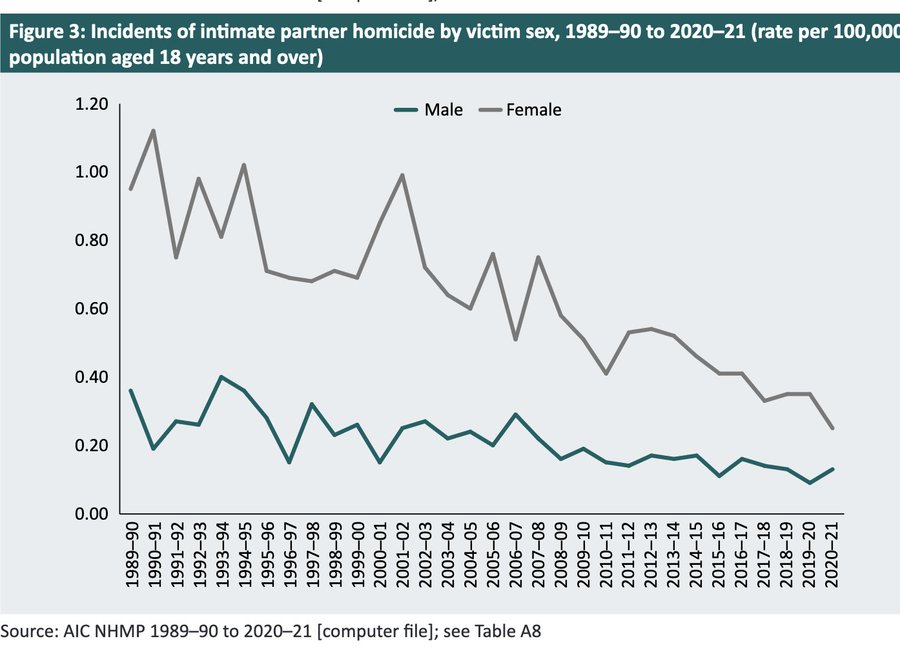
For the benefit of overseas readers, Anzac Day commemorates “all Australians and New Zealanders who served and died in all wars, conflicts, and peacekeeping operations” and “the contribution and suffering of all those who have served.”
This year (2015) is of special significance in that it marks the 100th anniversary of the landing at Gallipoli (Turkey) in April 1915. As a consequence we are currently being bombarded with all things Anzac – documentaries, mini-series, promotional products, and so on. But this is understandable as the Anzac phenomenon is recognised by most Australians as a pivotal element in our ‘nation building’ narrative.
Whilst the focus has always been on our fallen soldiers, an increasing amount of attention is now being given to the role played by women in the First World War, particularly with regards to nurses working close to the front line.
Nevertheless the feminist lobby have long associated Anzac Day with ‘toxic masculinity’ and men’s innate desire to initiate wars and engage in wholesale violence (for example).
The wikipedia entry cited in my opening paragraph, for example, mentions that in 1978, “a women’s group laid a wreath dedicated to all the women raped and killed during war, and movements for feminism, gay rights, and peace used the occasion to draw attention to their respective causes at various times during the 1980s. In the 1980s, Australian feminists used the annual Anzac Day march to protest against rape and violence in war and were banned from marching.”
In condemning Anzac Day as a celebration of men’s propensity for violence, feminists appear to be either be blissfully unaware of, or to conveniently overlook, the existence of a movement known as the Order of the White Feather.
“The organization aimed to shame men into enlisting in the British Army by persuading women to present them with a white feather if they were not wearing a uniform.
This was joined by prominent feminists and suffragettes of the time, such as Emmeline Pankhurst and her daughter Christabel. They, in addition to handing out the feathers, also lobbied to institute an involuntary universal draft, which included those who lacked votes due to being too young or not owning property.“
The White Feather movement facilitated the war deaths of untold numbers of young men, as well as the shaming and suicide of many other men who either chose not to join the army or who were denied active service (which could occur for a variety of reasons).
On a final note, some have compared the White Feather movement to the present-day White Ribbon campaign, given the level of feminist influence surrounding both and their shared emphasis on male shaming.
Firstly, a few words about Quentin Bryce. Quentin is a former Governor-General who recently chaired a state Taskforce into Family Violence the report for which was released in February 2015 (see related blog posts here and here).
Quentin deserves our thanks for performing that role without sticking out her hand for the sort of generous compensation demanded by other prominent talking heads of the Australian Domestic Violence Industry. Quentin was ill-advised, however, to issue statements during the course of the Inquiry that were pre-emptive and prejudicial, and which clearly signalled her own personal anti-male and pro-feminist agenda (example1, example2).
In the article linked above Quentin reiterates a key element of the feminist narrative as it is applied to the issue of domestic violence, that:
“Domestic and family violence is caused by unequal distribution of power and resources between men and women, it’s about the rigid gender roles and stereotypes that characterise our society, and the culture and the attitudes that support violence against women”
Domestic violence does indeed involve an unequal distribution of power, but where feminists get it wrong is that the man need not be the partner wielding the power. The feminist perspective also ignores the reality of domestic violence affecting same-sex couples.
Feminists cling to this notion however because it dovetails with a theoretical framework that they rely upon so heavily, known as the Duluth model.
According to the Duluth Model, “women and children are vulnerable to violence because of their unequal social, economic, and political status in society.”The program’s philosophy is intended to help batterers work to change their attitudes and personal behavior so they would learn to be nonviolent in any relationship. Its philosophy is illustrated by the “Power and Control Wheel,” a graphic typically displayed as a poster in participating locations. (Source)
What galls me most, however, is the mind-numbing hypocrisy of feminists asserting that the application of “rigid gender roles and stereotypes” promotes domestic violence, whilst their ongoing portrayal of men as perpetual perpetrators relies upon applying those self-same roles and stereotypes. Cognitive dissonance anyone?
I’ve had many of my comments removed and am on final warning prior to being banned from the site. On 1 April 2015 a moderator at The Conversation removed yet another comment, one that I added to this article about sexual assault. This is what I wrote:
“It’s deeply ironic that the title of your article is “let’s turn the spotlight on known perpetrators”, but within the first sentence you exclude acknowledgement or consideration of all female perpetrators of sexual assault. On what basis? There’s less reported crimes involving female perps, so it’s OK to just airbrush them out?
I’m also troubled by you referencing the 2013 National Community Attitudes Towards Violence Against Women survey, which didn’t bother to ask respondents about their attitudes towards violence to men. Thus the questions about violence towards women were robbed of context and so we don’t know the extent to which the issue is men’s attitudes towards women, or Australians attitudes towards violence generally.”
As usual my comments were fairly benign in the overall scheme of social discourse. But this time, on impulse I wrote to the two authors of the article to see how they felt about the level and nature of the moderation that was taking place:
“Dear Nicola and Anastasia
I write to you this morning in relation to your article in The Conversation entitled ‘Everyday rape: let’s turn the spotlight on known perpetrators’.
I’m a keen reader of The Conversation and like many other readers often feel compelled to offer a comment on the article presented therein. Also, like many other readers, I am frequently frustrated by the actions of the moderators in removing many of the comments contributed – indeed sometimes most of the comments contributed.
You will have noted that as of now, about half of the comments concerning your article have been removed (including one of mine btw). On this, as on previous occasions, my comments were neither offensive nor irrelevant to the matter being discussed.
I have previously raised my concerns about moderation policy with the relevant people at The Conversation. On those occasions when the moderators do not intervene as readily there have been some very good and quite robust discussions played out with no hint of undue unpleasantness.
Rather than just grumbling about it on this occasion, I was wondering how you – as authors – felt about the situation. Are you being consulted about which comments are removed? I assume not. Do you believe that your article – and indeed your own professional development – would be strengthened by allowing a freer interchange of ideas? My own view is that if one can’t have an honest and robust exchange of alternative viewpoints within a web site run/funded by universities, then where can you?
Thank you, and I look forward to hearing your views”
Dr Nicola Henry of Latrobe University, kindly wrote back on 2 April 2015:
“Thanks for your email. I think you raise a valid concern. I’ve read all of the comments that have thus far been removed (including yours). We of course have no say in this, but I did wonder why they were removed and personally wished they had remained on the site so that people can engage in debate about these issues. Sometimes there are very offensive personal attacks and inappropriate comments made on this site – so I can certainly see why moderation is important. In other words, I can understand why comments that contain vilification are removed, but not comments that pose an alternative view.
This is an issue that I discuss with my students who take my subjects – we discuss freedom of speech and censorship and the sometimes difficult lines that exist between offensive/discriminatory and opinionated speech (the latter I personally don’t think should be censored by the way).
I’m sorry I can’t offer you an explanation as to why your comment was removed from the Conversation site, but I can assure you that both Anastasia and I are always up for critical debate (that’s our job!).”
All good there. I wonder if other authors are mostly of the same view? If so then the problem lies with the attitudes of the management team at ‘The Conversation’.
I’ve said it before and I’ll say it again. The Conversation is a publicly funded forum for the discussion of current affairs and contemporary issues. It is operated under the auspices of Australian universities.
The Conversation should be about mature, free and open discussion (obviously sans expletives, threats and personal abuse).
The Conversation should not continue to be fettered by political correctness and ideologies du jour like gender feminism.
Here’s a relevant comment that appeared in an October 2015 reddit discussion thread concerning another biased gynocentric article appearing in The Conversation:
“I have opted out of The Conversation. Look at the number of “content removed by moderator” and you can bet that most of them were disagreement with the original article which Cory (the moderator) conflates with “breaching community standards” …
I have written several times to Cory pointing out that their editing is not ‘balanced’ and that they only publish a torrent of hate speech masquerading as academic “research”. His reply was to refer me the “community standards” which is a euphemism for a licence to censor opinions that they don’t like.”
This October 2015 Breitbart article provides an overview as to what is occurring in reader’s comments sections in left-leaning organisations like The Conversation.
And yet thankfully here and here we find evidence of a push-back beginning in some US universities. It’s been a long time coming & there’s such a long way to go.
(NB: The following is a working draft only at this point in time – see **)
In 2014 the New South Wales government implemented a program to rationalise the operation of a large number of publicly-funded domestic violence refuges and homeless shelters.
It’s my understanding that the review process was primarily driven by a desire to improve the system of management both at the state level, and at the level of individual facilities. Many of these facilities were being run by feminists essentially as private clubhouses based on individual rules and operating procedures. The refusal by feminist groups to provide accommodation for males in refuges was one of a number of contentious issues in this regard. Not surprisingly, the government sought transparency and accountability, and to maximise use of the network of refuges/shelters within the context of an agreed set of uniform standards.
Central to this reform process was a new policy framework entitled ‘Going Home Staying Home‘ which is summarized in this fact-sheet, and with many further details available here.
The review of refuges and shelters culminated in a tender process based on a set of specifications designed to ensure that refuges operated lawfully, and that broader community expectations were met. Feminists groups made a tactical error in refusing to properly engage with this process and/or commit to meet the required standards. They consequently fared poorly, with non-feminist organisations winning most of the available tenders.
Rather than admitting their own culpability, feminists chose to misrepresent the revised arrangements as indicative of a heartless government “closing” refuges to save money, before setting about sabotaging the efforts of the incumbent management groups.
A similar situation occurred when the feminist lobby accused the Western Australian government of terminating its trial of specialist domestic violence courts for financial reasons, whereas in fact they did so because the operation of the courts was found to be “counter-productive“.
Any government contemplating standing up to the Domestic Violence Industry needs to be mindful of the feminist modus operandi. In the NSW situation there were many millions of dollars of public funds on the table, and the feminist lobby was never going to bow out without a bitter stoush. Political happenings at both the state and federal level played in their favour, however, undermining the courage and conviction previously displayed by the NSW Government.
During the election campaign the Premier of NSW, clearly desperate after the ALP landslide in Queensland, actively wooed the feminist lobby. He made a number of commitments before being re-elected, and as a result it now appears that we will witness a reversal of the reforms of 2014.
The following series of articles provides readers with a time-line, albeit mostly framed according to the feminist perspective, of what occurred in NSW from May 2014 to the present day:
“In June, the NSW government released the results of a tender for three years of funding for Going Home Staying Home, its new policy for homelessness and domestic violence services. 27 women’s refuges, some of which had been open for decades, lost their funding …
Overall the NSW government has increased funding for homelessness to $515 million. But more significantly, it has dramatically changed the way it funds service.
336 funding agreements have been reduced to just 149 separate packages, which include anything from one to 13 organisations offering a range of services.
A new emphasis on local partnerships within 13 NSW regions meant that many tenders were hastily scrambled together to fit into the new funding requirement.
For women’s refuges, the news was bound to be bad, as 59 different women’s services were spread across different packages, often competing against each other.
Of 59 applications that included women’s refuges, only 32 were successful. To an outsider, this initially looks like 27 refuges will close, including Elsie’s which was one of the unsuccessful ones.
But the truth is more complicated. Some unsuccessful services are in the process of being taken over by winning tenderers, and some winning tenderers are looking rocky as the reality of making partnerships work hits home.”
The truth appears fairly simple to me … the NSW Government increased rather than decreased funding for shelters, the previous system of funding was extremely unwieldy, and in most cases shelters were not closed but rather placed under new management.
“Angry members of the state’s peak body for domestic violence have issued a vote of no confidence in the organisation, alleging mismanagement had resulted in the closure of a number of specialist women’s refuges.”
After reading Wendy’s article one is left with the impression that facility management problems only emerged after the feminists were ejected. I’d suggest that was not the case, and that significant problems were likewise evident in the management of facilities pre-June 2014. It’s unfortunate that journalists chose to look the other way at the time, and it also tells us a great deal about the priorities of current-day feminists.
The picture presented in the media is that any management deficiencies exposed in feminist-controlled facilities can be sheeted home to inadequate government support. Similar problems occurring in non-feminist run facilities are, however, a different and much more serious matter. The key factors in those situations are more likely to be reported as, for example, a “lack of specialised skills”, a lack of understanding”, and insufficient female focus.
And now I suspect we shall see the funding faucet once again thrown open for feminist groups, that an inordinate amount of money will be wasted or otherwise mis-directed, and that we shall still not see the provision of spaces with refuges for male victims of domestic violence.
(**I’ve written to the relevant state agency seeking further any information concerning both the background to the tender process and the tender process itself. I also want to confirm the figures as to how many, if any, refuges were actually closed versus how many refuges were created or expanded in capacity. Once this information is received I will amend this blog post accordingly. I would also welcome any relevant information that might be volunteered by readers)
Some other papers concerning the mismanagement of Domestic Violence refuges and homeless shelters (outside Australia)
Reinvigorating the domestic violence sector: Systematically addressing conflict, power and practitioner turnover This doctorate thesis from December 2009 discusses mismanagement and bullying within the domestic violence industry with the laughable conclusion being that the solution is to “re-invigorate the feminist principles and philosophy that has traditionally guided the sector”. Isn’t that a bit like saying the molestation of children in orphanages is best addressed by ‘re-invigorating the Catholic principles and philosophy that has traditionally guided the sector’?
Indeed, in both cases we have a group within society that has been placed on a pedestal and absolved of the level of oversight and accountability that would otherwise be considered reasonable.
On that note, this paper argues that given the failure of the feminist-driven approach to DV, that it’s time to give others a chance.
Domestic violence organisations in the USA don’t provide adequate services to male victims as they are required to do by law, and no-one does anything about it – See the related reddit discussion thread
Elsewhere in this blog you might be interested in:
Whilst some – most notably those on the payroll of the Domestic Violence Industry – are praising this is an appropriate response to the level of public concern about violent crime, others like myself are highly sceptical.
My take on this move is that it is motivated partly by the desire to be ‘seen to be doing something’, and partly as a sop to the feminist lobby. Surely only the most hard-line feminist could seriously believe that creating a new ministry will, in itself, make any significant difference in the ongoing quest to reduce the incidence of sexual/domestic violence?
So how about we take our foot off the ‘we spend because we care’ pedal, and pause a moment to ponder questions such as:
What more can be achieved with a new minister/ministry, than could be achieved in the absence of such changes? Is this administrative change really necessary in terms of delivering the sorts of tangible benefits that the community wants?
If there exists a sincere belief that a new ministry will expedite progress then, using the same logic, why not create a Minister for Reducing Traffic Accidents and/or Minister for Finding a Cure for Cancer?
Will this new initiative to anything to help break down the current substantial extent of gender bias which has seen both domestic violence and sexual assault portrayed as women’s problems with men as their root cause? Will, finally, serious attention be given to female perpetrators and their male victims?
How much will the creation of a new Ministry cost? Will it be cost-effective?
On that last point I can tell you that the costs of such a seemingly simple administrative change will far exceed what most people would imagine. I would guesstimate this to be in the low hundreds of thousands of dollars. And I think I can safely state that, barring perhaps an FOI request, you will NOT subsequently read about this impost in the media.
What then are some of these additional costs that are about to be borne by the taxpayers of NSW?
Creation of new corporate logo
Design and printing of business cards for all employees
Design, production and installation of new building/office signage
Production of new stationary, brochures and other printed material
Production of new corporate gifts and products such as coffee mugs with logo, etc
The destruction/disposal of pre-existing stationary, corporate livery, etc
Updating of web site and any other online presence
Employment of new staff/redeployment of existing staff/redundancies
Bear in mind, please, that each dollar spent (wasted) to pay for the creation of a new ministry means one less dollar available to actually address the central issues of concern … reducing domestic violence, and treating/supporting its perpetrators and victims.
In this post I address the topic of murder and suicide occurring within the context of intimate partner violence. There are also separate posts dealing with suicide, and with the DV-related deaths of children.
As readers might well be aware, significant numbers of men, women and children lose their lives each year by way of incidents related to domestic violence. As in the case of non-lethal injuries and mental anguish, feminists portray women’s deaths as constituting the “overwhelming majority“, and then use this as justification for ignoring the deaths of men.
In 2015 feminist activists operating under the banner ‘Destroy the Joint’, established an ongoing tally of the number of Australian women allegedly killed in DV situations. They then disseminated this data throughout the media, generating considerable publicity using the tagline “two women each week” (are being killed by their male partners). They claimed that there had been a doubling in the rate of men murdering their partners, and that domestic violence was twice as bad in 2015 as it was in 2014.
Even if their figures were drawn from official sources it would have been problematic to draw conclusions from statistics relating to short periods of time, as the results for the period in question may differ greatly from the long-term average.
We do know however that when averaged over the preceding twelve month period the corresponding figures were (approx.) one women killed every seven days versus one man killed every ten days. We also know that, at that time, 40% of homicide victims (occurring in a situation of domestic violence) were male.
(Postscript April 2016: The report of the Victorian Royal Commission into Family Violence included the following statistic, “Data from the Victorian Systemic Review of Family Violence Deaths shows that, of the 288 deaths of relevance to the review between 2000 and 2010, 138 were men and 150 were women (that is, 48 per cent male)”. (Volume 5, p207)
It is important to acknowledge that neither the ‘Destroy the Joint’ Facebook page, nor the various spin-off media stories, made mention of:
the corresponding number of men killed by their intimate partners or family members
the number of women killed by other women
the number of suicides linked to domestic violence (predominantly involving men)
On that last dot point, it’s worth reading this 2010 paper by Richard L Davis which addresses the relationship between domestic violence and suicide. (Postscript: This 2018 article concerns the suicide of a woman following the DV-related murder of her children. As is typically the case in MSM articles, the death of men in similar circumstances was overlooked.)
Another issue with the ‘Destroy the Joint’ tally is that (AFAIK) none of the cases it reported, at the time of writing this post, had been the subject of completed court proceedings. As a consequence it is not entirely certain that the deceased women were killed by a man, and/or that the deaths occurred within a context of domestic violence.
Furthermore, at some unspecified point in early 2015 (I suspect when deaths dropped below the previously claimed weekly average) the ‘Destroy the Joint’ tally was quietly expanded to include all women who were murdered (i.e. not just partner violence).
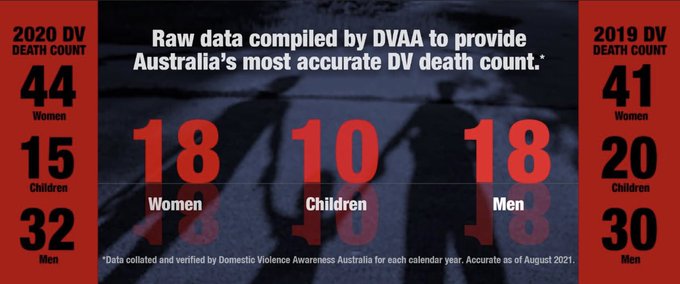
Jasmin Newman subsequently established the ‘Destroy the Narrative’ Facebook page to keep track of the corresponding number of male deaths at the hands of women. In December 2016 Jasmin published this paper regarding her work on this issue, which I strongly recommend you read now.
(Postscript: Sadly, Jasmin discontinued her online MRA efforts due to a concerted campaign of harassment by people opposed to her views. With regards to deaths related to DV, a new tally is being maintained by a group known as Domestic Violence Awareness Australia. Time will tell with regards to the longevity and reliability of this data source.)
Turning now to another issue. one of the statistical sources cited by ‘Destroy the Joint’ was this report by the NSW Coroner (Refer appendix C bar chart this is in the report on page 59 or 75 depending on how you read page numbers).
On first inspection it appears quite damning in relation to the culpability of men for DV-related deaths, but on further review there are a number of provisos that must be taken into consideration including:
the small sample size
the skewing of the results by the much higher incidence of DV-related deaths in the indigenous community
the fact that men are significantly less likely to report being subjected to domestic violence, and therefore many of the male perpetrators cited in the report may in fact have been victims of domestic violence (either as children, as adults, or both).
I’ll close this post with this comment contributed by ‘Phil’ in response to this article:
In order to provide solutions to any societal problem, the first step is having a complete understanding of the problem, all the relevant & accurate information, and an ability to see the bigger picture of the issue. It also requires a unified approach, appropriate systems in place to embrace & encourage change, and a shift in mindset that brings long-term & sustained behavioural change.
A great example of this is drink-driving, which is now seen as irresponsible, selfish, dangerous, disgraceful & a condemned behaviour after being culturally accepted for many years, until the effects of such actions, portrayed the destruction it was having on many lives. This change was brought about through the grief, heartache & suffering associated with losing a loved one and was driven by the love & compassion people felt for each other, their family & the broader community. Even though it was predominately men who were guilty of drink-driving, it wasn’t tackled as a gendered issue because society demanded a holistic approach to the problem, they wanted this senseless behaviour eradicated, no matter who was doing it and certainly wasn’t propelled by hatred or condemnation of one sex & not the other.
So, why has this approach not been taken when it comes to domestic violence? Why is one gender singled out as being the problem, when everyone with half a brain knows that both males & females are capable of being perpetrators of the vile acts of behaviour? How are we, as a society, meant to really eradicate this behaviour when blatant misrepresentation of the truth is communicated by groups hell-bent on only recognising some victims & perpetrators and not all? When did domestic violence become a political pawn used to generate votes & financial windfalls and one that promotes much debate & hatred, instead of a people focussed, behavioural problem that requires love & respect for fellow human beings to be solved?
It’s a figure quoted by media outlets, politicians & domestic violence advocates – 79 women killed due to domestic violence last year (2015) and the inference that these deaths occurred by their male partners. This is the figure devised by the Facebook page, Destroy the Joint {1}, who maintains a body count of women killed in Australia due to violence against them.
On September 24th 2015, newly appointed Prime Minister Malcolm Turnbull announced a new $100 million domestic violence package with former Australian of the Year & self-appointed expert of domestic violence, Rosie Batty, Turnbull stated in his press conference that 63 women had been killed to date in 2015. This gave the perception that all of these deaths had occurred due to domestic violence and at the hands of a current or former male partner of the deceased.
But when you look into these deaths in detail, you will find that the figure quoted is more propaganda by the “radical feminist” brigade who are insistent on only recognising female victims of domestic violence and ensure funding is siphoned through their sexist organisations. Of the 63, less than half were found to be killed by their current or former male partner (44%) and in total, 60% of these deaths were committed by male perpetrators known to the deceased.
I am in no way trying to minimize the impact of these tragedies as any life taken is a vile act of brutality towards another human being, what I am highlighting though is the gross misrepresentation of data that is being communicated to only further their own cause – not actually provide solutions to ending Australia’s domestic violence crisis other than to falsely propagate that it is a “gendered issue”.
Upon further analysis of the 79 women killed last year, here are my findings (based on information provided by ‘Destroy the Joint’):
43% killed by current or former male partner (34 in total) 16.5% killed by known male (13) 13.9% killed by a female (11) 11.4% killed by unknown male (9) 8.9% killed by either victims son, brother or father (7) 6.3% killed by an unknown perpetrator (5)
From the information provided & the perception of all these women being killed due to intimate partner violence being driven by various outlets, this represents an over inflation of the figures by a mammoth 132%! Destroy the Joint claims at least 75% {2} of these deaths are perpetrated by males known to the female victim but the figure actually equates to 68.4% and again their accuracy is found to be questionable. This is especially damaging when it is being used as “factual” information by government agencies, domestic violence groups, & prominent media outlets that inform the public, when analysis shows the information to be incorrect.
Paramount to solving any problem is having the correct details, being truthful in your communications and having a thorough understanding the issue at hand. With embellished & distorted information like this being used, clearly this is not about solving domestic violence holistically, merely being used as a catalyst to gain further funding.
{1} https://www.facebook.com/notes/934084536639291/ https://www.facebook.com/DestroyTheJoint/ {2} Destroy the Joint disclaimer – “Please note: We do not confine our count to only deaths attributed as domestic or family violence, as we believe all violent deaths targeted against women are the result of societal misogyny. Most of these cases are subject to court proceedings but we do know that in at least 75 per cent of the cases reported from 2012 to 2015, the victim knew her alleged killer. We include women killed by other women (lateral violence). Their relatively small but equally sad number confirms that most violence against women is perpetrated by men.”
Recently, I was viciously attacked for the post I made scrutinising the claims by Destroy the Joint about the women killed in violent circumstances last year. These attacks were cold, calculating, methodical, vile & extremely derogatory towards myself but worse still, my family & in particular, my children. It appears that I may have hit a nerve by revealing the truth about the misrepresentation of the information provided by them and the perception that there were 79 women killed in domestic violence scenarios last year.
Normally, I am not bothered by these types of attacks as they occur on such a regular basis and I have become desensitised to the constant taunts I receive. But, these were different, they were filled with so much hatred & vile language that I found myself a bit shaken by them and was appalled that some felt it warranted to continue this vitriol towards my children when I was not retaliating to their relentless abuse.
This type of toxic behaviour is quickly becoming normal, especially in the world of social media, with people spewing hatred towards one another purely because of a difference of opinion on a certain subject. Is this the type of behaviour, values & morals we want instilled in our next generation? Are we, as a society, truly considering the long-term impact this will have on future generations and teaching them to be accustomed with hatred instead of love? In order to overcome this problem of domestic violence, the solution cannot be based on hatred between the genders – it requires solutions based on love, respect, compassion, understanding & acceptance of every human being regardless of gender, sexual orientation, race or religion.
I will leave you with a quote from the remarkable Nelson Mandela to ponder – “No one is born hating another person because of the colour of his skin or his background or his religion. People learn to hate, and if they can learn to hate, they can be taught to love, for love comes more naturally to the human heart than its opposite.”
(Postscript February 2020: Whilst most articles about DV-related domestic violence still don’t bother to provide corresponding statistics for male deaths, we are told that ‘Australia is a nation of dead women, and we’re becoming numb to it‘. The level of feminist hypocrisy and disconnect remains staggering.)
(Postscript May 2020: I just learnt today – not from the mainstream media – that the number of women killed, in the UK, by their partner was now at a 40 year low – Source)
Other related references, including DV-related murders that you are unlikely to read about in the ‘Destroy the Joint‘ page – or in overseas equivalents such as, for example, @CountDeadWomen in the UK:
*Anything that might be put down to illness (poison) *Or accident (car, fire in bed, pushing) *Proxy violence (hitmen, white knight, swatting) or *Drive him to suicide. Or failing that, stab him, say you were abused, & label it self-defense.
Outcast powderkeg men, by Bettina Arndt (22 April 2022) What factors drive men to commit murder after their marriage falls apart? Could changes to the police & justice system prevent such murders occurring?
Are all missing persons female? (17 March 2022) USA. This is not specifically related to DV murders, but rather to the prevailing practice of ignoring or minimising male victims.
Lethal lovers: National strategy needed to end domestic homicides (22 February 2022) The feminist perspective, which continues to be to ignore female perpetrators and their many male & female victims. A more detailed article in the Canberra Times, addressing the same topic can be found here.
The forgotten victims of Australia’s female killings epidemic (6 May 2021) Now, for balance, let’s throw in a feminist perspective from Candace Sutton. Can you spot the difference?
‘There are more male victims of domestic violence than we think‘ An article by Janet Fife-Yeomans in the Daily Telegraph (23 February 2021) Australia. According to the NSW Bureau of Crime Statistics and Research, 61 of the 146 people killed in domestic-violence related homicides in New South Wales were men (i.e. 42%).
Spotlight on why men kill partners (21 April 2020) This research project represents a collaboration between the Australian Institute of Criminology and Australia’s National Research Organisation for Women’s Safety (ANROWS). Clearly women killing men is not that big a deal (?!)
Woman accused of stabbing partner to death claims self-defence (21 January 2020) We will see how this case concludes, but obviously when men are consistently portrayed as violent and abusive, then an argument of self-defence is more likely to be convincing.
The reckoning: One city, four murders (18 October 2019) By Richard Guilliatt. This is not specifically about DV-related murders, but addresses some interesting and related issues
“While it’s well-known women are at risk of being killed by an intimate male partner at separation or divorce, my analysis shows that some men are at risk of death at the hands of a current or former female partner in certain situations, like financial insecurity such as the drawing up of a new will,” she said.
Media double standards: Where are the panel discussions about vengeful ex-wives who kill their ex-husbands’ new girlfriends? Instead, a story about the ‘tragedy,’ and what a nice teacher the killer was (29 November 2018) Video
Dividing the Sexes: Critique of the Coroner’s Report on Domestic Violence Homicide (3 June 2018) Most DV-related homicides in Australia in the first half of 2018 were committed by women. A reality very much at odds with the misandric messages issued by the feminists who have adopted the Eurydice Dixon tragedy as their current cause celebre.
Joe Cinque’s Consolation: violence, delusion and the question of guilt (11 October 2016) Australia. Friends were told of the impending murder but did nothing – was this an inevitable outcome of community being conditioned to think that female-perpetrated violence is a rare and unlikely aberration.
A cycle of violence: when a woman’s murder is called ‘understandable’, by Laura Bates (27 July 2016) UK. Feminist perspective that ignores the fact that explanations/excuses are also routinely found when women kill their partners (in fact I would suggest that this is more common in such situations)
Domestic violence will flourish because of government funding cuts (2 May 2016) Australia. According to Jenna Price the pussy-pass works in reverse .. men do all the killing but the justice system lets them off the hook. Reality check please. All in all, an extremely misandric article. Reddit discussion thread here.
“The number of women convicted for domestic violence rose by 30% in the year to April 2015, from 3,735 to 4,866. It marks an upward trend – the number of convictions involving female perpetrators is now six times higher than it was ten years ago”
“The reality is 12 people have died in domestic violence [related incidents in 2016] and eight of them have been men. Men are dying at the rate of two to one, but we show only show one male victim out of half a dozen or eight females.” And yet at the same time ‘Destroy the Joint‘ tweeted that nine women had been killed in the same period. Someone’s maths skills are seriously impaired.
“Michelle Davies, domestic abuse strategy manager for Safer Cornwall, said it was “difficult to pinpoint” why more men than women have died in domestic situations in Cornwall over the past five years.”
“In 2015, statistics from the Ministry of Health recorded three women killed in the province of Seville at the hands of their partners or former partners. There is no official count for murdered men, but through the news published by the media know that this crime was the second in 2015 … (In the first case) a neighbor beheaded her husband and then cut the veins.Like the (recent) case, the woman had a mental disorder.” And in a related reddit discussion thread it was noted that:
“As expected, (the) “battered woman” and “mental issues” justifications appear in the news. And as expected, the case is treated as “domestic violence”, not “gender violence”. At least 29 men have been murdered by their partners (and in comparison, 48 women) in Spain this year, according to the press.”
Stop the tide of female blood (11 September 2015) More of the usual gender biased narrative from feminist journo Wendy Tuohy, but do take the time to scan the readers comments
Some other deaths you won’t read about in the ‘Destroy the Joint‘ page involve those men who paid the ultimate price for intervening to protect women who were being assaulted. Some of their stories can be found in this post.
On 25th November 2014 the White Ribbon Campaign (WRC) celebrated its annual ‘White Ribbon Day’, whereupon they beat their chests about the wonderful job they (say they) are doing, and sought to fill their coffers via donations and merchandise sales.
I visited their Facebook page at that time and noticed quite a number of dissenters posting comments there. In true feminist fashion these were slyly removed during the course of the day (as discussed in this blog post). WRC representatives responded to the nay-sayers by castigating them for complaining about WRC’s focus on female victims, and/or by telling them to go and start their own organisation to address violence towards men.
Without doubt there would be many people out there who would say, how could anyone be so mean-spirited as to criticise the White Ribbon Campaign? So what if they focus solely on female victims of domestic violence, at least they are still helping someone? Surely any publicity that raises awareness of the problem of domestic violence is a good thing? Lots of celebrities support WRC so they must be doing something useful otherwise those people wouldn’t risk their reputations, right? Right?
The WRC believes, or at least tries to make others believe, that those opposing it are misogynists who are angry about its sole focus on female victims. In actual fact, in most cases, that is not the root cause of disquiet about their operation.
So, if this issue isn’t the main issue of concern, then what is?
1. WRC’s lack of honesty and transparency, and their censorship, shaming and attacks on others holding alternative views
Publicly, the WRC’s rationale for focusing solely on female victims is based on their claim that the “overwhelming” majority of domestic violence is perpetrated by males upon females. Privately, the driving force behind WRC is its rigid adherence to feminist ideology.
These false assertions have the effect of denying male victims of domestic violence appropriate recognition or support, and of unfairly demonising men in general. Another outcome is the lack of attention given to abusive women through, for example, the provision of behaviour modification programs for female offenders.
Thus the problem is not that the WRC focuses on male violence towards women, but that – for strategic reasons – they fail to acknowledge other significant elements of domestic violence. No, in fact they do more than that. They argue that those whose priorities differ from their own are (at best) ignorant and misguided, and at worst that they are abusers themselves.
The message disseminated by WRC seeks to make a complex social issue appear simple. This is useful in attracting and maintaining the interest, and subsequently the financial support, of the public. Part of this involves inventing a single easily-identifiable bogey-man – the heterosexual male.
WRC’s approach also handily puts the onus for addressing the problem onto men and absolves women of any responsibility in relation to either causing the problem or fixing it.
2. The fact that WRC diverts, both strategically and inadvertently, public and private funds away from programs where they might be used more effectively in the fight against domestic violence and/or in assisting victims of DV
The effects of misrepresentations by WRC, when combined with substantial marketing efforts, political acumen, and a social environment highly supportive of feminism, sees WRC exert a significant influence on government policies and decisions regarding resource allocation to DV.
WRC compromise efforts to reduce domestic violence and assist male victims because they misrepresent both the nature of the problem and the nature of potential solutions. In so doing they side-track us from identifying and implementing more effective solutions. This skews the nature of research undertaken, in turn skewing the nature of support services provided.
WRC are not satisfied for a reasonable share of funds to be directed towards feminist groups like their own, they want all available funds so directed.
Questions have also been raised as to WRC’s ability to competently manage public funds, and the extent to which its operations are financially self-serving. Ironically this is happening at the expense of men, given that men contribute the majority of tax revenue.
According to White Ribbon Australia’s corporate annual report for 2013, they gambled their donations in the stock market and lost one fourth of their current assets! In other words, they lost almost $500,000 AUS playing the stock market with the public’s donations! Here is what their corporate annual report states:
“Total equity declined from $1,193,398 to $751,611 as a result of the trading loss.”
Society’s current predilection for placing feminism and feminist organisations on a pedestal, goes hand in hand with inadequate government oversight and serious lapses in accountability. History has shown us that this type of situation usually ends badly. It is quite simply a scandal waiting to happen. (I talk about this problem in my post on the Domestic Violence Industry)
WRC’s involvement in running programs in schools
White Ribbon’s involvement in running what are essentially feminist indoctrination programs in schools has been a source of considerable concern for many. This is the subject of the sources listed below, and is discussed further in this blog post.
Why does the White Ribbon Campaign make these errors of judgement, and why will it continue to do so?
WRC will continue down its current path because doing so supports feminist ideology and helps grow the influence of that movement, a goal that is of paramount importance to them. As a consequence, targeting anything or anyone that threatens the feminist narrative in relation to domestic violence is accorded a high priority (see my posts on Tanveer Ahmed and Sallee McLaren for example).
Secondly, it is financially lucrative for WRC to continue their current operating model. Misrepresenting the nature of domestic violence, and exaggerating its scale, stimulates further public support and government funding. This then channels additional funds towards themselves, other feminist enterprises and individual feminists (as per my post on the Domestic Violence Industry).
We stop violence at the source. And the source is men (28 June 2016) White Ribbon CEO Libby Davies defends White Ribbon (see article below), and in so doing happily throws men under the bus. Oh, but see the readers comments that follow (240+ at last count), NONE of which support Libby’s misandric stance. Here is a subsequent radio interview with Tom Elliot concerning Libby’s article, with further comments from Tom here.
Some of you may have read my earlier post about censorship and bias at a publicly-funded pro-feminist web site called The Conversation. I’m chuffed to see that post has attracted quite a lot of hits.
A comment contributed by one of their feminist readers struck a chord. It was pretty awful really.
And so I did something that I don’t recall having done before … I complained to the moderator:
“My main concern with Barbara’s comment was her unsubstantiated assertion that many of the people expressing concerns about the gender-bias in the debate surrounding domestic violence are perpetrators of abuse. This is an outrageous claim that is gender bigotry pure and simple. It is is like me saying that feminists are closet paedophiles because they remain silent about the now large numbers of female teachers who are caught having sexual relations with underage students. Hers was a completely inappropriate and inflammatory comment”
And lo and behold … Barbara’s post was consigned to the rubbish bin of history.
I can just imagine the gritted teeth of the resident white knight/SJW moderator as he pondered my request. But then, overcome with righteous fury, it appears he resolved to teach me a lesson. Something along the lines of “There’s no way I’m going to let this uppity MRA get away with this.”
And so it came to be that I was simultaneously advised:
Your comment on ‘Remove the burden of family violence from the victims, to the courts’ has been removed … For your reference, the removed comment was:
“Rob, I haven’t read your report yet (but will do so shortly), so the following comment is based on what I’ve read in the media. It appears that your report talks about the need for more & better intervention and behaviour modification programs for perpetrators, but that your recommendations in this regard are limited to male perpetrators.
Can I ask why you would not adopt a gender-neutral approach in this regard and have programs that catered for both male and female perpetrators. I mean, it’s not as though there are so few violent women that we can afford to just wave them away.
I first came across this proposal in a post within the Facebook page of the feminist advocacy group ‘Domestic Violence NSW’. I contributed a comment which they quickly removed (as recounted in another of my blog posts), and which I will now re-iterate and expand upon here.
“Women’s access to justice is the key thing and the key things that most women complain about is not being believed, not being heard, not having appropriate support or response.
“That’s one of the key findings of most research, and of course that puts police in the firing line, but one way of alleviating that is to have specially trained police who work in these police stations.”
(Professor Kerry Carrington is Head of the School of Justice, Faculty of Law, Queensland University of Technology, and author of Feminism and Global Justice, Routledge, 2015. Her original blog post on this subject can be accessed here)
But Prof. Carrington doesn’t just want specially trained police, she wants specially trained female police. In fact Prof. Carrington’s idea goes even further than that, calling for women-only police stations, a proposal that carries with it more than a whiff of separatism or gender apartheid.
In terms of enhancing the battle against domestic violence, to what extent would Ms. Carrington’s idea contribute above and beyond that which is, or could be, achieved with the existing system of mixed-gender police stations?
It’s probably fair to assume that some women would be more comfortable reporting domestic abuse to female police officers. I certainly understand and support that with respect to (for example) having female officers assist traumatized female rape victims. As a consequence one tangible benefit of women-only police stations could be an increase in the percentage of female victims of domestic violence lodging reports of violence.
But even if that were the case, would these further reported crimes translate into more effective sanctions, and eventually a corresponding reduction in rates of perpetration? I’m not convinced.
And given that the percentage of male victims of domestic violence currently lodging reports is substantially lower than for female victims (7% vs 21%), then perhaps addressing that segment should be accorded a higher priority?
I think we can assume that it is not Ms. Carrington’s intention to press for one male-only police station for every two female-only stations (to reflect the fact that one in three victims of domestic violence are male). Thus the proposal is sexist and discriminatory in that it provides a publicly-funded service for women in the absence of a similar service for men
Another point to consider is that domestic violence is only one of many crimes dealt with by local police stations. Even if women-only police stations were more effective at addressing domestic violence, would it be practical and cost-effective to establish special police stations to tackle one particular crime?
In the broader scheme of things, additional reports of domestic violence might well result in incremental increases in government funding for the domestic violence industry. But one has to ask just how effective has that consortium’s efforts been in reducing the incidence of domestic violence over recent decades? Hardly inspiring, I would suggest.
And what of other potential negative aspects of Ms. Carrington’s suggestion?
It reinforces the false view that women are more empathetic and/or that male police officers are incapable of displaying empathy (even specially trained ones)
It reinforces the false view that domestic violence is limited to men’s violence towards women (and ignores the reality of male victims and female perpetrators)
It reinforces the notion that it is appropriate to have differing systems of justice for men and women, rather than one uniform and consistent justice system for all Australians
It may be the case that some citizens would be subject to inconvenience, or even additional danger, as a result of finding themselves further removed from a traditional mixed-gender police station. There would be some additional cost associated with the proposal, and thus there would be a corresponding ‘opportunity cost’ in that funds would be unavailable for alternative and perhaps more effective measures aimed at curbing domestic violence
The term “factoid” has two somewhat distinct definitions:
“an invented fact, believed to be true because of its appearance in print”
“a briefly stated and usually trivial fact” (Source)
Feminists have a well-earned reputation for making liberal use of the former so I was immediately sceptical when I first came across this graphic posted on a Facebook page by radfem group ‘Destroy the Joint‘. Sure enough, in a short space of time I saw the same statistic quoted elsewhere by others.
I set out to confirm its validity by posting a query on that original Facebook page, and then by searching the web site of the Centre for Injury Studies at Flinders University. No luck in either case.
Eventually the answer came to me via the team at the oneinthree organisation, who kindly advised that:
“You will find the source data at http://www.aihw.gov.au/WorkArea/DownloadAsset.aspx?id=60129542324. Page 23 has the table you want. Yes, one woman is hospitalised every 3.3 hours on average from family violence. One man is hospitalised every 7.4 hours on average from family violence.
But where it gets interesting is that one man is hospitalised every 55 minutes after violence perpetrated by “unspecified persons”, while one female is hospitalised every 4.9 hours after violence perpetrated by “unspecified persons”. Because of the emasculating shame and embarrassment that male victims of family violence suffer when they disclose their experiences, it is very likely that many more of those “unspecified persons” are partners and family members for male victims.”
So my conclusion? Assuming the raw data, as originally collated, was accurate then the statistic used on the graphic is factual. It’s value in the DV debate is compromised however through the failure, by feminists, to provide corresponding figures for men. This is, of course, a tactic that is almost de riguer for the feminist lobby.
In addition, and as oneinthree note, we need to delve deeper into the statistics to see whether just the self-disclosed information provides an accurate picture of what is actually happening ‘on the ground’.


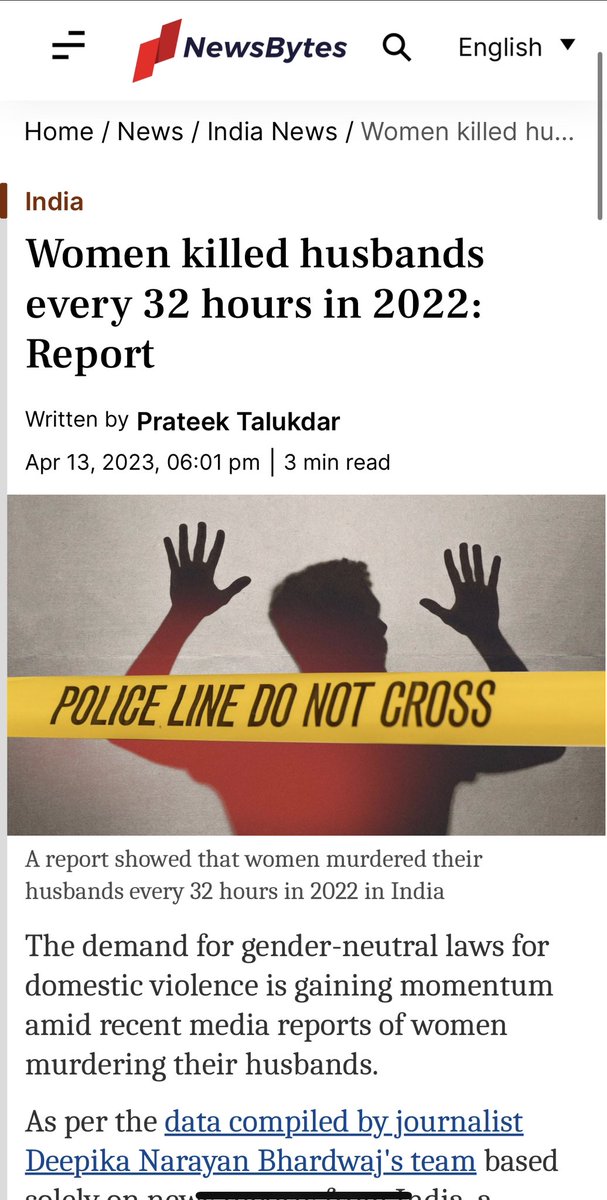

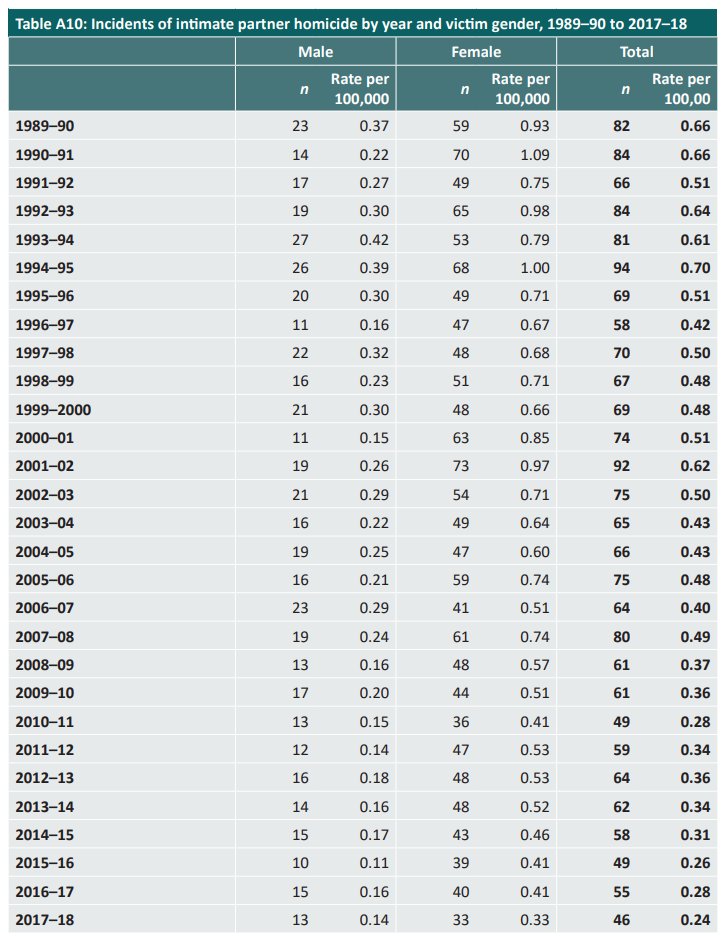 (Australian data –