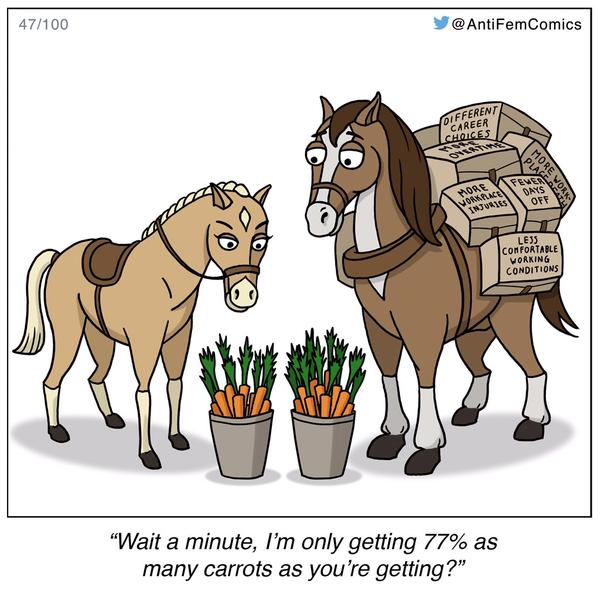
Yet another case of two steps forward and one step back. In two earlier posts in this blog I described how members of the ‘Sunrise’ TV show purposefully stood their ground against strident feminist criticism. I had hoped that they would keep the positive momentum going with some segments about the excesses and mistruths of the contemporary feminist movement. Unfortunately that was not to be the case. Well, at least not yet. (Postscript: Pleased to see ‘Sunrise’ step up with this interview with MRA Paul Elam on 5 July 2014 … kudos to ‘Sunrise’)
I just watched a segment on ‘Sunrise‘ – an interview involving Michael Kaufman of the ‘White Ribbon Campaign‘ and Sunrise’s resident ‘White Knight‘, Andrew O’Keefe . The segment came across as something of an attempt by ‘Sunrise’ to win back some street-cred with pro-feminist viewers. It’s sad that they feel the need to curry favour with a movement represented by this, this and this.
The ‘White Ribbon Campaign‘ is a pro-feminist organisation whose goal is to stop violence by men towards women. They ignore violence by women, and for the most part they ignore violence by men towards other men. They do acknowledge problems that disproportionately affect men like suicide and homelessness, but claim that these are a reflection of the pressures of gender stereotypes imposed on boys and men (i.e. be a man!). The solution, they say, is for men to be comfortable showing what are seen as feminine attributes – and then they would not have to hurt women. The ‘White Ribbon’ crowd thus conveniently choose to ignore more potent forces such as the increasingly toxic environment in schools and universities for male students, the pervasive anti-male bias in the media, etc etc.
By all means please do address the problem of violence – violence by people of all genders. And by all means address the imposition of negative gender stereotypes – again, by people of all genders. But by focussing entirely on violence by men towards women, the White Ribbon Campaign reinforces the prevailing stereotype of men as brutes and women as victims. That being the case, they are as much part of the problem as they are part of the solution.
One of the outcomes of this telescopic view of ‘domestic violence = mens violence towards women’ is the trivialising of the other dimensions of intimate partner violence (i.e. womens violence towards men, male on male violence, and female on female violence). This bias is a pervasive influence across society, and is discussed and demonstrated in another blog post which includes links to videos showing public reaction to male and female actors playing out different scenarios of partner violence.
The concerns of others regarding the White Ribbon Campaign can be ascertained by googling on the words ‘White Ribbon Campaign criticism’ (some examples here, here, here, here, here and here).
Workplace harassment takes a number of forms, and these may or may not be related to a worker’s gender. Whilst sexual harassment is the most often discussed, all forms of harassment or discrimination warrant serious consideration and remedial action. No-one should have to tolerate working within such an environment. Everyone deserves respect.
Thus sexual harassment, gossiping and false accusations, bullying, and gender discrimination in recruitment, promotion and management policies – all deserve attention.
If the majority of perpetrators are historically male, as is likely the case with regards to sexual harassment, then a gendered debate might be called for. What we are seeing nowadays though is more a case of systematic demonisation of male managers and staff, whilst female perpetration of sexist and abusive behaviours is downplayed or even air-brushed out of contention.
Despite the fact that both men and women can (and do) perpetrate these types of behaviours, or be victimised by them, media coverage focuses almost entirely on the victimisation of female staff (example/example/example/example/example/example and example).
The furore about sexual harassment that initially centred on the misbehaviour of Harvey Weinstein has only amplified this already heightened degree of gender bias. It has also added to the confusion regarding the boundary between acceptable and unacceptable workplace behaviour.
Men are thus, both collectively and individually, painted as the architects of toxic workplaces, and responsible for victimising a slew of women and other men. And as with so many of these issues, men are the ones held responsible for fixing the problem and judged harshly on any perceived lack of progress.
Conversely, the media generally avoids identifying women as having significant involvement in discriminatory and/or harassing patterns of behaviour.
One of the outcomes of this situation is that men are discouraged from reporting abuse, in turn reinforcing the view amongst policy-makers and managers that female perpetration is little more than a rare aberration.
‘Abuse’: Gender workplace trend erupts (27 December 2024) Australia. No mention of the gender that is primarily dishing out the abuse. No surprise there
Sydney woman welcomes new office rule men say makes them ‘uncomfortable’ (17 October 2022) The woman is a feminist canetoad, oops I mean journalist. Heaven help men complaining about being made to feel ‘uncomfortable’ … that’s a woman’s job, right? Heaven help them too, if they express interest in the view provided.
“An SNP MP has been accused of making “appalling” comments about sexual harassment during a probe into allegations she pestered a male staffer. A submission by Patricia Gibson claimed it is “discriminatory” to say the impact of sexual harassment of a man by a woman is the same as by a male against a female.”
Extracts also stated it was “highly unlikely” the complainer would have felt “any kind of physical threat or vulnerability” as a man.
Workplace equality meaningless unless ‘macho’ culture disappears, by Mary Barry, CEO ‘Our Watch’ (13 February 2017) Not content to simply ignore female perpetration/male victimisation, the author suggests the answer lies in feminising the workplace. But wait there’s more, as the author draws an even longer bow in asserting a nexus between the perceived overt masculinity of many workplaces, and the incidence of domestic violence in the community.
Not asking for it (2016) Australia. This article interviews 13 women about their experiences of sexual harassment. I guess no men were available on the day.
In this example the author again makes no mention of there being either female perpetrators or male victims of inappropriate behaviour (see Reddit discussion thread here).
Similar bias can be seen in ‘Know where the line is: Melissa Hoyer and Elizabeth Broderick address sexual harassment‘ (May 2014). Interestingly though, readers comments paint a quite different picture. This then prompts a furious backlash, with feminists asserting that others are seeking to downplay the significance of harassment of women and/or justify that harassment on the basis that women also harass men. This tends to be the pattern with articles on this topic, and I sense a great deal of pent-up frustration with the one-sided coverage of these issues.
(Addendum: Ms Broderick is now raking in plenty of $$ shaming business into conducting surveys of sexist behaviour which confirm, surprise, surprise, that they have a toxic culture that can only be remedied by feminist consultants.)
Australian women share their experiences with sexism in the workplace (16 April 2015) This typical mainstream media article about discrimination in the workplace lacks even a single reference to the fact that men experience the same or similar problems and issues. But again, take a look at the subsequent readers comments both here and at the relevant post in the news.com.au Facebook page … an avalanche of angry men and women pointing out how biased and inaccurate the article is.
‘Things my male colleagues have actually said to me‘ (10 April 2015) Don’t hold your breath waiting for part 2 ‘Things my female colleagues …’, at least not in the mainstream media. And I note that readers comments are not permitted – which is typical in the case of these anti-male hit-pieces
In contrast very little indeed, with the exception of readers comments, has been written about toxic workplaces from the male perspective. Have men been given a free pass from having to endure such experiences? Or has the plight of male victims simply been ignored, as has occurred in the case of domestic violence and sexual assault?
Unfortunately, one outcome of ignoring female perpetration/male victimisation is the relative lack of objective research. And of course as long as research bias results in such behaviour being excluded from consideration, then there is an over-reliance on conjecture and anecdotal evidence. Hardly an ideal situation in terms of getting the powers-that-be to sit up and take notice.
On that note I just google-searched using the words “My female boss …” and was surprised by the topics that automatically appeared. Try it yourself. Looks like a lot of people having problems with female supervisors. Personally, both my best and worst bosses were female. But boy, the bad ones were shockers.
Moving on, I think it’s clear that some of the behaviour that is perceived as harassment or discrimination in the workplace is a function of the different ways that men and women operate. There are gender-based differences at play, and it is hardly unreasonable to suggest that both men and women should try to understand and compromise.
This WSJ article is another in a long line of articles proposing that men need to adjust to women, but never the other way round (read the comments too). See a critique of this article here, and again I would suggest also reviewing the readers comments.
And again, this August 2016 article appearing in the pro-feminist/SJW ‘The Conversation‘ provides a remarkably one-sided view of the issue. It’s entitled ‘Calling all men! Five ways you can be a feminist at work‘, and it’s by UK academic Scott Taylor.
This provider of business training videos obviously hasn’t heard – or doesn’t care to acknowledge – that women can also be perpetrators (scroll down to ‘Employment and Workplace Issues‘).
There are a number of implications – both positive and negative – regarding the current ‘debate’ and related media coverage. One of the negative outcomes is the growing reluctance by men to work closely with individual women, as discussed in this and various other recent articles.
The following sources consider discrimination/harassment/false allegations suffered by men/boys:
Feminist instructor proudly informs readers how she discriminates against male students (15 July 2016) Australia. Reddit discussion thread with linked article.
Workplace sexism: we still don’t want to talk about it, by Kate Jenkins (1 June 2016) Australia. A sole reference to male victimisation in an article that otherwise implies sexism only affects women. I’d suggest that one reason why men “don’t want to talk about it” is the strongly gendered nature of the debate which is equal parts disinterested and dismissive of men’s concerns.
Update on Rates of Violence in Male and Female Exotic Dancers (18 May 2016) France. Reddit discussion thread with linked article – be sure to click through to the earlier study which showed roughly equal rates of harassment/abuse of male versus female performers.
Workplace (In)Equality (7 May 2016) Reddit discussion thread. On situations where men & women are paid the same but men routinely given the harder jobs.
Articles about how women treat other women/girls at work
“I can’t understand the push for more women in the workplace. My partner has just quit specifically because of problems with women at her workplace. Her sister also has quit her job from a different workplace for the same reason. This prompted me to ask other women I know if they have problems with women in the workplace.
The answers I received staggered me. I have two sisters that I could ask and both said they were having problems with women in the workplace at the moment, but never with men. My own mother when asked said to me, “to be honest with you the only problems I have had in my working life have been with women”.
I have asked now dozens of women when I get the chance, many that are friends, and every one of them say the same thing. That they find it difficult to work with women and that they are the cause of stress in the workplace for them, preferring to work with men.
I challenge readers to ask this question to women they come across. The answers I receive are amazing to me. A real problem that is either unknown or swept under the carpet in my opinion.” (Source)
How The Bachelor turns women into misogynists (18 August 2016) Read this article which tells how women only undermine other women when manipulated by TV producers … then read the papers below.
Sleep with me or be sacked (14 July 2014) with the same issue addressed here where some guy is quoted as having said: “You’ll see more sexual harassment cases in Silicon Valley [like this] because of the male dominated culture“. Here are two of the readers comments that followed:
“Don’t be shocked. My female manager harassed me for years. I was maybe 24 and single, she was probably 40, married and had 2 kids. I knew her family pretty well, which made it even more weird. For years she would come in and sit on my lap, or make comments like “If I don’t eat soon, I’m going to get goofy and rape you or something”… It was very uncomfortable. Especially since I knew her husband, and her regular “boyfriend”.. Finally, one day she was teasing me, I turned around and said, must you? She says, why is it sexual harassment? I responded, I don’t know, what if you were sitting in this chair and I was behind you tickling your neck, would that be harassment? A week or two later I got my layoff notice… So I don’t find this story hard to believe at all….”
“This is about a woman harassing another woman, but yet this running dog had to curry favor with his feminist masters and find a way to vilify men and make them responsible somehow for the wrongdoing to this female victim. Nobody can just admit that women are as prone to indulge in harassing behavior as men are”
Half of men in corporate Australia are fatigued by gender equality (24 November 2021) Entitled, condescending nonsense. Scroll through the readers comments in Twitter and elsewhere, and then imagine the same style on commentary aimed at a feminist author … it would create an absolute furor.
Gender harassment harming women in male-dominated industries (9 November 2020) Australia. You’d think that it would make sense to conduct a similar survey of men working in female-dominated industries, to provide context … but no. As I mentioned in this other post, feminists don’t want context – merely to support pre-ordained conclusions supportive of the feminist narrative.
If festival crowds can unite to help a crowd-surfer, they can unite against sexual assault (6 February 2017) Australia. This article demonstrates the prevailing mindset of only men harass/only women are harassed & it’s men’s duty to defend women. The hypocrisy of creating an assistance ‘hotline’ that only caters for women is lost on these people. See also the reader’s comments
Heinous sexist culture inside STEM industries exposed, by Liz Burke (27 January 2017) Ignores discrimination and recruitment bias against men – the implication being only women are affected. Relies heavily on anecdotes, and fails to provide corresponding statistics for men (ditto) – all typical of pro-feminist journalism/’research’.
Swedish women get hotline to report mansplaining (16 November 2016) Feminists hard at work addressing the big issues. All men magically know whether each individual woman knows more about a given topic than they do. Well all men except the misogynists it seems. NB: Women never guilty of behaving in a patronising manner.
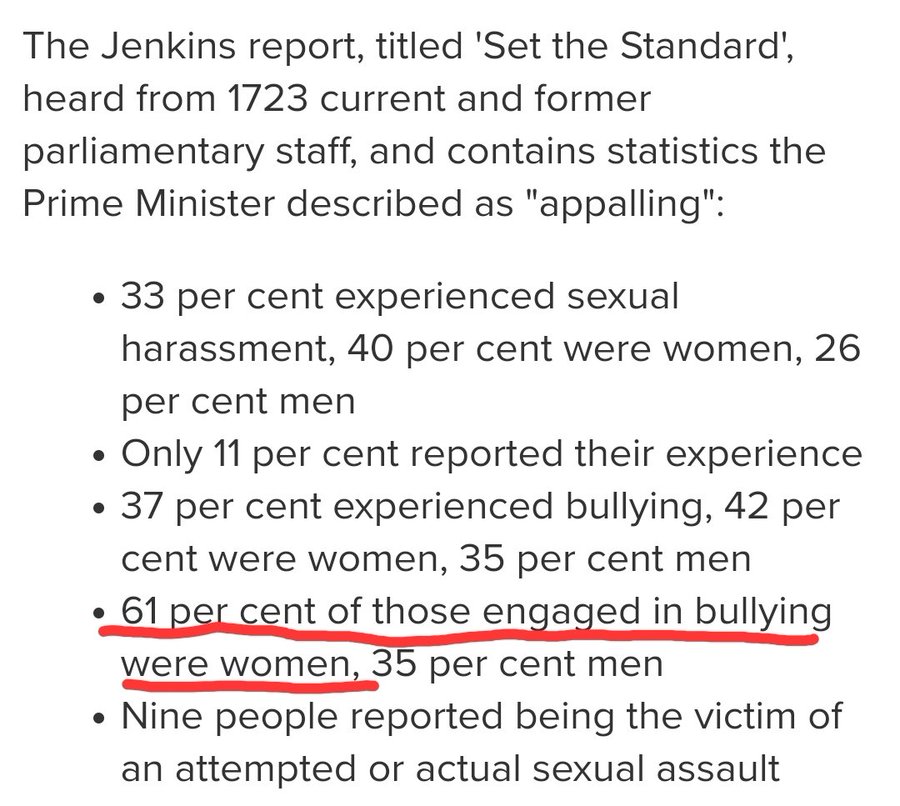
Statistics from the UK National Workplace Bullying Advice Line and Bully OnLine reveal that at least 50% of over 6000 cases involve a female serial bully. The top four sectors for cases are teaching, nursing, social services, and the voluntary / not-for-profit sector, in which there is a higher percentage of female managers. Serial bullies, male or female, can be recognised by their behaviour profile.
Sexual harassment in politics, by Karen Middleton (15 October 2016) Australia. The article contains details of a string of incidents of gross conduct by men in the political sphere. Karen asserts “that attitude and that kind of predatory behaviour is extremely – extremely – common” (para 9), and then in the final paragraph:
“The men I’ve described are ordinary men. That’s the problem – that it is and has been ordinary to behave this way. Women don’t talk about it for lots of reasons. They fear it would damage their careers, their social lives, their relationships. But that doesn’t mean it doesn’t happen …”
No, ordinary men do not behave in this manner, and such conduct is not part of the ordinary course of events in Australian workplaces. It is certainly not “extremely common“. In fact the author admits “it was only a handful of our elected representatives who did these things“.
Karen omitted any/all incidents of female perpetration of abuse. And yet men are also victims, albeit it to a lesser extent, though they also “don’t talk about it for lots of reasons“. Whilst journalists fail in their duty to report the other part of the workplace harassment problem … “But that doesn’t mean it doesn’t happen”.
“Prime Minister Malcolm Turnbull’s department is paying a feminist “change agent” almost $200,000 to conduct a three-month “cultural audit” to find and weed out any unconscious bias against women”
This person has the perfect solution for women in the workplace (2 September 2016) Because only women have to walk on eggshells due to the entitlement and/or fragile egos of their co-workers. Feminist erasure – This blogger failed to upload my comment in relation to her post.
“I am a professor and a newly minted pro vice chancellor and I have spent my entire research and working life with male bosses or supervisors. I have never reported to a woman.”
So presumably men have mentored the author throughout her career, and been instrumental in her elevation to the top job. Despite this she implies that the disproportionate number of men in senior positions is sinister, given their inherent propensity to exercise power to the benefit of men. Greater gender equity is only achievable through listening to women’s voices. Men should be grateful for sound guidance that women shall provide … and for any incidental rewards that may come their way. Oh wait, I get it, those men, the first lot, they were different.
(As a footnote: I sent three tweets in response to this article (see Twitter stream 15 July 2016) and was immediately blocked by the author. What a curiously inept response for someone so obviously well-credentialled to attempt to defend her position.
Middle-aged women bosses more at risk of sexual harassment, finds study (30 June 2016) I can’t locate the results of the Australian Journal of Public Administration study cited in the article anywhere online … if anyone reading this can provide a link, then pls let me know. Thanks in advance.
Fathers rights comprises both a very important set of social issues, as well as a highly visible and significant component both within and beyond the MHRA movement.
Anyway I will start the ball rolling by mentioning an article in the ‘Genderratic’ web site entitled ‘The Feminist Crusade against Fatherhood‘. One notable feature of this well-researched article is that it provides a historical background to the issues of child custody and the provision of financial maintenance.
Various papers concerning, or of concern to, fathers
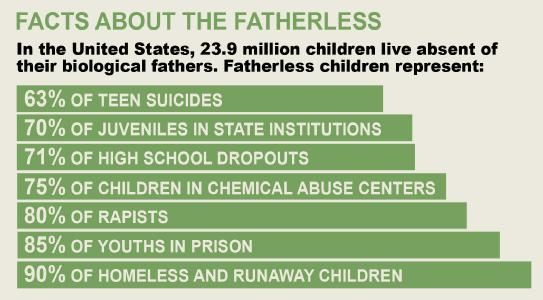
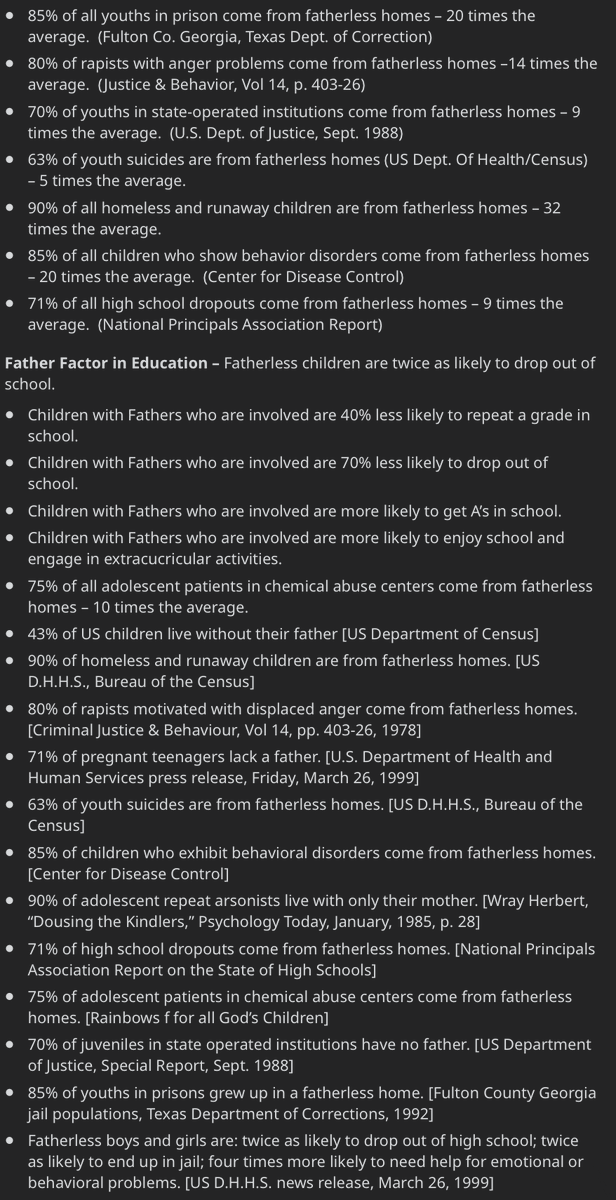
The Fatherless Generation (undated, but assumed to be circa 2010-2020). Blog posts and statistics in relation to the effects of fatherlessness
Chris Mackney was a father who was driven to commit suicide due to his treatment at the hands of an abusive wife and a legal system that is strongly biased towards the rights of woman. Read more about Chris here.
You’ve probably noticed that one of the many, many criticisms of men is that they don’t help out with family/household as much as they should (& women already do). And yet men who choose to become house-husbands are often viewed with disdain. This phenomenon is apparent in this reddit discussion thread.
Bettina Arndt has asked me to raise awareness of an alternative Australian family law resolution service offered by Professor Patrick Parkinson, which you can read about here.
Dad’s DNA Nightmare: Your legal questions answered (13 February 2017) Men can’t win. When you read this story, and then others about non-biological parents (men) who are forced to pay child support until age 18 even when DNA evidence is available!
Child psychologist Penelope Leach says sleepovers at dads ‘may damage brain’ (18 May 2014) Unbelievable that the media would publicise such views, and imagine the uproar from the feminist lobby if the genders were reversed. In this article the author of the study cited by Ms. Leach rebukes for misrepresenting his findings. Imagine that, a feminist misrepresenting the actual facts in order to further their own ideology … who would have thought?
“…an estimated 50,000 persons are kept in jail or in prison on any given day in the U.S. for child support arrears.” (13 January 2012) Statistics such as this need to be probed, but with feminists controlling the relevant government agencies we know that is not going to happen anytime soon. For example, how many of these men are not the biological parent of the child in question? How many women are not paying their share of child support, and what percentage of them are being jailed? etc
There is nothing at all remarkable about the articles discussed in this post. The pro-female sexist bias that they exhibit reflects a broader pattern that is discussed in this other blog post. Here I thought that I would dissect a small sample to show how the mainstream media gets things so wrong when it comes to addressing gender issues.
Whilst in this post I have chosen to use news.com.au and their affiliates as my focus of attention, there are plenty of other media outlets that are as bad or worse with regards to their degree of pro-feminist bias, for instance The Guardian or Daily Life.
It’s no accident that most of these articles didn’t allow readers comments to be posted, the editors no doubt well aware that they would have been called out in relation to their obvious bias. Postscript 5 May 2015: It appears that news.com.au has realised that people are circumventing this strategy by posting critical comments on the news.com.au facebook page, and so some articles are not being posted in their timeline either (example).
First up is a little gem entitled “The top nine unexpectedly common Tinder profile photos“. It starts off well with ”I’ve been far too amazed and astounded at the photographs that people seem okay with having as their profile shots“. But no, it’s not about “people”, it’s about men. Stupid men who post pictures that are ridiculous or inappropriate in the eyes of one female journalist. Haw. Haw. Haw. Aren’t they silly?! The journo could have just as easily pulled out five “funny” profiles from men and five from women, but I guess poking ‘fun’ at men is more newsworthy or socially acceptable or something. Or perhaps the journalist is a sexist bigot.
An academic stoush has exposed the dark recesses of the gender wars. On one side are radical feminists who see men as “carnivorous and necrophiliac” and on the other side are men’s rights extremists who see women as “lying bitches” who routinely make false rape accusations.
The Townsville Bulletin revealed last week that Dr Greg Canning quit his James Cook University post in protest because they refused to discipline his feminist colleague Dr Betty McLellan for writing an article which he thought stereotyped all men as sexual abusers.
Dr McLellan wrote on radical feminist website RadFem Hub that in light of male violence and rape we should be asking ourselves what it is about men that leads to these behaviours. Dr Canning said the article painted all men as evil, but the university declined to take any action.
(Mod: And given that women also engage in violence and rape … “what it is about women?“)
Now it turns out Dr Canning is the Australian news director of a US hate site that claims men have almost no legal rights and should shift to a “war mentality” because women now have “supreme power”.
(Me: Please substantiate the claim that ‘A Voice for Men’ is a “hate site” and provide a link/citation for the quoted remarks. Let me help by suggesting this article – read paragraph 5 and see what they actually say.)
Dr Canning works for A Voice for Men. AVFM’s claims include that there is an “epidemic” of false rape accusations, that rape and domestic violence awareness campaigns are examples of “male sex witch hunting”, and that women, literally, get away with murder.
The site’s motto is “FTSU” which stands for ‘F***king their s**t up’ in reference to feminists, and it is closely connected to a site called “Register Her” to name and shame women who are “lying bitches” or bigots. For example, actor Katherine Heigl features on there under the heading “bigot” because she once made a joke about castration.
(Me: How about a link to a page in the Voice for Men site to substantiate the claim about its motto? In return I’ll happily provide links to feminists using hateful terminology and taunts about men.)
Dr Canning told News.com.au he disagreed with the tone of some sections of the website and that he did not agree with all the arguments on there, but that he believed it was a rare place where men could speak up.
He does, however, talk about false rape allegations on the site, a topic that is a core issue to AVFM. Men’s rights extremists claim women often invent rape, either because they regret sex or because they want to frame men.
When questioned about another claim that there was a “corrupt” domestic violence “industry”, Dr Canning said he believed that the domestic violence sphere was controlled by feminists who ignore violence against men. He then went on to attack Dr McLellan afresh, pointing out that the website she wrote on describes men as having “carnivorous and necrophiliac” behaviours.
RadFem Hub also warns about the dangers of “penis in vagina” sex and argues that men “as a class” are trying to destroy women.
Gender and violence expert Dr Michael Flood, a senior sociology lecturer at the University of Wollongong who has had disagreements with Dr Canning and men’s rights activists in the past, said vitriol and extremism were rife online. He said the false rape allegation claims were a standard way men’s rights activists tried to discredit rape victims.
“It ends up disempowering victims and protecting perpetrators,” he said, adding that false rape allegations were rare and likely made as often by men as by women.
(Me: What a ridiculous assertion … based on what statistical source pray tell?)
Dr Flood also said the internet could be a dangerous place for women, particularly feminist women.
“The internet has provided a forum for more extreme and vitriolic beliefs and it has provided a forum where angry anti-feminist men can voice the most hostile and toxic kinds of attacks, particularly against feminist women,” he said.
(Me: Oh yup, hey let’s just overlook the fact about women going online to shares extreme and vitriolic views about men … or is that somehow justified or OK?)
Sad story, but the journalist just couldn’t pass up the opportunity to slip in a bit of anti-male bias in one of the final paragraphs:
“One woman dies every week from domestic violence in Australia, and in America where Ms Montgomery is from, spousal homicide is the number one killer of young African American women.”
Wouldn’t it be appropriate to also acknowledge that there are male victims of domestic violence? The USA spousal homicide figure is bogus … I cite one or more references about this particular feminist myth statistic in my blog post about domestic violence. Further details concerning the misuse of domestic violence statistics can be found here.
Complete distortion and misrepresentation by this journalist … read the reddit thread and then re-read the article. I couldn’t find any mention of women whining – just discussion of the court case and some issues related to it. Where was all the support for people wanting to take up-skirt photos? Which mens rights groups “weren’t happy“? The comment “there you have it ladies” in the context of the rest of the article, tends to suggest that the courts decision followed lobbying from the mens rights movement, or at the very least the mens right movement supported the courts decision. A nonsense all round.
” … Gender reporting is not without its critics too. Some complain that companies already disclose gender information on their websites. Some do, but it’s usually those with the least to hide.
Critics also claim companies face their own incentives to stamp out discrimination, because doing so will help them make the most out of their most talented workers.
And yet, gender discrimination continues. And so regulation is needed to push companies in a better direction.
Gender reporting isn’t red tape — it’s more like the gardening tape you use to train small shrubs to grow up straight …”
Ahh, a breathless and silky smooth transition from tallying the respective numbers of male & female employees, to the incidence of actual gender “discrimination”. I mean what other explanation could there be for < 50% female representation? And of course anything less than 50% is a big problem – one that companies must be made to fix. (Correction: Anything less than 50% WOMEN is a big problem)
Well sorry to rain on your feminist parade girls, but that is utter rubbish. Read this post first, and then this one, and maybe, just maybe the truth will set you free.
And of course men never get hit on in the work environment do they? I mean stuff like this just can’t be true:
I began working in the 60s also. I saw (and experienced) the male vs. female sexism in the workplace, and also female vs. male. My son knows many men who have been propositioned in the workplace, also being told their jobs might depend on it. I think a lot of men who are put in that position, and don’t find it morally acceptable to acquiesce, don’t report it because nobody believes it happens. (Adrienne)
I worked in a female predominant workforce. I have been groped, grabbed, propositioned, had breasts rubbed on me, my back (while at a computer). I have been physically assaulted with a book hit over my head. Women folks are no better than men in the workplace. (RME)
Oh, you bet Yunha, “fund-raising can be easier” … do tell the good readers how many subsidies and funding sources are available to aspiring female entrepreneurs in the USA versus those available to males?
“Girls will help you because you are a fellow female entrepreneur”. Really? Because I’ve read plenty of accounts from women who describe the bad/worse treatment they have received from other women. And “a bunch of studies that show women perform better on the job“. Hey I’d really like to read those studies, citations please.
And now, when can we expect to see the companion piece entitled ‘what it’s really like being a male CEO in Silicon Valley’ with similar remarks about female candidates, colleagues, etc? Hmm. What do you mean, “never”? Oh OK, I understand. Unless you carefully vetted the author he would probably come out and say stuff that undermined the feminist ‘women good/men bad’ victim narrative. And we couldn’t have that, now could we?
And now let’s finish off with this article from news.ninemsn.com.au:
In 1913 a gentleman by the name of Ernest Bax wrote:
“When, however, the bluff is exposed… then the apostles of feminism, male and female, being unable to make even a plausible case out in reply, with one consent resort to the boycott, and by ignoring what they cannot answer, seek to stop the spread of the unpleasant truth so dangerous to their cause. The pressure put upon publishers and editors by the influential Feminist sisterhood is well known.”[From The Fraud of Feminism, p.1-2]
In this post I am using a broad definition of censorship that includes blocking or excluding or misrepresenting people/groups or opinions that are at odds with all or part of the feminist narrative.
I should mention that it is not only anti-feminist perspectives that are censored, but also sometimes perspectives offered by men who identify as feminists, or by women who identify as (for example) equity feminists rather than gender feminists.
An example of feminist men being excluded can be seen in this article about a pro-abortion rally in Ireland where men in the audience were told to “know your place” and to remember that “this is a women’s movement“.
Personally, when I read material produced by feminists and see how they respond in online forums, my mind is drawn to the Credit Union Australia adverts shown on Australian TV. In those ads people block out information they don’t want to hear/consider by covering their ears and saying “la la la”. Except that feminists often substitute the la la la with somewhat saltier language.
What is happening is that any view that runs contrary to feminist ideology is branded misogynistic and hateful, and thus automatically unworthy of consideration. In my eyes, alternative viewpoints are not necessarily hateful. Sure they might cause hurt feelings, but that is part and parcel of debate in intelligent adult society.
Feminists say they are addressing both mens and womens issues, and will make the world a better place if we just stay the F**K away and let them do what they need to do. This is a nonsense. Has there been even a single policy change initiated or achieved by feminists that has had a tangible benefit for men collectively? (Cue: sound of crickets)
Good quote about feminism: “That’s what gets me about them — for thirty years, they screamed that slogan [make the personal, political] at the top of their lungs. And then, once men start turning to politics to make the personal political, they start hemming and hawing about whether or not this issue or that one is really a ‘mens’ issue. But somehow, everything on earth is a women’s issue.” (Source)
Let’s be quite clear that we are talking about censorship based on ideology and personal preferences here. I have no problem with moderators taking action against posts that are threatening, incoherent, or peppered with profanity.
So what then are some of the techniques commonly employed by feminists/SJW to isolate those putting forward alternative positions?
Blocking and/or removal of posts or readers comments in online blogs and mainstream media web sites
A major factor in motivating me to create this blog was the annoyance I experience when I’m continually thwarted upon trying to post my views in online fora, for example in blogs, discussion forums, and mainstream news sites like news.com.au.
This blocking or removal of dissenting posts is extremely prevalent in sites related to discussions of gender and feminism. It generally occurs when I, and others like me, put forward perspectives that conflict with cherished notions held by the (usually female feminist) author or moderator. These are people who are, more often than not, singularly unwilling to accommodate alternative positions. I lost track long ago of the number of times this has happened to me … examples here, here, here, here, and here … courteous posts that were either not uploaded, or uploaded but subsequently removed.
This September 2016 article about domestic violence by Rebecca Poulson is an example where readers comments were overwhelmingly critical of the author’s perspective. The author complained on social media of her comments thread being “hijacked”, with many of those comments subsequently being removed by the moderator.
I don’t mean to be pedantic but the use of the term “hijack” demonstrates the sense of entitlement shown by many feminist writers. The definition of this word entails illegal seizure (of an aircraft, ship, or vehicle for e.g.) whilst in transit, and the use of force to make it travel to a different destination. Readers offering their views is neither illegal nor does it involve force, and others are free at any time to offer their own views.
The following collection of reddit discussion threads detail moderator bias and censorship in relation to threads/posts concerning domestic violence and child abuse – See example 1, example 2, example 3, example 4, example 5 and example 6 (27 October 2014) Includes the following quote from a moderator responding to a query as to why a post was removed: “It needs to be the right information from the right people. Here’s a shorthand guide: if you are an MRA or TRP, you need not bother posting. If your information may tend to make women look bad, same.”
Let’s consider the experience of another who has had similar experiences:
M the Atheist wrote on 3 September 2013 “… I found a thread about rape and power and spent the time to read the post and all the comments, did not seem too hateful and had some reasonable stuff … I wrote a very reasonable and objective post about rape, power and rape culture (based on one of GWW’s videos). I included data, reason, personal experience and points from GWW’s video; and was surprised that it got posted …
I went back a few hours later to find that my post was removed; and I could not figure out why. I went through great pains to make it neuter, people inclusive, and posited GWW’s hypothesis in what I thought was a well mannered and calm, dispassionate way.
They had also posted and allowed to remain other males’ posts. So why not mine? I then realized that they only allow mens’ posts to remain if they can destroy them or if they are easily group-attacked.”
Something similar also happened to Australian TV personality David Koch when he sought to respond to an attack on him posted in a feminist web site. Another example here from the UK.
With the exception of reddit/r/mensrights and a few others, there is a high probability that any post made that challenges the leftist or feminist narrative will quickly be made to disappear. It will either be removed by a moderator on their own volition or on the basis of the post being reported by users of the forum. This is not ‘tin-foil hat’ stuff, it happened to me as recently as this morning.
Two other common occurrences on Reddit, involving those making posts that challenge or question the prevailing feminist/SJW commentary, are:
Posts being removed from view to due to down-voting. The speed at which this occurs, plus the large number of votes cast, suggest that this is an organised strategy employed by like-minded activists.
Reddit users being banned from posting in particular forums for posting often remarkably benign comments or questions. Examples of this are provided in reddit/r/mensrights on an almost daily basis.
Another common tactic employed by feminists on social media is to lodge reports, which may be exaggerated or completely bogus, about Facebook pages maintained by others. They often do so in a co-ordinated manner with their friends/associates, with the aim of having the relevant pages suspended/removed. And in many cases they are successful.
It would be one thing if the administrators at Facebook were applying these rules and restrictions evenly across the board, but that is not the case. What is happening is that Facebook pages with a conservative or egalitarian or anti-feminist slant are being targetted. Meanwhile a blind eye is being turned to questionable content within pages with a leftist/liberal/SJW or feminist slant.
There are further examples and discussion of this trend in articles listed later, in addition to the following:
Developments on Facebook have helped drive many people, both those with anti-feminist/SJW views and trolls alike, across to Twitter where until recently there was a relatively unimpeded flow of ideas and information. Things are now also tightening up there also, both in terms of actions taken by Twitter staff and other users. For an example of the former, google search to see how Twitter have pursued MRA and anti-feminists such as Milo Yiannopoulos. More recently Twitter has introduced tools to enable greater censorship (see here and here).
Many feminists/SJW not only block those that they encounter, but also make use of shared block-lists. Clementine Ford, for example, blocks 133,000 Twitter accounts and invites other feminists to use her list.
Another Australian feminist, Van Badham, revels in her ability to block in this 2019 article.
This means that a Twitter user can find him/herself blocked from another user’s stream even when they have never had contact with that particular person or group. In some cases this may occur simply because your account was red-flagged due to others that you follow.
I have lost count of the number of times I have been blocked – Here are two examples:
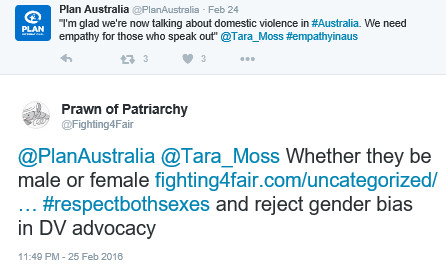
In my first example a feminist journalist by the name of Lindy West blocked me. I don’t know Lindy from a bar of soap, but apparently she considers my views on anything/everything to be unacceptable. Really Lindy? As one cheeky reader commented in response to this article, perhaps you’d be better off blocking Twinkies instead.
At least in my second example I actually had some contact with the blocker (Tara Moss) before the hammer fell. That single solitary tweet is shown below:
Lobbying against planned events by anti-feminists or men’s rights advocates and/or disrupting events whilst they are underway
In what is becoming a popular strategy to prevent opposing views being heard, feminists are setting off fire alarms at venues hosting MHRA or anti-feminists speakers. If you want to get some idea of how widespread this form of nuisance ‘activism’ is becoming then google on the words ‘feminist protesters pull fire alarm’. Go ahead – you can start by reading this and this. And only recently feminist protestors disrupted a presentation by CAFE.
Christina Hoff Sommers debated Roxane Gay in Sydney & Melbourne in late March 2019. Refer this article and linked Twitter stream for now, whilst I try to locate a better review (oh and here’s a SMH offering with reader’s comments). Apparently Gay’s leftist supporters focused on disrupting the event rather than letting an actual debate take place.
The term ‘anti-democratic’ is way too insipid to describe this pattern of behaviour. This is something more negative, much darker and more pervasive, and which all but precludes any meaningful dialogue. Indeed the direction in which this is already heading is that any comments that are deemed to be anti-feminist and/or sexist will be made illegal on the grounds of combating hate-speech (example). Opposing this trend, at least for those that have the means to take legal action, is legal precedent such as this.
A curious aspect of feminist censorship is that one of its key functions is to block open debate of their own issues. Even the noisiest feminists only want to be heard when they can control the ‘dialogue’. Otherwise … well this challenge by Milo Yiannopolous to Anita Sarkeesian (thus far) illustrates what shrinking violets even high-profile feminists can be when someone else seizes the initiative. Mike Buchanan’s web site features many examples of his own unacknowledged public challenges to feminists to debate significant issues.
Feminists don’t want to debate issues or engage with their opponents, they want to neutralise them by almost any means necessary. What follows is a brief extract fromRules for Radicals‘ as cited in a blog post by Anne Althouse:
“Pick the target, freeze it, personalize it, and polarize it. Cut off the support network and isolate the target from sympathy. Go after people and not institutions; people hurt faster than institutions. (This is cruel, but very effective. Direct, personalized criticism and ridicule works.)”
Some articles on the general issue of the gradual death of free speech and/or the unwillingness of the liberal left to engage constructively
Two good articles in The Australian on 24/25 September 2016 (if you can get behind the paywall): ‘What more in the name of love?‘ by David Crowe, and ‘Straight-out hate in politics of identity‘ by Brendan O’Neill. Neither article specifically mentions feminists, yet very accurately describe their tactics.
“Labels are important tools in identifying socio-cultural problems. Privilege exists. Shaming exists. But when we adopt labels, project them onto others, or create new ones, we sometimes take broad social concepts and individualize them. We use labels to silence those who don’t agree with us, which keeps us from engaging in open, honest conversations. Many people with legitimate opinions and solid ideas are afraid to participate because they are afraid they might say the wrong thing, or say the right thing in the wrong way. When people are silenced, the conversation suffers.”
“The Google employee behind a ten-page viewpoint diversity manifesto that went viral online has been fired. James Damore, whose manifesto criticizing the politically correct corporate culture at Google prompted outrage from left-wing employees and social justice warriors online, revealed that he had been fired” (Source) More at:
To Milo or not to Milo? (21 February 2017) How the left neutralised a very annoying thorn in their side. A story rich in hypocrisy given what various feminists/SJW have previously said & done & walked away from without penalty.
Archetypal mangina David Futrelle seeks to undermine credibility of film-maker Cassie Jaye because she dared to produce a fair-minded representation of the men’s rights movement. See here, here and here for example
Columbia student newspaper disables sexual assault comments, while picking and choosing opinions published – Reddit discussion thread and linked article
And now to close with something a little different, this April 2015 article in The Guardian claims that men post far more comments online (think news and current affairs web sites), and that this has the effect of “silencing” women. The author also claims, amongst other things, that many women are posting online using male names for “protection“. Firstly this begs the questions how could he know how many of those posting were men/women. Secondly it would be counter-productive to assume a male name for this reason when surveys show that men attract significantly more online abuse/harassment than do women. But the best bit is that the moderator removed my comment. They didn’t even leave the usual “Your comment was removed” message. They silenced me!
“The anarchist Bob Black predicted back in 1982 that feminism would eventually become a totalitarian movement to rival history’s most oppressive tyrannies. Most people find this idea absurd due to gynocentrism, “women are wonderful” and neoteny (and frankly, male vanity). However Black made the point that feminism — since its arguments are completely illogical and do not stand up to scrutiny — could not maintain power except through censorship.
Feminists are attempting to turn all of society into a “safe space” for feminists (not women, not children, certainly not men, just feminists). That includes cyberspace. As more and more people debunk feminist ideology online, calls will grow to “end online misogyny,” with predictable results. There is already a huge chilling effect underway.” (Source)
The biggest issue that arises when people travel is safety. This encompasses many topics such as sexual assault, robbery and scams, motor vehicle accidents, food poisoning, STD’s, animal bites, etc. Within the mainstream and online media most attention focuses on threats to the personal safety of women. It’s as if males are immune from muggings, drink spiking, motor vehicle accidents, etc … or are deemed to be incapable of benefiting from advice.
Nevertheless, out in the real world, males are just as vulnerable to these threats as are females, if not more so. No one questions that women are deserving of support and advice in relation to the issue of traveler safety. But it would appear that men being men, well you know, they should just suck it up. Or something.
I read a post in a feminist blog that informed me that men don’t need this sort of advice because men “can look after themselves“. Well to the extent that men *can* look after themselves whilst travelling, they do so chiefly by following the same sort of advice that they offer to women (and then get called victim-blamers!). Funny thing that.
Aside from feminist bias I can’t think of a logical reason why journalists persist in compartmentalising their coverage of this issue along gender lines … that is unless the goal is simply to perpetuate a myth of eternal victimhood.
And so it is that much of the online discussion of traveller safety is devoted to women railing against the injustice of being unable to dress like a hooker – according to local mores – without being approached with offers of work. Oh, wait, perhaps the patriarchy made them do it? Just what is the big deal about briefly modifying one’s normal fashion style? Those people promulgating this crazy notion of polite compromise as being akin to outright capitulation, have a lot to answer for. (Refer to these posts for more on this issue: Post 1 & Post 2 & Post 3).
Guys, on the other hand, seem to be able to enjoy their holidays just fine without the need to show off their butt cheeks whilst shopping in the market.
No, no-one deserves to be harassed or raped. And in an ideal world we could wear whatever we chose, and go where-ever we wanted at any time of the day or night, without attracting judgement or a violent response.
But it’s not an ideal world, and it is foolish to ignore patterns of behaviour correlated to higher levels of threat, in favour of feel-good public rituals and esoteric babbling about the need to “educate” men and boys. Sounds a lot like comfortable insulated upper middle-class delusion to me. The criminal underbelly of society, along with the mentally ill, naughty boys (and girls!) one and all … they just need a good talking to, and a couple of polished Powerpoint presentations should straighten them out.
Christian schools have been teaching the ‘do not steal’ lesson for a couple of thousand years now, and we still seem to have a problem with theft. I am not saying that there is no place for education, but I sure wouldn’t be relying on it as the biggest stick in my armoury.
Oh, but heaven help any man who attempts to join the discussion and suggest tips like “don’t get drunk or take drugs”, “dress conservatively” or “don’t walk alone at night”, for they are immediately labelled victim-blamers and rape-apologists!
This theme, that the behaviour of women never causes nor contributes to the problems they encounter or anything bad that happens to them, is a feminist mainstay. And dare you suggest otherwise then you are the bad guy, even if you really don’t think you are … because your mind has been corrupted by “cognitive bias’ and ‘systemic sexism’. Move over Scientology!
Did you know that some airlines still have a policy of not seating unaccompanied minors next to men? I guess that haven’t read my post about female kiddy-fiddlers.
And so in April 2014 a Australian feminist journalist by the name of Tracey Spicer wrote an article about how she didn’t want her children sat next to men on flights – see the article and related discussions here and here. This article in a feminist web site contributes nothing to the debate but there are some interesting points buried amongst the readers comments.
Oh, but I love this article, it contrasts feminists silence about men being required to sit away from unaccompanied children, with the requests of ultra-orthodox Jewish men to be sat away from women.
This blog post discusses an article by Wendy Tuohy on the same topic, but which in this case drips with hypocrisy bearing in mind the pronounced feminist bias of her prior repertoire of articles and offerings on social media.
This family-oriented tourist attraction in England has taken the step of banning unaccompanied adults from entering, though I suspect that unaccompanied women would not encounter a problem.
Passengers arrested after wild mid-air brawl (25 April 2023) Now if this story involved 3 or 4 guys causing mayhem then I bet the journalist would have given us a gender rundown within the first paragraph (if not in the headline).
Miss Universe model Olivia Culpo told to ‘cover up’ before boarding plane (17 January 2022) Virtually identical articles as per this one seem to appear a couple of times a week now … they are beyond tedious. It’s time that narcissists (and their media enablers) put on their ‘big-girl’ pants.
The last few decades have seen men increasingly portrayed in a negative light, basically it’s now a choice between lazy, inept, evil, stupid, or creepy. Concerns raised about this trend are generally dismissed along the lines of “relax, it’s just a joke!”. Funny thing though, ‘jokes’ made about women elicit a very different reaction.
“Men have always made fun of themselves,” said New York Times best-selling author and social philosopher Michael Gurian. “The kind of things that are done with men in the media would never be done with women, and that’s just sort of a given. But men don’t mind. They live by joking and putting each other down and lifting each other up. But the negative is that they can only be OK if the rest of society has a basic understanding and respect for boys and men.” (Source)
I’m tired of Hollywood trying to sell me on the concept of “loveable idiots”, and I am disheartened by the ubiquitous content that tears men down. I love filling my life with laughter, however why are my current content choices trying to get me to laugh at a reduced version of men? Why is Hollywood trying to get me to focus on the broken-down, allegorical version of who they think my husband is? Obviously they don’t know my husband. (Source)
Now take a look at this article that appeared in that dreadful magazine ‘Cosmopolitan‘. It’s all about the ways that women are said to be better than men. Stomach-turning sexist tosh. Ah, but then treat yourself to this excellent rebuttal by Janet Bloomfield.
One wonders whether this ongoing negative portrayal of men reinforces hostility towards men, which may in turn influence the rate of partner violence towards men as addressed in this other blog post.
The various sources listed below discuss this issue in depth and/or provide specific examples of negative ways in which men are presented in the media and/or are subsequently perceived in the community-at-large:
The team working for McDonalds fast-food chain (Mumbrella) seem destined to produce a Gillette-style campaign, but targeting boys (3 February 2020) “Just a bit a fun say the advertisers, while boys get demonised for slamming doors in girls’ faces” observes Bettina Arndt.
The Victorian Government (Australia) has issued a video highlighting the horror of women receiving unwanted attention on public transport, and – surprise surprise – calling on men to step in and deal with other men (9 April 2019). ‘Independent Man’ responds to this rather well with his own video.
Ten things not to say to/about your husband (9 February 2010) Video. How rarely is this type of message encountered? Women have corresponding obligations to their spouse? What?
Why I won’t let any male babysit my children, by Kasey Edwards (23 February 2017) Australia. My subsequent blog post concerning both this article, and various follow-up articles, can be found here.
Husbands Are Deadlier Than Terrorists (11 February 2017) USA. Wives are too, but saying that won’t get the author a tummy scratch from the feminist lobby. The thing is, even if the author had titled this piece ‘Spouses are deadlier that terrorists’, it would not have detracted from the main thrust of the article one iota … ie. completely superfluous sexism. (My readers comment is here)
‘Women kicking balls, I’d like to see that’ (22 January 2017) New ad campaign promoting women’s sport. How about ‘Men grabbing pussy, I’d like to see that’. Hmm, still not funny.
Son, let me tell you all about how dadsplaining works (13 January 2017) Whether this piece was a weak & inappropriate attempt at humour, or a serious bid for a tummy-scratch from feminists, it undermines the role of men/fathers at a time when we need to be doing the very opposite.
“Although the participants didn’t personally endorse those stereotypes, it’s clear that they affected the participants’ unconscious thinking. Stereotypes can be like poison in the water we all swim in, and the brain, like a sponge, absorbs them, Freeman said, even when we don’t want it to.”
Heineken’s ‘Drink Responsibly’ TV ad (January 2016) Only men drink to excess. ‘Good men’ don’t drink to excess. ‘Good men’ get to go home with a hot girl. The subliminal message here being that men’s irresponsible behaviour is best addressed through a combination of shaming and dangling the carrot of sexual gratification. This not-so-flattering portrayal of men dreamt up in the (I’m guessing) feminist-sodden environment of some ad agency or another. Sure they score a point for making an effort to reduce over-consumption of a pernicious legal drug, but they lose two for lacking the courage & conviction to produce a companion ad for the ‘I’m so drunk!’ millennial female set.
Too many young men with negative attitudes to sex and violence, survey finds (7 May 2015) And what of the attitudes of young women? We’re not told, and increasingly surveys don’t even bother to explore that side of the equation. This article is typical of the one-sided (anti-male) hit-pieces continually being fed to the public by left-leaning progressive journalists, eagerly supplied by obliging local feminist advocacy groups. Agenda? What agenda?
Wet wipes blocking Sydney sewers as more men flush them down the toilet (7 December 2014) Yeah sure, and the sample size of the survey that determined that men were flushing wet-wipes, was how small? This article would have been worth writing if it had suggested promoting the use of Asian-style ‘bum-guns’ in Australia, but they chose to waste bandwidth with another hit-piece on men instead.
Why are men on TV always such fools? (13 March 2014) Note the 433 readers comments – clearly many people are fed up with the current situation of rampant double-standards
In the days in which Dusty Springfield performed (1960’s) women were happy to express affection for men. Ah, the old days
And finally here are two representations of men, one from a country where feminists ‘call the shots’, and one from a country where they don’t. Can you guess which one is which?
I came across this fellow’s plea whilst web surfing the other day, and thought it was quite a good question:
“Is there a news source that doesn’t have a pro-feminist bias?
I order “The Week” and most magazine issues have at least one article discussing a women’s issue; 50-70% of the issues discussed are either non-existent, highly exaggerated, or are only looking at the female side where the issue can affect anybody, and I have yet to see a single men’s issue being discussed in that magazine. I’ve been getting issues of that magazine for about two years now. I’m stopping my order as soon as I can, but I’m still going to have to deal with this crap with EVERY news source except …..?
And I don’t want a source that is specifically anti-feminist, and I don’t want a republican source like Fox News either.”
The question has only attracted two answers thus far, but ‘Elana’ responded as follows:
“I think you’re going to find it very difficult to find something without bias unless it avoids a subject entirely.
Really the only way you can do it is by reporting lots of different points of view and how it effects lots of different people.
My problem with feminism has always been that it NEVER reports what effects its policies has on men. I’ve never thought that women don’t need advocacy – they most certianly do – but to claim that feminism is all about equality and THE ONLY people who are all about equality, when in fact they are nothing more than a rather single minded advocacy movement for women – makes them dangerous.
At least MRAs point out what they are doing and why.
As MRAs gain traction, I’m 100% positive we’ll be muttering the same things about them, but right now, the vast majority of them, at least in the West, are fighting an uphill against court systems, political systems and media systems that are singularly feminist.”
Domestic violence (DV), also referred to as Intimate Partner Violence (IPV) or Family & Domestic Violence (FDV), is a shocking blight on the community. This is a scourge that inflicts substantial negative impacts on the lives of countless men, women and children. Whilst definitions have evolved and broadened, DV is loosely defined as “physical, sexual, or psychological harm by a current or former partner or spouse“.
It is important to acknowledge that DV encompasses man on man, women on women, man on woman, and woman on man violence (both cis- and transgender). Further, in many instances violence is perpetrated by both partners as shown in the accompanying diagram. There is also a strong nexus between the incidence of child abuse/neglect and subsequent perpetration of domestic violence by affected individuals upon reaching adulthood.
The Wikipedia entry for ‘Epidemiology of domestic violence‘ provides readers with useful background information on this topic. For those willing to read something a little meatier, I would recommend this paper by esteemed DV researcher Malcolm George. Malcolm walks the reader through the historical context to the current debate about gender differences in violent behaviour and the way that society responds to the issue.
Many of those working within the DV sector, particularly here in Australia, only choose to acknowledge one element of the problem – that part involving male perpetrators and female victims. It is no coincidence that most staff within these government agencies, universities and NGO’s are strongly influenced by, and biased towards, feminist ideology. The feminist position is unequivocal, and it is that domestic violence = men’s violence towards women. Here is an example of that mindset, and here are many others.
This routine failure by feminists to recognise and discuss male victims, female perpetrators and bi-directional violence is no accident or coincidence. It is a deliberate strategy to build their brand, and in so doing demonise the overwhelming majority of men who have never, and would never, hurt or abuse their partner.
As a result, and in order to support the feminist narrative, a great deal of ‘cherry-picking’ and misrepresentation occurs in relation to the statistics provided in DV literature. In addition, the design and implementation of survey instruments is too often tainted with bias. This issue, that of feminist efforts to hide or discredit legitimate research and/or generate false or misleading statistics, is explored in this further blog post.
You will note, as you scroll down this page, that there are a multitude of sources of DV statistics, particularly the United Kingdom and the United States. Here in Australia, much less research has been undertaken – particularly in relation to male victimisation. One of the more significant sources is the Australian Bureau of Statistics Personal Safety Survey 2012, which found that one in three victims of domestic abuse were male. The results of overseas studies generally found levels of male and female victimisation that were closer to parity, and in some instances even higher rates of victimisation for men that women.
Unfortunately many journalists display remarkable tunnel-vision when addressing the topic of IPV. Indeed some have suggested that the media is complicit in the same sort of systemic gender bias against males noted earlier amongst those working in the field of DV.
Turning to my first example, an article called ‘Til death do us part’ which appeared in The Australian newspaper. It consisted of five pages of heart-wrenching coverage of men’s violence towards female partners, but made no mention of any other form of domestic violence, i.e. m-m, f-f, or women on men. Similarly this February 2014 article from The Mail newspaper also neglected to mention that men can be victims too.
Fiona McCormack also ignores male victims and female abusers this item on Australian ABC TV … except in an aside where she implies that anyone who raises the issue of women abusers is only seeking to “excuse” the behaviour of male abusers. This is very much akin to the feminist predilection of labelling anyone who questions various aspects of sexual assault (e.g. false rape allegations) as being “rape apologists” “victim blamers” etc.
Now let’s turn to this article by Charlie Pickering (more about Charlie here). Charlie is concerned that more attention is paid to the issue of random one-punch attacks on men, than on the violence visited nightly on women people in their homes. He goes on to state:
“For a long time, the termdomestic violence has softened and normalised what is really going on. A more accurate term is ‘men’s violence against women’. Not ‘violence against women’, because that takes the responsibility for it away from those who need to be made responsible.”
This belief, that by acknowledging male victims and female perpetrators, we are somehow ignoring the validity and the pain of female victims is absurd, yet unfortunately commonplace in public discourse. The fact that there may be somewhat fewer male victims does not, nor should not, make domestic violence a gendered issue.
A precious few writers, like this one, suggest a more practical and unbiased approach to the issue:
“When it comes to the statistics about domestic abuse, it doesn’t matter to me how many men to how many women experience domestic violence. Domestic violence is a power issue more than a gender issue. Intimate Partner Violence affects men and women, and I really do not care in what proportion …
Within anti-domestic violence advocacy, there seems to be a trend to pit female victims against male victims and vice-versa. I do not know who is behind it, nor do I know if there is a “who” to blame. I do know that blame has no place in this fight against domestic abuse, especially when victim blames victim for any reason …
In a perfect society, men and women are equally protected under the law not because more laws were made to protect one sex but because in each mind and heart of all people, women and men are respected equally, and the individual contributions or crimes are our only measures of judgment. However, this ideal is as far away from our current reality as the idea that no person would seek power over another.”
Many others within the wider community have, however, embraced a biased and incomplete representation of DV, liberally salted with misinformation, at face value. Who could blame them, given that so many sources are bellowing out the same relentless message about male perpetrators and female victims, whilst studiously ignoring other elements of the issue.
Here in Australia, let’s look at this page within the web site of the Department of Social Services entitled ‘Women’s safety’, and the linked 28 page literature review prepared by ‘Urbis’ consultants at a cost of $220,000. One would have assumed, especially given the enormous cost, that the review would have encompassed all forms of abuse and perpetration. But, unfortunately, it did not.
In fact the review states that “Male perpetrators of domestic violence or sexual assault against men and female perpetrators of either offence against men have not been considered in this literature review. It is acknowledged that in practice the great majority of programs will be targeted towards men who commit domestic violence or sexual assault against women.”
Yes, that makes perfect sense … there are no programs for female offenders so let’s pretend they don’t exist. Such circular logic is (almost) unbelievable. And no, there is no corresponding ‘Mens Safety’ page within the DSS web site.
To be fair, the authors of some studies do admit that there are many female perpetrators and male victims, and that little research has been directed towards these groups. They also admit that there are probably many similarities between male and female perpetrators of IPV. They then invariably proceed, however, to offer a variety of justifications to continue their focus on the ‘domestic violence = Mens violence towards women’ model (example).
When misleading statistics are repeatedly exposed the feminist reaction is to move the goalposts by expanding the reach of the definition of domestic violence to encompass sexual violence, and less tangible forms of non-physical ‘violence’. This serves to both maximise the perceived magnitude of the problem, as well as support the anti-male narrative.
Naturally those areas where female perpetration is substantial, such as child abuse and elder abuse, are totally ‘out of bounds’. This theme is explored in this separate blog post. The same approach has been taken by feminists to prop up the notion of the existence of a ‘rape culture‘ in western societies.
Those of us concerned about men’s rights seek to have all aspects of domestic violence considered, as well as seeking remedies to specific issues such as:
the lack of resources to assist abused men and their children
laws and legal procedures that are based on the assumption that the male in the relationship is the abuser
negative and biased behaviour towards men who seek assistance, for example the screening of (only) male callers to abuse help-lines to determine if they are in fact perpetrators (example)
A selection of statistical sources that haven’t been doctored to support the feminist narrative
References examining assaults by women on their spouses or male partners: An Annotated Bibliography by Martin S. Fiebert. This bibliography examines 286 scholarly investigations: 221 empirical studies and 65 reviews and/or analyses, which demonstrate that women are as physically aggressive, or more aggressive, than men in their relationships with their spouses or male partners. Here is a link to an updated June 2013 version of Fiebert’s bibliography.
Partner Abuse, Volume 1, No. 1, 2010 The first edition of a new journal created to showcase academic research into domestic violence without gender bias
“Almost 24% of all relationships had some violence, and half (49.7%) of those were reciprocally violent. In non-reciprocally violent relationships, women were the perpetrators in more than 70% of the cases.”
More than 125,000 women homeless because of domestic violence (15 February 2016). The only figures for male victimisation that were mentioned – because they appeared to support the feminist perspective – were drawn from this media release from a government agency. What’s not mentioned though is that the relatively low numbers of men seeking assistance are indicative of factors other than simply lower rates of male victimisation, incl.:
the rampant genderbias of ‘help-lines’, advocacy groups and even government agencies
the (widely-known) lack of resources available to help male victims (with or without children, and
the much greater incidence of non-reporting of DV by men (compared to women)
This article and related reddit discussion concern a move in Victoria, Australia, to alter the law in relation of using self-defence where death of a partner occurs (article) (discussion)
General sources regarding Intimate Partner Violence
Prevalence of recorded family and domestic violence offending: A birth cohort study (17 September 2024) The Australian Institute of Criminology has a known pro-feminist bias, but one statistic was interesting “nearly 1 in 10 men (9.6%) born in NSW were found to have been processed against by police for a family or domestic violence offence by the age of 37.” Now we just need to account for the influence of distorting factors such as false allegations.
Domestic abuse: The latest lie (19 July 2019) UK. This article addresses, amongst other things, the feminist myth that most men who suffer domestic violence are the victims of other men.
“The proportion of male victims who told police about their domestic abuse increased from 10.4% in 2014-15 to 14.7% this year as charities said more men were shaking off the stigma of talking about their suffering.“
How Victoria’s family violence system fails some victims – by assuming they’re perpetrators (14 November 2017) I thought this paper was going to talk about men being misidentified as DV aggressors, but oh no, apparently it happens to women all the time <facepalm> and men exploit this to obtain intervention orders to protect themselves (& their children) from women who aren’t really hitting/abusing them.
Shocking domestic abuse statistics don’t show the real picture: it’s even worse (14 December 2016) UK. This is one of several articles written by feminists in response to the recent release of stats showing the large (and increasing) number of male victims. Essentially they say ‘it doesn’t matter how many men are victims, women have it worse and we should focus entirely on them’.
Stopping Fathers Committing Family Violence (13 December 2016) The Victorian Government (Australia) ignores female perpetrators of domestic violence – it’s something only dads do! Disgusting bias
This is one of countless examples of how feminist DV advocacy groups seek to minimise both women’s role in perpetrating abusive behaviours, and its degree of impact on male victims.
“The findings of an in-depth domestic violence study, which showed violent conduct almost evenly split between the genders, are potentially cause for concern, a senior police officer says.”
The gender of domestic violence (8 June 2016) NZ video concerning the difficulty experienced by researchers whose findings showed that women were equally likely to abuse.
For Nelson Women’s Refuge manager Katie O’Donnell, the solution to New Zealand’s domestic violence problem is more straightforward. “People say it’s a really complex issue. Well, it is a complex issue but also it isn’t – guys just have to stop doing it”
The surprisingly common reason John hits his partner (14 October 2015) Of course a male batterer is profiled, but watch the fur fly when someone suggests a contributing factor that doesn’t fit the feminist Duluth Model.
Tara Moss: ‘We can’t let trolls hijack the domestic violence conversation’ (5 March 2015) Australia. This is the feminist concept of a “conversation” – we talk & you shut-up. If you try to join our conversation then you are a troll. And, as is becoming increasingly common of late, no reader’s comments were permitted on this article.
Can domestic abusers be rehabilitated? (1 February 2015) Gynocentric/pro-feminist bias but worth reading in conjunction with the comments contributed by readers
Telstra introduces domestic violence leave (13 January 2015) Australia. Article implies only women are victims of domestic violence and leaves us guessing as to whether the company policy is sexist/discriminatory – or just the journalism
Why don’t we speak up when we see signs of domestic violence? (1 October 2014) This article in a pro-feminist web site provides a stereotypical feminist perspective on the subject. What was notable was that almost all the readers comments attacked the author’s obvious anti-male bias. This article forms the focus of this blog post.
In this article a feminist writer, Amanda Hess, attempts to rationalise why domestic violence by a female sports star should be addressed differently than in the case of a male sports star (22 September 2014) Most of the 600+ readers comments that followed disagreed and told her so in no uncertain terms.
‘Lollies at a childrens party and other myths: Violence, protection orders and fathers rights groups’ by Miranda Kaye and Julia Tomie (1998). Another detailed but flawed paper in support of the feminist position on DV. Its main line of attack is that available statistics don’t support claims made by men’s rights advocates. It conveniently ignores the fact that most Australian DV research is undertaken by feminists and biased towards finding ‘evidence’ to support a pre-determined conclusion. Thus the accuracy and impartiality of the research is the real issue, rather than the credibility of the whistle-blowers.
The paper also misinterprets and/or takes out of context, many of the comments it attributes to fathers groups in an attempt to portray them as irrational or unreasonable. Finally the authors attack specific statements put forward by fathers groups despite the same arguments having been used (at other times) by feminists in support of their own (feminist) perspective. The authors of this paper, for example, want to jump from one camp to the other (and back again) in relation to the issue of whether behaviour other than physical violence should be included in the definition of domestic violence.
We need to show it’s just not manly to hit out (9 July 2014) Nonsense article dripping with white knight bias … “The idea that the woman may be equally to blame, even if she is also violent and even the initiator of the violence, is simply not acceptable”
A reddit discussion thread about the anti-male bias evident in the web site of an American domestic violence centre’s web site. Unfortunately such bias (i.e. stating or implying that all men accessing the site are abusers and that all women are victims) is also common in domestic violence centres in Australia.
Some people call the notion of a gender pay gap a ‘myth’, but it does in fact exist. A certain mythical element arises however in the way that feminists blatantly misrepresent the pay gap to support and advance their peculiarly jaundiced view of the world. You see, feminists would have us believe that women earn substantially less than men for doing the same work, and that this is primarily the result of sexist bias by employers. Such a position is equal parts over-simplification and outright falsehood, yet it forms a key prop in the gender feminists’ claim of perennial victimhood at the hands of a cruel and unyielding patriarchy.
Indeed, all manner of people – even ex-President Obama – keep spouting this bunkum, and the mainstream media laps it up and repeats it ad nauseam. (Oh, and by the way, Politi-Fact rated the President’s statement as ‘mostly false’, with further comments here).
Feminists conveniently neglect to tell everyone that:
as you drill down into the data looking at particular segments of the workforce, one is increasingly likely to find that the wage gap favours women – not men
pay disparity is the outcome of many different variables, of which sexist discrimination by employers is just one – and a relatively minor one at that
Indeed the most significant variables affecting pay rates relate to personal choices made by individual employees, choices such as type of job, amount of overtime worked, etc.
“In Britain, lesbians are paid an average of eight per cent more than straight women, with the trend even more extreme in other western countries. In the US, the difference is 20 per cent …
Dr Nick Drydakis, senior lecturer in economics at Anglia Ruskin University in the UK who authored the World Bank report, said pay differentials were explained by the career and lifestyle choices that gay women were more likely make.
“Lesbians may realise early in life that they will not marry into a traditional household,” he said.”
So, does this mean that employers actively discriminate against straight women?
“Love the way it’s so obviously special pleading. Gay men earn less? Must be discrimination! Lesbians earn more? Must be lifestyle choices. Women earn less? Must be sexism. Men earn less? Must be lifestyle choices.”
Please take a moment to review some or all of the following sources:
The Factual Feminist‘ (Christina Hoff Sommers) looks at the wage gap issue Part 1, Part 2 and Part 3
Penalizing ourselves (22 September 2022) Hooray, another article that delves deeper than the usual feminist offering on the subject. It happens sometimes
The Gender Pay Gap is real. Here’s proof (29 August 2017) Discusses a recent NZ study which failed to convince most (all?) of those who contributed reader’s comments.
“The easiest way to solve the ‘gender pay gap’ would be to make it a criminal offence for a man to financially subsidize ANY woman, even his wife. Then women would have an incentive to work to the best of their earning potential regardless of the wealth of their male spouse.”
Earnings inequality among men soars (13 January 2017) UK. There are many significant pay gaps other than all men v all women, but any gaps that don’t support the feminist narrative tend to be ignored. This study is just one of many examples.
“blah, blah, blah Where men and women are doing the same job, they are usually paid almost the same – although men still have a slight advantage, earning an average of 1.6% more blah blah blah”
Daniel Radcliffe: How can this still be happening? (25 April 2016) Harry Potter actor talks about how much more male Hollywood actors are paid. Neglects to mention factors inconsistent with feminist narrative – like the pay differential for fashion models for e.g.
Daily Reminder That the Wage Gap Isn’t Real (5 March 2016) A list of links to articles and videos debunking the gender pay gap, some of which will already be included in my post, others not.
“Here is a list of the ten most remunerative majors compiled by the Georgetown University Center on Education and the Workforce. Men overwhelmingly outnumber women in all but one of them:
1. Petroleum Engineering: 87% male
2. Pharmacy Pharmaceutical Sciences and Administration: 48% male
3. Mathematics and Computer Science: 67% male
4. Aerospace Engineering: 88% male
5. Chemical Engineering: 72% male
6. Electrical Engineering: 89% male
7. Naval Architecture and Marine Engineering: 97% male
8. Mechanical Engineering: 90% male
9. Metallurgical Engineering: 83% male
10. Mining and Mineral Engineering: 90% male
And here are the 10 least remunerative majors—where women prevail in nine out of ten:
1. Counseling Psychology: 74% female
2. Early Childhood Education: 97% female
3. Theology and Religious Vocations: 34% female
4. Human Services and Community Organization: 81% female
5. Social Work: 88% female
6. Drama and Theater Arts: 60% female
7. Studio Arts: 66% female
8. Communication Disorders Sciences and Services: 94% female
9. Visual and Performing Arts: 77% female
10. Health and Medical Preparatory Programs: 55% female”
This 2011 article in the New York Times, ‘They call it the reverse gender gap‘, discusses the woes of women earning more than many men (yes, even back in 2011!)
Re: “But they make less money no matter what the job”
Wrong. “In 2011, 22% of male physicians and 44% of female physicians worked less than full time, up from 7% of men and 29% of women from Cejka’s 2005 survey.” (See ama-assn.org/amednews/2012/03/26/bil10326.htm)
That’s just one of countless examples showing that some of the most sophisticated women in the country choose to earn less while getting paid at the same rate as their male counterparts.
A thousand laws won’t close that gap.
In fact, no law yet has closed the gender wage gap — not the 1963 Equal Pay for Equal Work Act, not Title VII of the 1964 Civil Rights Act, not the 1978 Pregnancy Discrimination Act, not affirmative action (which has benefited mostly white women, the group most vocal about the wage gap – tinyurl.com/74cooen), not the 1991 amendments to Title VII, not the 1991 Glass Ceiling Commission created by the Civil Rights Act, not the 1993 Family and Medical Leave Act, not diversity, not the countless state and local laws and regulations, not the thousands of company mentors for women, not the horde of overseers at the Equal Employment Opportunity Commission, and not the Ledbetter Fair Pay Act, which is another feel-good bill that turned into another do-nothing law (good intentions do not necessarily make things better; sometimes, the path to a worse condition is paved with good intentions)…. Nor will a “paycheck fairness” law work.
That’s because women’s pay-equity advocates, who always insist one more law is needed, continue to overlook the effects of female AND male behavior:
Despite the 40-year-old demand for women’s equal pay, millions of wives still choose to have no pay at all. In fact, according to Dr. Scott Haltzman, author of “The Secrets of Happily Married Women,” stay-at-home wives, including the childless who represent an estimated 10 percent, constitute a growing niche. “In the past few years,” he says in a CNN report at tinyurl.com/6reowj, “many women who are well educated and trained for career tracks have decided instead to stay at home.” (“Census Bureau data show that 5.6 million mothers stayed home with their children in 2005, about 1.2 million more than did so a decade earlier….” at tinyurl.com/qqkaka. If indeed a higher percentage of women is staying at home, perhaps it’s because feminists and the media have told women for years that female workers are paid less than men in the same jobs — so why bother working if they’re going to be penalized and humiliated for being a woman.)
As full-time mothers or homemakers, stay-at-home wives earn zero. How can they afford to do this while in many cases living in luxury? Answer: Because they’re supported by their husband, an “employer” who pays them to stay at home. (Far more wives are supported by a spouse than are husbands.)
The implication of this is probably obvious to most 12-year-olds but seems incomprehensible to, or is wrongly dismissed as irrelevant by, feminists and the liberal media: If millions of wives are able to accept NO wages, millions of other wives, whose husbands’ incomes vary, are more often able than husbands to:
-accept low wages -refuse overtime and promotions -choose jobs based on interest first, wages second — the reverse of what men tend to do (The most popular job for American women as of 2010 is still secretary/administrative assistant, which has been a top ten job for women for the last 50 years. http://www.huffingtonpost.com/2013/06/11/gender-wage-gap_n_3424084.html) -take more unpaid days off -avoid uncomfortable wage-bargaining (tinyurl.com/3a5nlay) -work fewer hours than their male counterparts, or work less than full-time instead of full-time (as in the above example regarding physicians)
Any one of these job choices lowers women’s median pay relative to men’s. And when a wife makes one of the choices, her husband often must take up the slack, thereby increasing HIS pay.
Women who make these choices are generally able to do so because they are supported — or, if unmarried, anticipate being supported — by a husband who feels pressured to earn more than if he’d chosen never to marry. (Married men earn more than single men, but even many men who shun marriage, unlike their female counterparts, feel their self worth is tied to their net worth.) This is how MEN help create the wage gap: as a group they tend more than women to pass up jobs that interest them for ones that pay well.
This last reference is also quite dated, and is not about feminist misrepresentation per se, but just shows how easily incorrect statistics can be created (in this case by Australian politician Joe Hockey) and then go into circulation: