Yet another case of two steps forward and one step back. In two earlier posts in this blog I described how members of the ‘Sunrise’ TV show purposefully stood their ground against strident feminist criticism. I had hoped that they would keep the positive momentum going with some segments about the excesses and mistruths of the contemporary feminist movement. Unfortunately that was not to be the case. Well, at least not yet. (Postscript: Pleased to see ‘Sunrise’ step up with this interview with MRA Paul Elam on 5 July 2014 … kudos to ‘Sunrise’)
I just watched a segment on ‘Sunrise‘ – an interview involving Michael Kaufman of the ‘White Ribbon Campaign‘ and Sunrise’s resident ‘White Knight‘, Andrew O’Keefe . The segment came across as something of an attempt by ‘Sunrise’ to win back some street-cred with pro-feminist viewers. It’s sad that they feel the need to curry favour with a movement represented by this, this and this.
The ‘White Ribbon Campaign‘ is a pro-feminist organisation whose goal is to stop violence by men towards women. They ignore violence by women, and for the most part they ignore violence by men towards other men. They do acknowledge problems that disproportionately affect men like suicide and homelessness, but claim that these are a reflection of the pressures of gender stereotypes imposed on boys and men (i.e. be a man!). The solution, they say, is for men to be comfortable showing what are seen as feminine attributes – and then they would not have to hurt women. The ‘White Ribbon’ crowd thus conveniently choose to ignore more potent forces such as the increasingly toxic environment in schools and universities for male students, the pervasive anti-male bias in the media, etc etc.
By all means please do address the problem of violence – violence by people of all genders. And by all means address the imposition of negative gender stereotypes – again, by people of all genders. But by focussing entirely on violence by men towards women, the White Ribbon Campaign reinforces the prevailing stereotype of men as brutes and women as victims. That being the case, they are as much part of the problem as they are part of the solution.
One of the outcomes of this telescopic view of ‘domestic violence = mens violence towards women’ is the trivialising of the other dimensions of intimate partner violence (i.e. womens violence towards men, male on male violence, and female on female violence). This bias is a pervasive influence across society, and is discussed and demonstrated in another blog post which includes links to videos showing public reaction to male and female actors playing out different scenarios of partner violence.
The concerns of others regarding the White Ribbon Campaign can be ascertained by googling on the words ‘White Ribbon Campaign criticism’ (some examples here, here, here, here, here and here).
Let’s look at the issue of female nudity. I imagine that most readers would have observed the naked female form, both in real real life and by way of advertising material and pornography. Indeed, the nude or partially nude images of many thousands of women and girls can be encountered in various forms of media. Most of these images were provided with consent, and often on the basis of financial compensation.
Readers would also likely be familiar with activist groups such as FEMEN, PETA and Pussy Riot, who routinely employ nude or partially nude females ostensibly to advance their political agendas. We might then add various events/memes such as #FreeTheNipple and #Slutwalk.
The Wikipedia entry for ‘Feminist views of Pornography‘ states that “pornography has been one of the most divisive issues in feminism”, and provides a general introduction to the issue.
As to whether the sale and/or public display of female nudity is empowering or oppressive, the answer seems to be “it depends”. Obviously it depends on who you ask. It also depends on the gender of the person asking the question, being viewed or doing the viewing. It depends on what is going through the viewers mind. And so on. The universal exception is material at the far end of the spectrum, particularly images of minors or those obtained surreptitiously and/or without consent.
Some feminists are on record as stating that women who make a living from selling nude photos of themselves and/or performing in pornographic films and/or working as prostitutes, are empowered. Many in this group identify themselves as ‘sex-positive feminists‘.
Many other feminists, however, argue that such behaviour is harmful to women, and that it promotes and/or facilitates violence against women. As a consequence many demand stricter censorship of pornography, whilst other feminists are both anti-pornography and anti-censorship.
(And yet even anti-pornography feminists manage to accommodate their proclivities via strategies such as creating a distinction between ‘pornography’ and female-friendly ‘erotica’.)
Many of these feminists have suggested that women involved in the sex industry do so as a result of earlier emotional damage inflicted by way, for example, of child abuse combined with economic and educational disadvantage.
The only area where the disparate tribes of feminism come close to speaking with one voice is when it comes to condemning men who view pornography or purchase sexual services from women. Such men are portrayed as misogynists partaking in a form of patriarchal oppression, or even violence against women.
As a consequence feminists in various jurisdictions have lobbied for changes to laws that would see the selling of sexual services by women decriminalised, whilst making the purchasing of sexual services by men a crime. But again, even with this issue there are some differences in feminist opinion.
Feminists tend to remain silent on this issue of women purchasing sexual services. Quelle surprise.
See also:
Aussie star’s holiday video exposes ‘uncomfortable’ male truth (19 June 2026) Yet more misandry to read, courtesy of the MSM. Ignores female pervs and those that they target, e.g. “somebody exposing themselves in a sexual manner” … provided the somebody is male.
Stars’ wildest Met Gala afterparty looks (8 May 2024) Just after the boys at Yarra Valley Grammar School were vilified for a webpage that objectified girls, here are some young women doing it for themselves.
“Polska, who regularly posts videos of herself wearing low-cut dresses for her army of fans, explained: “My friend Tootatis and I were prevented from entering this restaurant because of our cleavage.”” -> Air-head
Mum, daughter forced out of supermarket for ‘inappropriate’ crop tops (16 June 2020) UK. I am sick to death of oft-repeated media items like this one. Wear what you like on the beach, but if you can’t bring yourself to cover your pallid flesh in other public places then use the home delivery services provided by most supermarkets.
“The situation she is in is undoubtedly traumatising. This is just like with rape”. Except there is nothing to indicate she was coerced into the performance, and of course there is no way she actually got off on it is there? Because … feminism + prudishness
No, the internet is not actually stealing kids’ innocence (25 July 2017) Religiously avoids mention of any factors dear to the feminist hive-mind. Mentions causality/correlation issue – lol – never mentioned by feminist researchers looking at, for eg. gender quotas in business, wage gap, etc.
“In terms of identifying causes, we should ask why the finger of blame is always pointed at the media rather than other likely causes (including violence against women, or problems linked to growing inequality or precarity)”
Gonzo: we need to talk about young men and porn (23 September 2016) Maddening gender bias in this article in pro-feminist discussion forum The Conversation. They admit the relationship between viewing pornography and violence against women is hotly disputed and call for a nuanced approach, which suggests some degree of objectivity on the issue. But all the while the author happily ignores the issue of girls viewing pornography, and the possible effects of that on both males and females.
Gender hypocrisy in porn debate (25 September 2013) This article has interesting things to say about the real source of concern regarding men’s access to pornography, which differs from their publicly stated concerns. The same article was reproduced in the AVfM web site with readers comments (some quite funny)
Children accessing porn: Schools battle to deal with consequences (22 July 2016) Australia. Typical of media coverage of this issue, this article alternates between use the terms “children” and “boys” to suit the narrative. It ignores the involvement of girls except as victims of boys, and the affect that their exposure/involvement has on their attitudes/relationships with others.
One relatively recent phenomenon that I find curious is the declining popularity of going topless at the beach. This article about young women in France suggests that the trend is the result of a return to conservative and family values. The situation in Canada (BC) is discussed here. This article and this article suggest that women are now shunning topless bathing as a result of the availability of digital cameras, but this article says its because women are uncomfortable with men ogling them. I disagree with these explanations.
Alternatively, this article and this article blame the lessening popularity of topless bathing on womens insecurity regarding their bodies. Some cynics have even suggested that women are avoiding going topless as by doing so they ‘devalue the currency‘ (reduce their ability to use sexual leverage against men).
Feminists, in theory at least, should support toplessness with regards to their stated aim of gender equality. With the exception of Sweden they have, however, been generally subdued on the issue.
Sorry, but after reading the often contradictory messages in the above papers … well to the average guy like me the issue seems like a moveable feast of hypocrisy and nonsense. And when it comes to pro-feminist groups using nudity to get publicity advance their philosophical position, I’d go so far as to say it’s even a little infantile. As and when my BS meter stops buzzing so loudly I’ll revisit this post and endeavour to add more thoughtful comment and analysis.
In November 2010 a Canadian organisation called ‘Sexual Assault Voices of Edmonton‘ (SAVE) devised an ‘educational’ poster campaign. They called it “Don’t be that guy“. True to the feminist narrative, and despite statistical evidence to the contrary, it ignores male victims and female perpetrators of sexual assault and domestic violence.
By way of background, in this post I note that a large proportion of the perpetrators of sexual assault are women and girls, whilst elsewhere I talk about the issue of false rape allegations. In this post I discuss the incidence of paedophilia and underage sex by females. Here, in this post, I note that the initiators of domestic violence are about 50/50 male and female. And finally, in this post I highlight the increasing extent of violence by women and girls.
Thus there can be no question that it would have been equally valid (or invalid) to run a parallel “Don’t be that girl” campaign – which SAVE did not do. Perhaps there was a funding constraint … or maybe it was an ideological one. Anyway, in recognition of this anomaly, an organisation called ‘Mens Rights Edmonton’ (MRE) launched their very own “Don’t be that girl” poster campaign.
Clearly targeting male perpetrators is seen by many as not merely appropriate, but as ‘striking a righteous blow against <insert feminist term of your choice here>’. But turn the spotlight onto female perpetrators and oh dear, suddenly that same approach is – you guessed it – HATEFUL and SEXIST.
Thus the feminist response was along these lines …
@BryonyHouse Never thought you would be. It just sucked seeing your name being used for hate.
Nope, that’s right, it doesn’t matter if the statistics back it up. It doesn’t matter if sending out a message to ALL likely perpetrators might be more productive in terms of, you know, actually protecting innocent victims. No, no, no, the important thing here is that due respect is shown to women, and particularly feminist women, at all times.
Reading the various feminist responses to the MRE poster campaign it’s quite clear that they just don’t ‘get it’. They saw the MRE posters merely as a “parody” of their campaign, and one that had no purpose other than to antagonise. Some feminists even went so far as to suggest that the MRE campaign advocated rape.
The fact that the MRE campaign was based on a truthful premise and in a way dovetailed with feminists’ own efforts, didn’t enter into their thought processes. So deeply has the ‘women good/men bad/MRA worse!’ mantra permeated into their psyche that they have lost all sense of perspective or reason.
Unless of course the SAVE view was that a different type of approach might be more effective for female perpetrators. In which case the obvious question is what form this approach should take, and when can we expect to see it rolled out?
Ideally of course we would be targeting that small minority of individuals who are perpetrators, not huge slabs of the population comprising mainly innocent people. Have a look at the article linked below to see how the ‘don’t be that guy’ concept might be applied to other groups in society, e.g. ‘don’t be that negro’.
As I’m typing this I’m recalling something said in the February 2014 letter by RAINN to the White House Task Force to Protect Students from Sexual Assault:
“In the last few years, there has been an unfortunate trend towards blaming “rape culture” for the extensive problem of sexual violence on campuses. While it is helpful to point out the systemic barriers to addressing the problem, it is important to not lose sight of a simple fact: Rape is caused not by cultural factors but by the conscious decisions, of a small percentage of the community, to commit a violent crime.
While that may seem an obvious point, it has tended to get lost in recent debates. This has led to an inclination to focus on particular segments of the student population (e.g., athletes), particular aspects of campus culture (e.g., the Greek system), or traits that are common in many millions of law-abiding Americans (e.g., “masculinity”), rather than on the subpopulation at fault: those who choose to commit rape. This trend has the paradoxical effect of making it harder to stop sexual violence, since it removes the focus from the individual at fault, and seemingly mitigates personal responsibility for his or her own actions.”
The 25-year-old in an open relationship with her long-term partner (23 April 2022) And does anyone out there seriously think that any of these women will be in happy, loving relationships in ten years time? Because every man dreams of raising a family with a women whose vagina has been as busy as Grand Central Station, right?
“There was a woman I knew intimately a few times. She is today an assistant professor of literature in a university and teaches with an explicitly feminist bent, able to effortlessly write reams upon reams of stuff in that vein.
In bed, she really did prefer it when the man took the lead and she was thankful that I’d broken the ice and made the first moves and so on. Afterwards, she said some words about me acting “entitled” to sex, an accusation which I found stunning at the time seeing as how we’d never had done it if I hadn’t stuck my neck out.
So that’s how it is with feminists. They expect– nay, DEMAND– that men make the first move and, when they do, sneer at them for their effrontery and being too forward, all of which is “entitlement” in their world. Their own normative situation of feeling they ought to get sexual attention– only when wanted– without breaking a sweat to get it and having their minds read in the process is, of course, a natural birthright and not “entitlement” in any way, shape or form.” (Source)
“I remember listening to the This American Life episode on testosterone. In Act 2, when a female-to-male transgender person is interviewed, he lays out all the graphic and objectifying thoughts he now has as a man. At no point is he challenged by the interviewer Alex Blumberg in his assumption that this must be how men see the world despite the fact that he, by his own admission, is taking HUGE amounts of testosterone as part of his transition–approximately 2-3 times the amount found in a typical adult male. A common element of misandry (which incidentally the text editor is underlining in red as not being a real word) is the idea that lewd or dangerous sexual behavior is merely the logical extension of normal male impulses. “I felt like a monster” says the interviewee followed by “It made me understand men. It made me understand adolescent boys a lot.””
‘Sunrise‘ is a popular Australian morning TV show. In an earlier post I discussed how team members of that show incensed feminists by standing up for themselves after a scathing article appeared in a pro-feminist web site.
Well a female member of the ‘Sunrise’ team, Natalie Barr, has now poked the feminist hornets nest again by writing an article in the Daily Telegraph newspaper highlighting the trend of women to blame men for problems they encountered in their lives – particularly at work. A related segment appeared on the ‘Sunrise’ show on the day the article was published (20 March 2014).
It is pleasing to note how many of the comments submitted by readers (both male and female alike) were supportive of what Nat had to say. Despite this it was still evident that further supportive comments never saw the light of day due to overly-enthusiastic vetting. I myself attempted to contribute about half a dozen comments to the online discussion, and I think the final score was two posted and four disappeared.
Of those opposed to what Natalie said, the typical responses were:
“well, that’s just your opinion” OR “so what if you have never experienced discrimination, you’re just one person”
“feminism isn’t about hating men” OR “standing up to discrimination isn’t the same as men-hating”
“how can you possibly say that there is no discrimination?” (Nat didn’t) OR “you can’t speak for all women” (she never said she did)
Those that sought to provide ‘proof’ that gender discrimination was commonplace (with of course women as victims) invariably relied upon that hoary old feminist chestnut, the male/female wage gap.
In another web site ‘Carli‘ described her disgust at those expressing support for Natalie Barr’s perspective in the following manner:
“… too many important issues being trivialised and too many bottom feeders feeling empowered … “
And here is a sampling of the other, predictably haughty & incensed, feminist response that followed:
http://thehoopla.com.au/hating-men-ms-barr/ (This includes a video showing a panel of feminists – including the obligatory mangina – to simulate the appearance of a balanced perspective – attacking Natalie’s position)
Several hundred comments were also added to the ‘Sunrise’ Facebook page (scroll to 19 March 2014), as well as many tweets to Nat Barr’s Twitter account.
Again the message is oh so clear, “don’t you dare say anything that runs contrary to feminist dogma, or else we’ll get you!” Indeed the article in ‘The Hoopla’ includes the statement:
“… all that is wrong with Barr’s pretty unhelpful contribution to the feminist debate”
Poor choice of words, I reckon they probably meant to say ‘monologue’ rather than “debate”, because in a debate people are expected to put forward alternate views and engage in open discussion – with no points awarded for shaming. Kind of like hell for feminists.
Reading the comments that attacked Nat’s position on discrimination, it is clear that many of the contributors are either woefully ignorant or in a state of serious denial about the misandric aspects of contemporary feminism. They simply can’t, don’t or won’t recognise the gap between the warm fuzzy inclusive variety of feminism that exists only within their own well-coiffed heads, and the reality of what connected feminists are actually saying and doing.
There is obviously a great deal of violence, oppression and areas of relative disadvantage affecting men and boys. The true extent of this is, however, suppressed by feminists and feminist sympathisers within the media, government agencies and universities because it undermines the dominant feminist narrative (men as oppressors/women as the powerless and oppressed).
I touched on this issue in a post I made on the ‘Sunrise’ Facebook page on 23 August 2014 concerning a story they ran on modern-day slavery:
“Isn’t is funny how gender is never mentioned in these stories unless women/girls are worse off? Most enslaved people are male working in primary production and construction, but most of the attention and support is directed towards the far smaller number of women is sexual servitude. Guess that might have something to do with the abundance of feminists in the media/gov’t/NGO sectors and how feminists view males as disposable.”
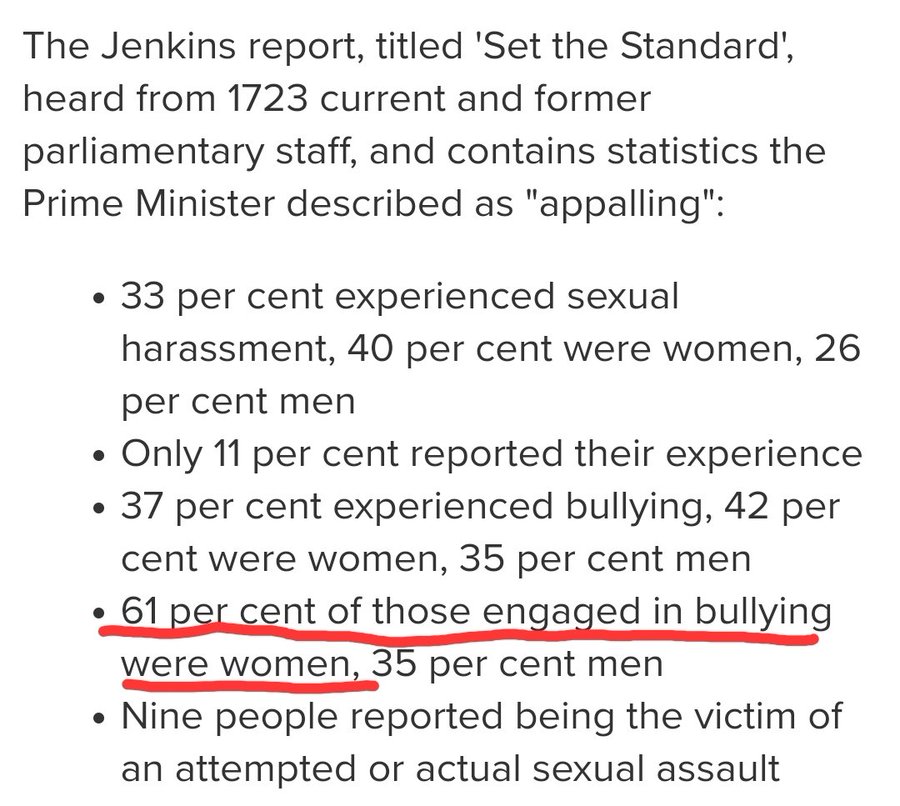
Workplace harassment takes a number of forms, and these may or may not be related to a worker’s gender. Whilst sexual harassment is the most often discussed, all forms of harassment or discrimination warrant serious consideration and remedial action. No-one should have to tolerate working within such an environment. Everyone deserves respect.
Thus sexual harassment, gossiping and false accusations, bullying, and gender discrimination in recruitment, promotion and management policies – all deserve attention.
If the majority of perpetrators are historically male, as is likely the case with regards to sexual harassment, then a gendered debate might be called for. What we are seeing nowadays though is more a case of systematic demonisation of male managers and staff, whilst female perpetration of sexist and abusive behaviours is downplayed or even air-brushed out of contention.
Despite the fact that both men and women can (and do) perpetrate these types of behaviours, or be victimised by them, media coverage focuses almost entirely on the victimisation of female staff (example/example/example/example/example/example and example).
The furore about sexual harassment that initially centred on the misbehaviour of Harvey Weinstein has only amplified this already heightened degree of gender bias. It has also added to the confusion regarding the boundary between acceptable and unacceptable workplace behaviour.
Men are thus, both collectively and individually, painted as the architects of toxic workplaces, and responsible for victimising a slew of women and other men. And as with so many of these issues, men are the ones held responsible for fixing the problem and judged harshly on any perceived lack of progress.
Conversely, the media generally avoids identifying women as having significant involvement in discriminatory and/or harassing patterns of behaviour.
One of the outcomes of this situation is that men are discouraged from reporting abuse, in turn reinforcing the view amongst policy-makers and managers that female perpetration is little more than a rare aberration.
‘Abuse’: Gender workplace trend erupts (27 December 2024) Australia. No mention of the gender that is primarily dishing out the abuse. No surprise there
Sydney woman welcomes new office rule men say makes them ‘uncomfortable’ (17 October 2022) The woman is a feminist canetoad, oops I mean journalist. Heaven help men complaining about being made to feel ‘uncomfortable’ … that’s a woman’s job, right? Heaven help them too, if they express interest in the view provided.
“An SNP MP has been accused of making “appalling” comments about sexual harassment during a probe into allegations she pestered a male staffer. A submission by Patricia Gibson claimed it is “discriminatory” to say the impact of sexual harassment of a man by a woman is the same as by a male against a female.”
Extracts also stated it was “highly unlikely” the complainer would have felt “any kind of physical threat or vulnerability” as a man.
Workplace equality meaningless unless ‘macho’ culture disappears, by Mary Barry, CEO ‘Our Watch’ (13 February 2017) Not content to simply ignore female perpetration/male victimisation, the author suggests the answer lies in feminising the workplace. But wait there’s more, as the author draws an even longer bow in asserting a nexus between the perceived overt masculinity of many workplaces, and the incidence of domestic violence in the community.
Not asking for it (2016) Australia. This article interviews 13 women about their experiences of sexual harassment. I guess no men were available on the day.
In this example the author again makes no mention of there being either female perpetrators or male victims of inappropriate behaviour (see Reddit discussion thread here).
Similar bias can be seen in ‘Know where the line is: Melissa Hoyer and Elizabeth Broderick address sexual harassment‘ (May 2014). Interestingly though, readers comments paint a quite different picture. This then prompts a furious backlash, with feminists asserting that others are seeking to downplay the significance of harassment of women and/or justify that harassment on the basis that women also harass men. This tends to be the pattern with articles on this topic, and I sense a great deal of pent-up frustration with the one-sided coverage of these issues.
(Addendum: Ms Broderick is now raking in plenty of $$ shaming business into conducting surveys of sexist behaviour which confirm, surprise, surprise, that they have a toxic culture that can only be remedied by feminist consultants.)
Australian women share their experiences with sexism in the workplace (16 April 2015) This typical mainstream media article about discrimination in the workplace lacks even a single reference to the fact that men experience the same or similar problems and issues. But again, take a look at the subsequent readers comments both here and at the relevant post in the news.com.au Facebook page … an avalanche of angry men and women pointing out how biased and inaccurate the article is.
‘Things my male colleagues have actually said to me‘ (10 April 2015) Don’t hold your breath waiting for part 2 ‘Things my female colleagues …’, at least not in the mainstream media. And I note that readers comments are not permitted – which is typical in the case of these anti-male hit-pieces
In contrast very little indeed, with the exception of readers comments, has been written about toxic workplaces from the male perspective. Have men been given a free pass from having to endure such experiences? Or has the plight of male victims simply been ignored, as has occurred in the case of domestic violence and sexual assault?
Unfortunately, one outcome of ignoring female perpetration/male victimisation is the relative lack of objective research. And of course as long as research bias results in such behaviour being excluded from consideration, then there is an over-reliance on conjecture and anecdotal evidence. Hardly an ideal situation in terms of getting the powers-that-be to sit up and take notice.
On that note I just google-searched using the words “My female boss …” and was surprised by the topics that automatically appeared. Try it yourself. Looks like a lot of people having problems with female supervisors. Personally, both my best and worst bosses were female. But boy, the bad ones were shockers.
Moving on, I think it’s clear that some of the behaviour that is perceived as harassment or discrimination in the workplace is a function of the different ways that men and women operate. There are gender-based differences at play, and it is hardly unreasonable to suggest that both men and women should try to understand and compromise.
This WSJ article is another in a long line of articles proposing that men need to adjust to women, but never the other way round (read the comments too). See a critique of this article here, and again I would suggest also reviewing the readers comments.
And again, this August 2016 article appearing in the pro-feminist/SJW ‘The Conversation‘ provides a remarkably one-sided view of the issue. It’s entitled ‘Calling all men! Five ways you can be a feminist at work‘, and it’s by UK academic Scott Taylor.
This provider of business training videos obviously hasn’t heard – or doesn’t care to acknowledge – that women can also be perpetrators (scroll down to ‘Employment and Workplace Issues‘).
There are a number of implications – both positive and negative – regarding the current ‘debate’ and related media coverage. One of the negative outcomes is the growing reluctance by men to work closely with individual women, as discussed in this and various other recent articles.
The following sources consider discrimination/harassment/false allegations suffered by men/boys:
Feminist instructor proudly informs readers how she discriminates against male students (15 July 2016) Australia. Reddit discussion thread with linked article.
Workplace sexism: we still don’t want to talk about it, by Kate Jenkins (1 June 2016) Australia. A sole reference to male victimisation in an article that otherwise implies sexism only affects women. I’d suggest that one reason why men “don’t want to talk about it” is the strongly gendered nature of the debate which is equal parts disinterested and dismissive of men’s concerns.
Update on Rates of Violence in Male and Female Exotic Dancers (18 May 2016) France. Reddit discussion thread with linked article – be sure to click through to the earlier study which showed roughly equal rates of harassment/abuse of male versus female performers.
Workplace (In)Equality (7 May 2016) Reddit discussion thread. On situations where men & women are paid the same but men routinely given the harder jobs.
Articles about how women treat other women/girls at work
“I can’t understand the push for more women in the workplace. My partner has just quit specifically because of problems with women at her workplace. Her sister also has quit her job from a different workplace for the same reason. This prompted me to ask other women I know if they have problems with women in the workplace.
The answers I received staggered me. I have two sisters that I could ask and both said they were having problems with women in the workplace at the moment, but never with men. My own mother when asked said to me, “to be honest with you the only problems I have had in my working life have been with women”.
I have asked now dozens of women when I get the chance, many that are friends, and every one of them say the same thing. That they find it difficult to work with women and that they are the cause of stress in the workplace for them, preferring to work with men.
I challenge readers to ask this question to women they come across. The answers I receive are amazing to me. A real problem that is either unknown or swept under the carpet in my opinion.” (Source)
How The Bachelor turns women into misogynists (18 August 2016) Read this article which tells how women only undermine other women when manipulated by TV producers … then read the papers below.
Sleep with me or be sacked (14 July 2014) with the same issue addressed here where some guy is quoted as having said: “You’ll see more sexual harassment cases in Silicon Valley [like this] because of the male dominated culture“. Here are two of the readers comments that followed:
“Don’t be shocked. My female manager harassed me for years. I was maybe 24 and single, she was probably 40, married and had 2 kids. I knew her family pretty well, which made it even more weird. For years she would come in and sit on my lap, or make comments like “If I don’t eat soon, I’m going to get goofy and rape you or something”… It was very uncomfortable. Especially since I knew her husband, and her regular “boyfriend”.. Finally, one day she was teasing me, I turned around and said, must you? She says, why is it sexual harassment? I responded, I don’t know, what if you were sitting in this chair and I was behind you tickling your neck, would that be harassment? A week or two later I got my layoff notice… So I don’t find this story hard to believe at all….”
“This is about a woman harassing another woman, but yet this running dog had to curry favor with his feminist masters and find a way to vilify men and make them responsible somehow for the wrongdoing to this female victim. Nobody can just admit that women are as prone to indulge in harassing behavior as men are”
Half of men in corporate Australia are fatigued by gender equality (24 November 2021) Entitled, condescending nonsense. Scroll through the readers comments in Twitter and elsewhere, and then imagine the same style on commentary aimed at a feminist author … it would create an absolute furor.
Gender harassment harming women in male-dominated industries (9 November 2020) Australia. You’d think that it would make sense to conduct a similar survey of men working in female-dominated industries, to provide context … but no. As I mentioned in this other post, feminists don’t want context – merely to support pre-ordained conclusions supportive of the feminist narrative.
If festival crowds can unite to help a crowd-surfer, they can unite against sexual assault (6 February 2017) Australia. This article demonstrates the prevailing mindset of only men harass/only women are harassed & it’s men’s duty to defend women. The hypocrisy of creating an assistance ‘hotline’ that only caters for women is lost on these people. See also the reader’s comments
Heinous sexist culture inside STEM industries exposed, by Liz Burke (27 January 2017) Ignores discrimination and recruitment bias against men – the implication being only women are affected. Relies heavily on anecdotes, and fails to provide corresponding statistics for men (ditto) – all typical of pro-feminist journalism/’research’.
Swedish women get hotline to report mansplaining (16 November 2016) Feminists hard at work addressing the big issues. All men magically know whether each individual woman knows more about a given topic than they do. Well all men except the misogynists it seems. NB: Women never guilty of behaving in a patronising manner.
Statistics from the UK National Workplace Bullying Advice Line and Bully OnLine reveal that at least 50% of over 6000 cases involve a female serial bully. The top four sectors for cases are teaching, nursing, social services, and the voluntary / not-for-profit sector, in which there is a higher percentage of female managers. Serial bullies, male or female, can be recognised by their behaviour profile.
Sexual harassment in politics, by Karen Middleton (15 October 2016) Australia. The article contains details of a string of incidents of gross conduct by men in the political sphere. Karen asserts “that attitude and that kind of predatory behaviour is extremely – extremely – common” (para 9), and then in the final paragraph:
“The men I’ve described are ordinary men. That’s the problem – that it is and has been ordinary to behave this way. Women don’t talk about it for lots of reasons. They fear it would damage their careers, their social lives, their relationships. But that doesn’t mean it doesn’t happen …”
No, ordinary men do not behave in this manner, and such conduct is not part of the ordinary course of events in Australian workplaces. It is certainly not “extremely common“. In fact the author admits “it was only a handful of our elected representatives who did these things“.
Karen omitted any/all incidents of female perpetration of abuse. And yet men are also victims, albeit it to a lesser extent, though they also “don’t talk about it for lots of reasons“. Whilst journalists fail in their duty to report the other part of the workplace harassment problem … “But that doesn’t mean it doesn’t happen”.
“Prime Minister Malcolm Turnbull’s department is paying a feminist “change agent” almost $200,000 to conduct a three-month “cultural audit” to find and weed out any unconscious bias against women”
This person has the perfect solution for women in the workplace (2 September 2016) Because only women have to walk on eggshells due to the entitlement and/or fragile egos of their co-workers. Feminist erasure – This blogger failed to upload my comment in relation to her post.
“I am a professor and a newly minted pro vice chancellor and I have spent my entire research and working life with male bosses or supervisors. I have never reported to a woman.”
So presumably men have mentored the author throughout her career, and been instrumental in her elevation to the top job. Despite this she implies that the disproportionate number of men in senior positions is sinister, given their inherent propensity to exercise power to the benefit of men. Greater gender equity is only achievable through listening to women’s voices. Men should be grateful for sound guidance that women shall provide … and for any incidental rewards that may come their way. Oh wait, I get it, those men, the first lot, they were different.
(As a footnote: I sent three tweets in response to this article (see Twitter stream 15 July 2016) and was immediately blocked by the author. What a curiously inept response for someone so obviously well-credentialled to attempt to defend her position.
Middle-aged women bosses more at risk of sexual harassment, finds study (30 June 2016) I can’t locate the results of the Australian Journal of Public Administration study cited in the article anywhere online … if anyone reading this can provide a link, then pls let me know. Thanks in advance.
Most people were sickened to learn of this violent unprovoked attack on an old man in Australia, which was subsequently discussed in this rather insightful article by Jim Muldoon. One perpetrator subsequently went to court in September 2014 and walked free on a good behaviour bond. No surprise there.
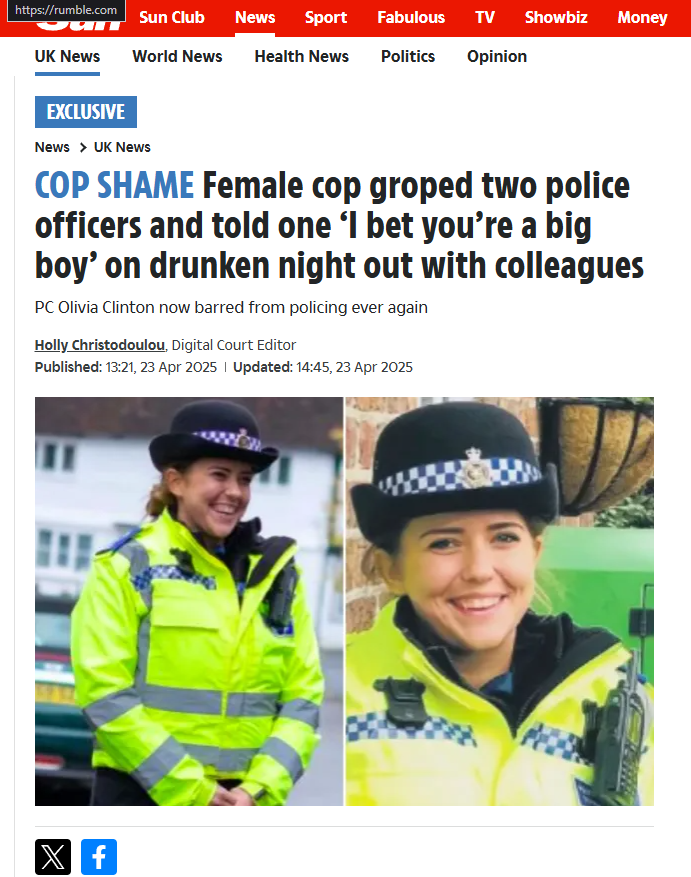
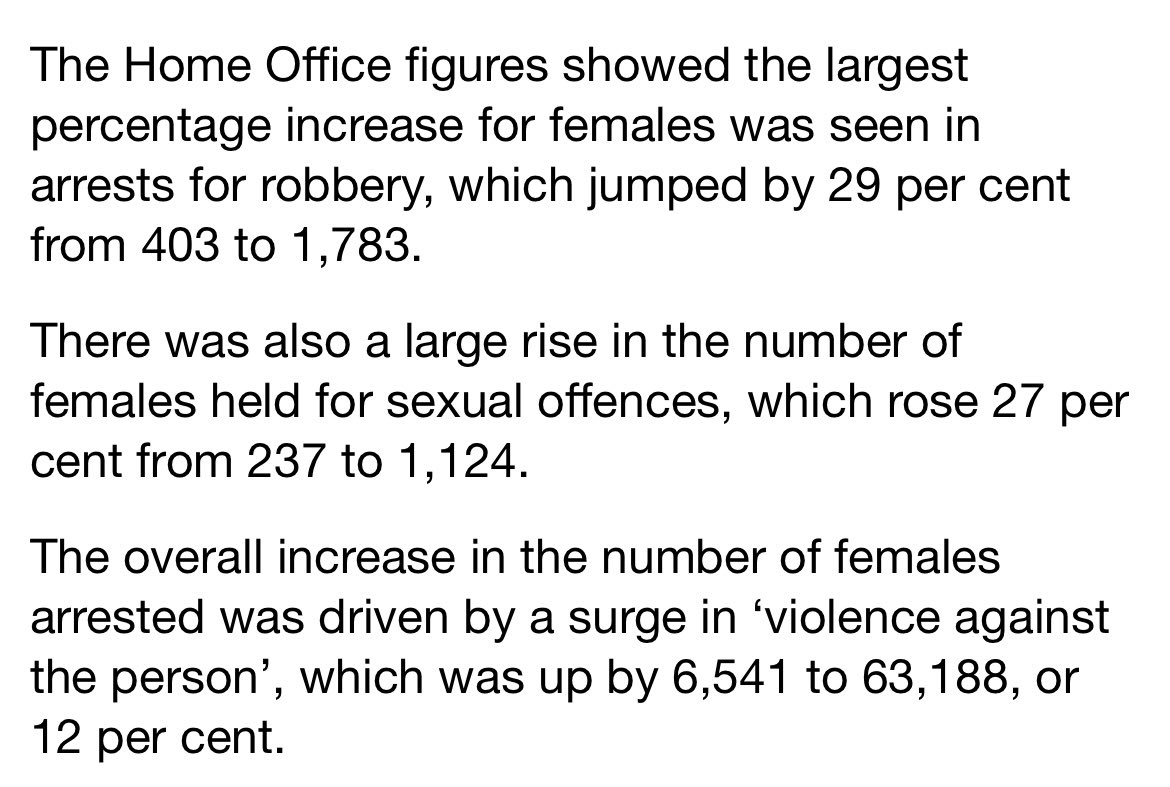
This was not an isolated episode though, and there have been many recent instances of violent crimes involving female perpetrators. Including more attacks on the elderly man (a 2018 example). Indeed, the numbers of women committing violent crime is increasing significantly. Further, the gap between the rate at which violent crimes are committed by men and women is slowly narrowing as male perpetration has either plateaued or declined in many jurisdictions. This trend casts further doubt on the veracity of claims that the number of male victims of domestic assault is inconsequential.
“A third of family murders involved a female as the killer. In sibling murders, females were 15% of killers, and in murders of parents, 18%. But in spouse murders, women represented 41% of killers. In murders of their offspring, women predominated, accounting for 55% of killers” (Source)
The paragraph above was extracted from a 1994 publication, not because patterns of gender perpetration have changed greatly but because the feminist filter has been imposed so completely now that we only see articles like this one that present statistics in a manner that suggests that women are the perpetual victims of oppressive male malevolence. (Reddit discussion thread here)
The first group of linked articles/papers below explore the general issue of violence by females. A second and subsequent collection of links relate to specific acts of violence by women/girls.
Given all of the above it’s frightening how few anger management programs there are available for women here in Australia. In fact the only dedicated program of which I am aware is LifeWorks. If you know of others then please let me know and I will list them here.
Links to online sources dealing with the issue of violence by women/girls (other than specific incidents or case studies)
Australian Domestic Violence Homicide Statistics 2018 (19 June 2018) Most DV-related homicides in the first half of 2018 were committed by women. A reality very much at odds with the misandric messages issued by the feminists who have adopted the Eurydice Dixon tragedy as their current cause celebre.
https://en.wikipedia.org/wiki/Female_suicide_bomber A google search on the words ‘female suicide bomber’ will also reveal many papers on the subject as well as details of specific incidents that have appeared in the media (example).
“Women have increasingly assumed more operational roles in jihadist terrorism activities, as have minors and young adults. One in four (26%) of the arrestees in 2016 were women, a significant increase compared to 2015 (18%)” (Source)
“The February CDC study found that, over their lifetime, 44% of lesbians had been physically assaulted by a partner (more than two-thirds of them only by women), compared to 35% of straight women, 26% of gay men, and 29% of straight men.”
“Teens cheer as schoolgirl bashed, thrown down stairs“. By another girl – though that bit’s left out of the headline (15 March 2022). Crime occurred at Bundaberg, Queensland. Article is behind the Courier-Mail paywall.
Girl’s teeth knocked out in alleged bashing (6 February 2020) See how far you need to read through the article before it’s disclosed that the attackers were female. Do you think that would have been the case if they were male? Most unlikely
One of many video clips on the net showing a woman beating a man in public, with no-one intervening … until the male strikes back. More such videos can be seen in this post. (September 2019)
“An 11-year-old girl is in a stable condition in a Melbourne hospital with multiple gunshot wounds, after a supermarket brawl between two women allegedly later led to a shooting”
Man shot at Labrador (22 August 2016) Why are both the media and police so coy (i.e. gender neutral) when the perpetrator is a female? The man subsequently died. At least this article told it as it was.
The policeman was quoted as saying “I certainly don’t condone the behaviour but I can certainly see the funny side of it as well.” Bet he wouldn’t have said that if a man had pushed him.
Court documents reveal Jackson, who only got her licence back in January after a two-year driving ban, has twice had restraining orders taken out against her, both by ex-boyfriends in 2012.
One of the men claimed to have received 72 phone calls from Jackson in a single day. He accused her of later trying to break into his house through a bedroom window after leaving menacing voicemail messages, including “I’m going to hurt you”.
The Unknown History of Misandry A comprehensive blog that discusses the issue of female sociopaths and serial killers, featuring innumerable case-studies
Fathers rights comprises both a very important set of social issues, as well as a highly visible and significant component both within and beyond the MHRA movement.
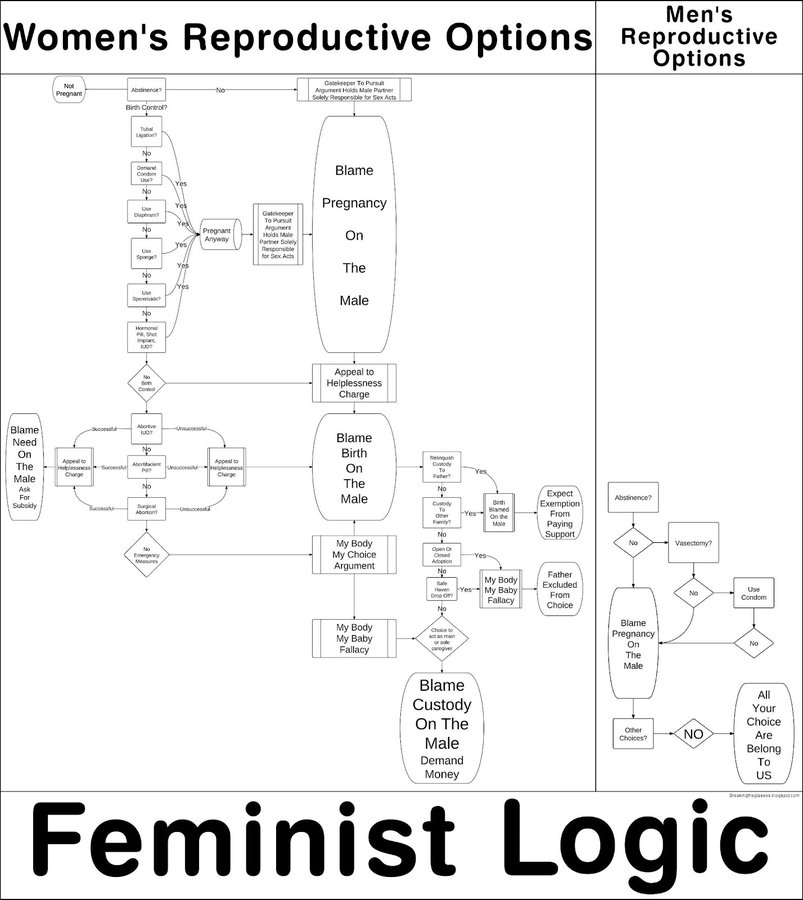
Anyway I will start the ball rolling by mentioning an article in the ‘Genderratic’ web site entitled ‘The Feminist Crusade against Fatherhood‘. One notable feature of this well-researched article is that it provides a historical background to the issues of child custody and the provision of financial maintenance.
Various papers concerning, or of concern to, fathers
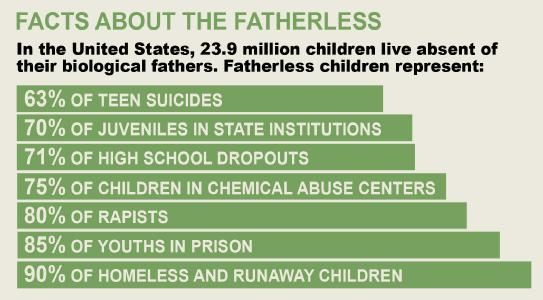
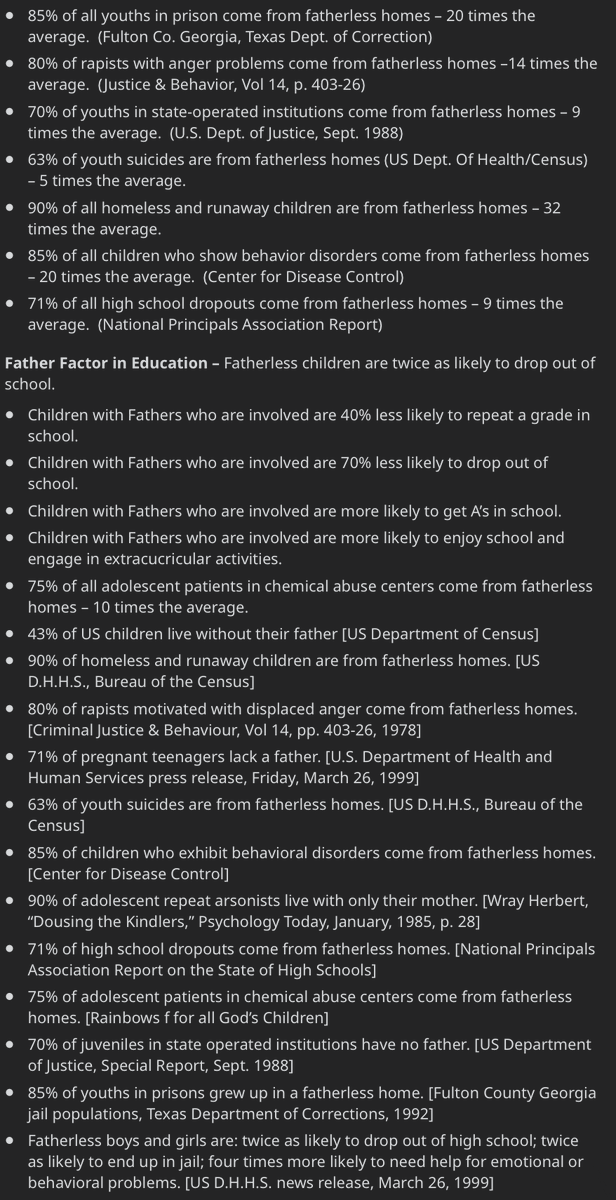
The Fatherless Generation (undated, but assumed to be circa 2010-2020). Blog posts and statistics in relation to the effects of fatherlessness
Chris Mackney was a father who was driven to commit suicide due to his treatment at the hands of an abusive wife and a legal system that is strongly biased towards the rights of woman. Read more about Chris here.
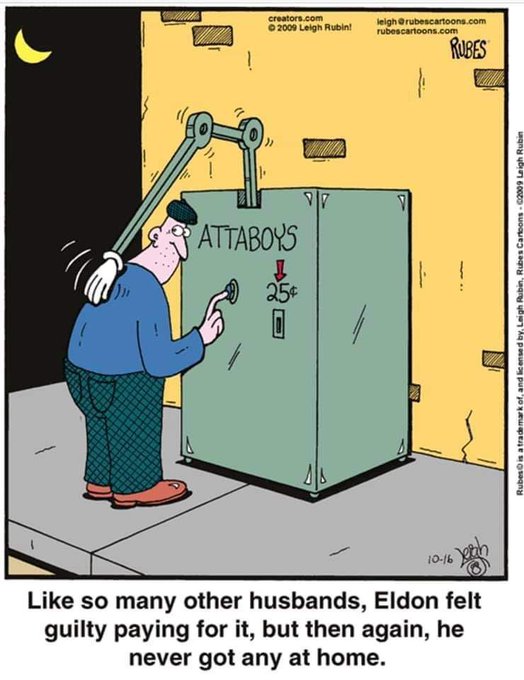
You’ve probably noticed that one of the many, many criticisms of men is that they don’t help out with family/household as much as they should (& women already do). And yet men who choose to become house-husbands are often viewed with disdain. This phenomenon is apparent in this reddit discussion thread.
Bettina Arndt has asked me to raise awareness of an alternative Australian family law resolution service offered by Professor Patrick Parkinson, which you can read about here.
Dad’s DNA Nightmare: Your legal questions answered (13 February 2017) Men can’t win. When you read this story, and then others about non-biological parents (men) who are forced to pay child support until age 18 even when DNA evidence is available!
Child psychologist Penelope Leach says sleepovers at dads ‘may damage brain’ (18 May 2014) Unbelievable that the media would publicise such views, and imagine the uproar from the feminist lobby if the genders were reversed. In this article the author of the study cited by Ms. Leach rebukes for misrepresenting his findings. Imagine that, a feminist misrepresenting the actual facts in order to further their own ideology … who would have thought?
“…an estimated 50,000 persons are kept in jail or in prison on any given day in the U.S. for child support arrears.” (13 January 2012) Statistics such as this need to be probed, but with feminists controlling the relevant government agencies we know that is not going to happen anytime soon. For example, how many of these men are not the biological parent of the child in question? How many women are not paying their share of child support, and what percentage of them are being jailed? etc
As I discussed in another post within this blog, feminists often display a generous measure of spitefulness and intolerance towards those who don’t share their jaundiced view of the world. The degree of loathing demonstrated seems to depend in part on where people rank in the following list (with one being most loathed):
Female men’s rights activists
Male men’s rights activists
Female celebrities who openly refuse to be labelled as feminists (example: Salma Hayek)
Other women who openly refuse to be labelled as feminists (see this post and here)
I don’t recall having seen the term ‘gender traitor’ used within a men’s rights web site or forum. Nevertheless, when I googled that term, for some reason I half expected to bring up a list of sites towards the harsher fringes of the so-called ‘Manosphere’. Perhaps this is a hang-over from all those long years of gynocentric brain-washing that I’ve endured.
No, what I found instead was sites where the term ‘gender traitor’ was used by feminist women … sites such as these:
Interestingly also, when I review the search terms that people use to find my blog, I’ve noted several examples like “Erin Pizzey traitor” or “Karen Straughan traitor” (these being well-known men’s rights activists). And just recently an Australian journalist, Corrine Barraclough, was accused of being a traitor after calling for a gender-neutral approach to domestic violence.
This use of ‘gender traitor’ and other similar terms conflicts with this statement by a feminist writer: “Interesting that feminists do not have a derogatory word for women who are not active in their movement. Maybe men could just respect each other’s opinions and win minds with logic.”
Maybe that writer should google-search on the term ‘pick-me’, which is used to try to deride women who either support or are sympathetic to, one or more men’s rights issues.
Unbelievably, the term ‘simp‘ has even come to the attention of the US Dept of Homeland Security who state in a March 2024 report about the perceived dangers of the manosphere, that:
“A disconcerting trend has surfaced within the manosphere… where men proudly proclaim to “stop simping.” ‘Simp’ is sometimes used as a derogatory term to troll men who extend positive expression or behavior towards women, particularly kindness.” (Source)
Whilst browsing social media and the WWW, two other terms likely to be encountered are ‘White Knight’ and ‘Mangina’. These terms tend, however, to be used with more of a sense of bemusement or mild disgust, rather than white hot anger. It is important to note also, that neither term are used in a blanket sense, i.e. to refer to all men who don’t support the men’s rights agenda. And in fact, many within the men’s rights movement reject the use of the term ‘mangina’ entirely, seeing it as inherently misogynistic.
White Knights are mainly driven by a sense of chivalry, impulsively responding to the impromptu cultural cue of a ‘damsel in distress’. Often white knights are largely ignorant of the nature of both feminism and the men’s rights movement. The historical derivation of the concept of a White Knight is discussed in this blog post.
Here is a recent example of ‘White Knight’ behaviour. Whilst I respect Ian Chappell as a person, his suggestion that cricketer Chris Gayle be banned from playing is an absurdly ‘over-the-top’ response to a relatively benign misdemeanour.
Whereas ‘white knights’ can be ingenues in the context of the gender debate, manginas are active and informed. Manginas often consider themselves to be feminists. They are frequently wilfuly persistent in seeking out opportunities to compromise the efforts of those wishing to advance particular objectives of the men’s rights movement and/or counter aspects of feminist ideology.
This is the way one fellow explained the difference between the two:
“A white knight is a man who will mindlessly defend a woman even when she is in the wrong, particularly if he does it out a misguided hope of impressing women with his honor. White knights are not necessarily feminists; they may be traditionalists as well. Women, not just feminists, will manipulate white knights into attacking other men for their own ends (or even just amusement).
A mangina is a man who has embraced the misandry of radical feminism and uses it to denigrate and smear other men in a pathetic attempt to make himself look better by comparison or to specifically curry the favor of feminist women.
A white knight will attack you physically, a mangina will just accuse you of being an exemplar of toxic masculinity. A white knight may be a very masculine man, a mangina never is.” (Source)
Change Makers, Indoctrination for Australian men seeking help in becoming a suitably compliant puppy in the workplace (December 2022) And no, there’s no equivalent training available for women
Male feminist, Jason Dion Bews, assaults female reporter then women cover his escape into the crowd (24 January 2017) Canada. Will this practice, feminists employing male muscle to fight their fights, become more common? If they get caught, meh, disavow & blame toxic masculinity!
The gendered nature of trolling, by Cory Zanoni (7 October 2016) An example of a mangina in action, employed by a web site widely-recognised for the degree of gender bias which it practices (example).